


A Conversation with ‘Comrade Kham’, the Makeshift Dentist
Fifty Years after 6 October 1976: ‘Society Has Made No Progress at All’
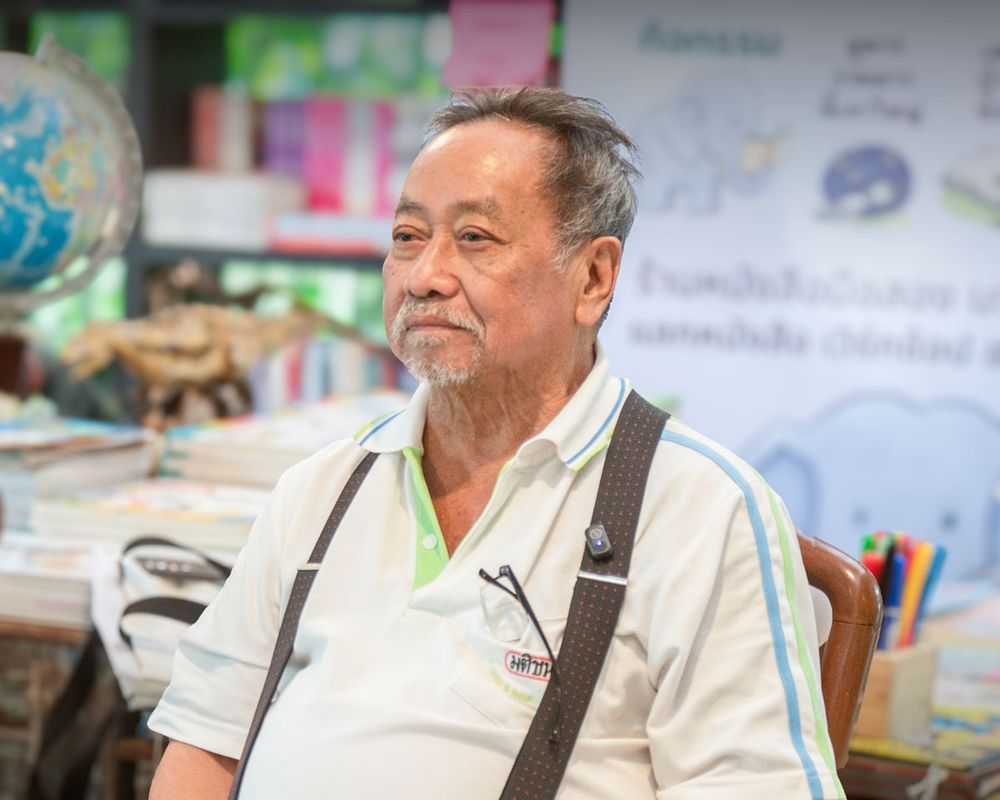
The name ‘Thawisak Yaimueang’ has long been familiar to followers of Thai politics. As a cartoonist for the Matichon Group, he is known for his clean, simple lines and humorous gags, with a particular flair for political parody and social satire.
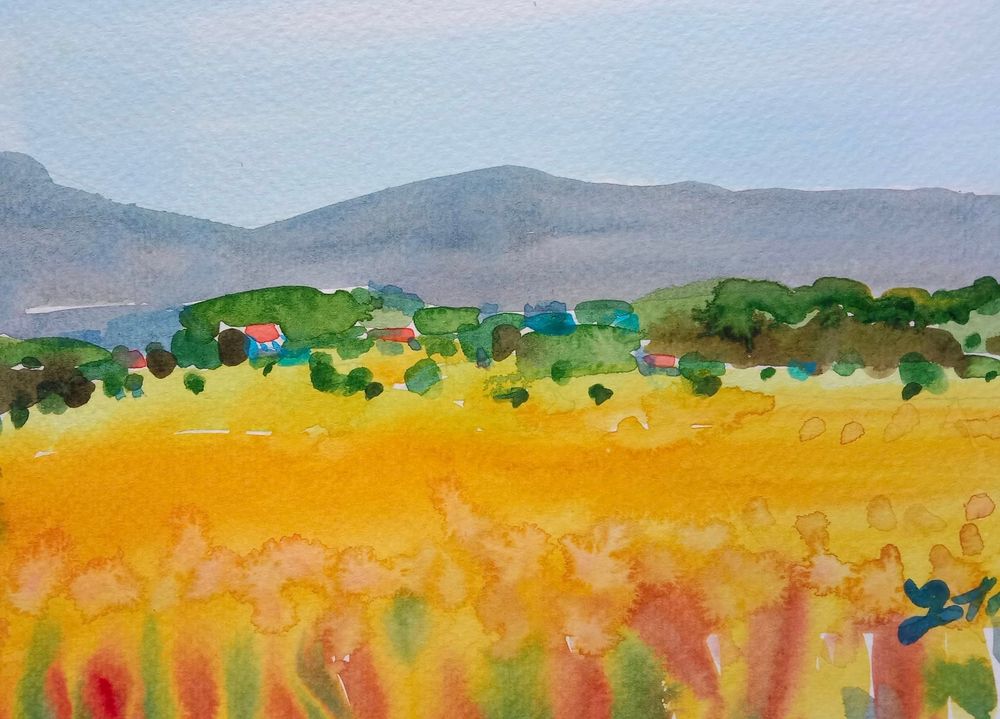
Thawisak Yaimueang moved to Khao Yai in 2006, fulfilling a childhood dream of living near the mountains: back home, there had been nothing but rice fields.
Originally from Uthumphon Phisai district in Si Sa Ket province, Thawisak Yaimueang loved drawing and writing from an early age. After finishing secondary school, he passed the entrance examination for Poh-Chang School. While studying in Bangkok, he enjoyed reading books and following the news. He was especially fond of the cartoons of Prayoon Chanyavongs, which inspired him to try his hand at social and political satire.
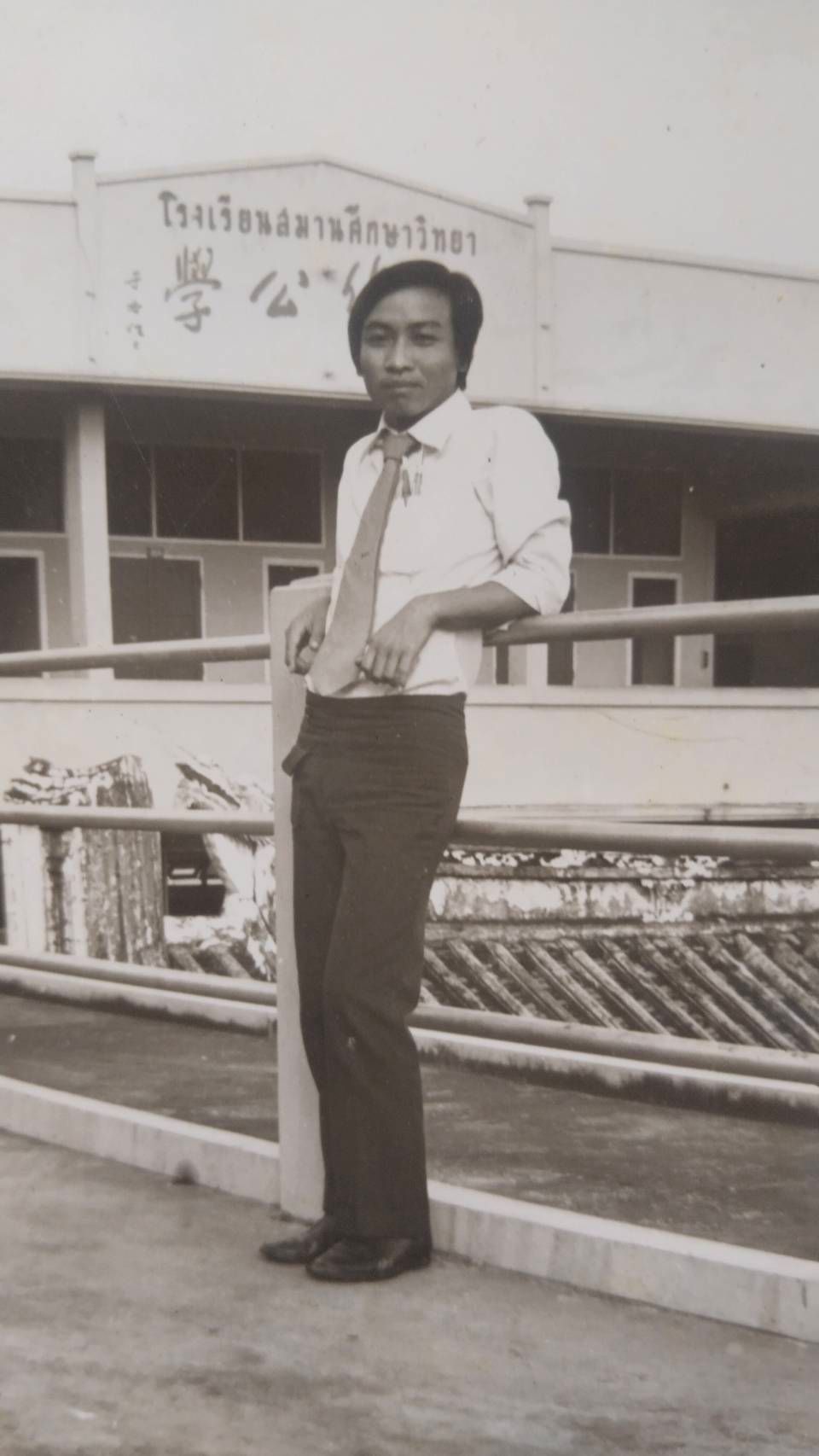
The uprising of 14 October 1973 took place while he was studying at Poh-Chang. It awakened his political consciousness and fired him with such enthusiasm that he decided not to continue his studies. It was a time of searching: he began reading more literature and joined the student movement. Then 6 October 1976 became a turning point in his life. He left his job as an art teacher and went into the jungle to take up arms in Saba Yoi district, Songkhla province.
He spent more than four years in the jungle, until the movement broke apart in what became known as pa taek, or the collapse of the jungle insurgency. Accepting defeat, Thawisak emerged to start life afresh at thirty. He found work in the art departments of Thai Watana Panich publishing house and the Imperial Hotel before eventually settling into a career at Matichon. His final position in the print media industry was advertising director.
While at Matichon, he showed Sathian Chanthimathon what he could do as a cartoonist. From then on, he became a fully fledged cartoonist for the group. That career has now spanned forty years.
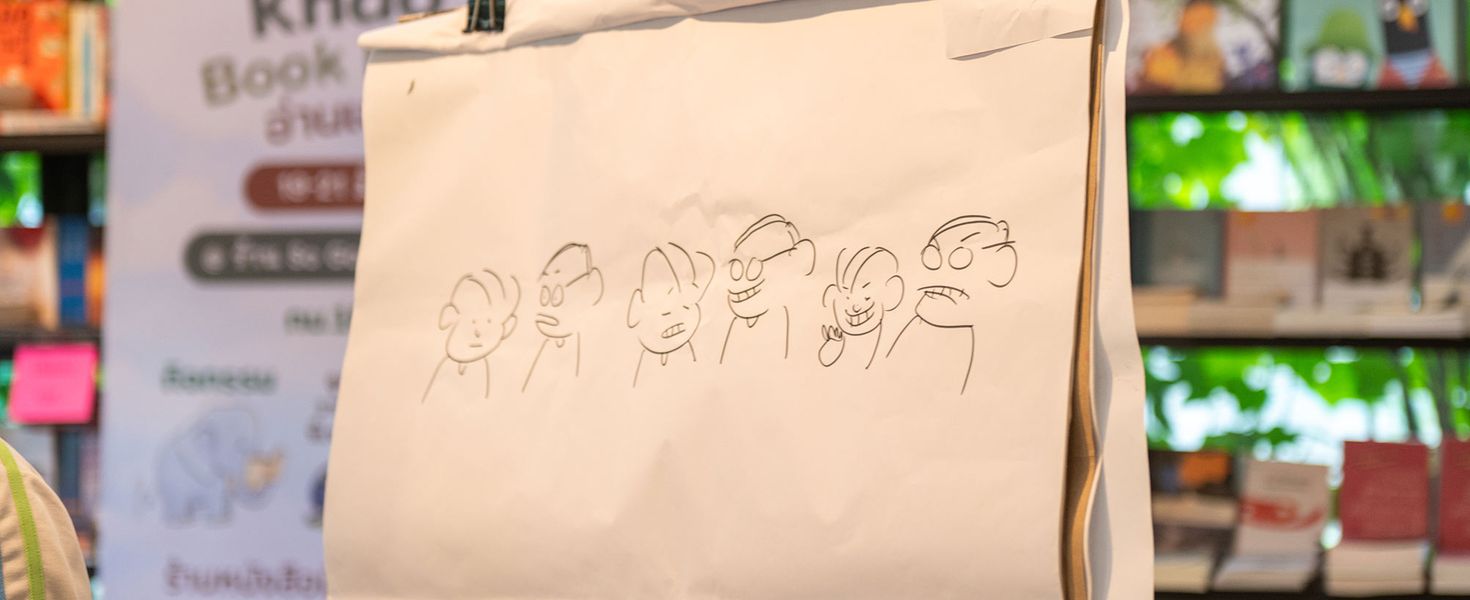
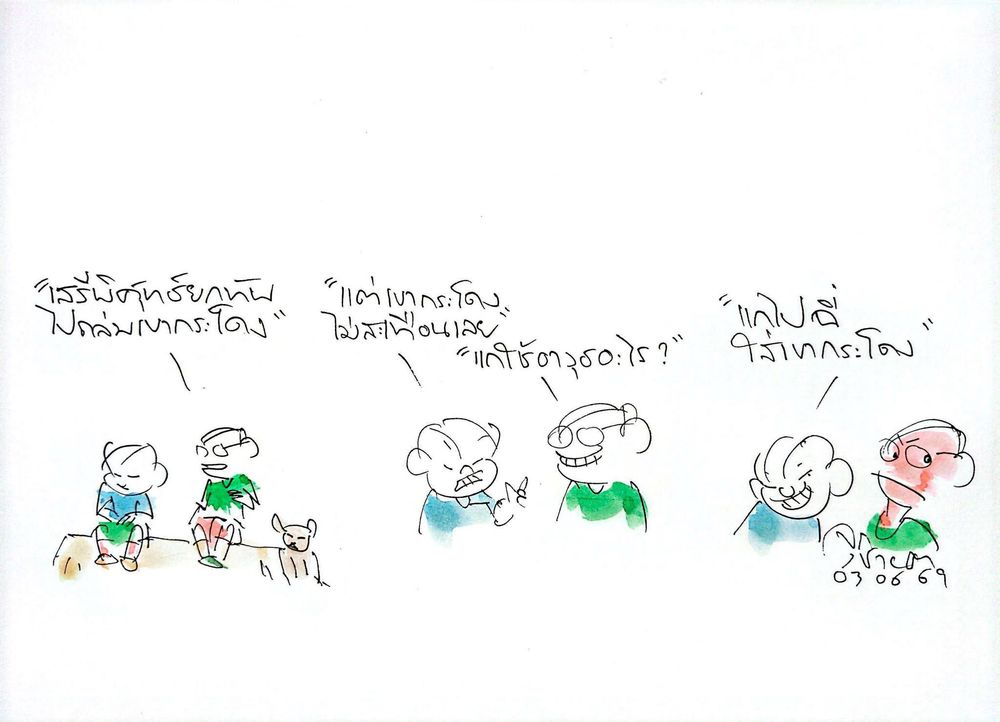
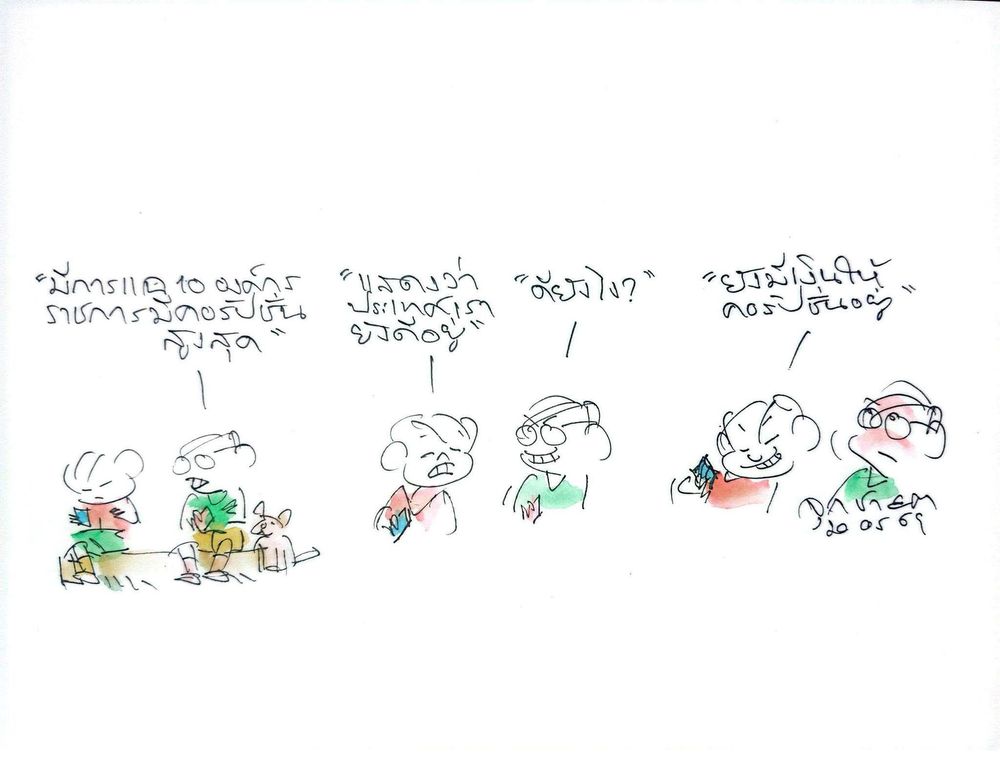
‘If I were to advise someone who wanted to draw cartoons today, I’d say there are all kinds of styles, so find your own first. I use very few lines and keep things simple. I draw people from the waist up because there’s limited space. I focus on facial expressions: frowning, smiling, laughing. And one thing that sets my cartoons apart is that I actually paint them in watercolour. Everyone else has gone digital, but I still use real paint because I like watercolour, the feeling of the colours.’
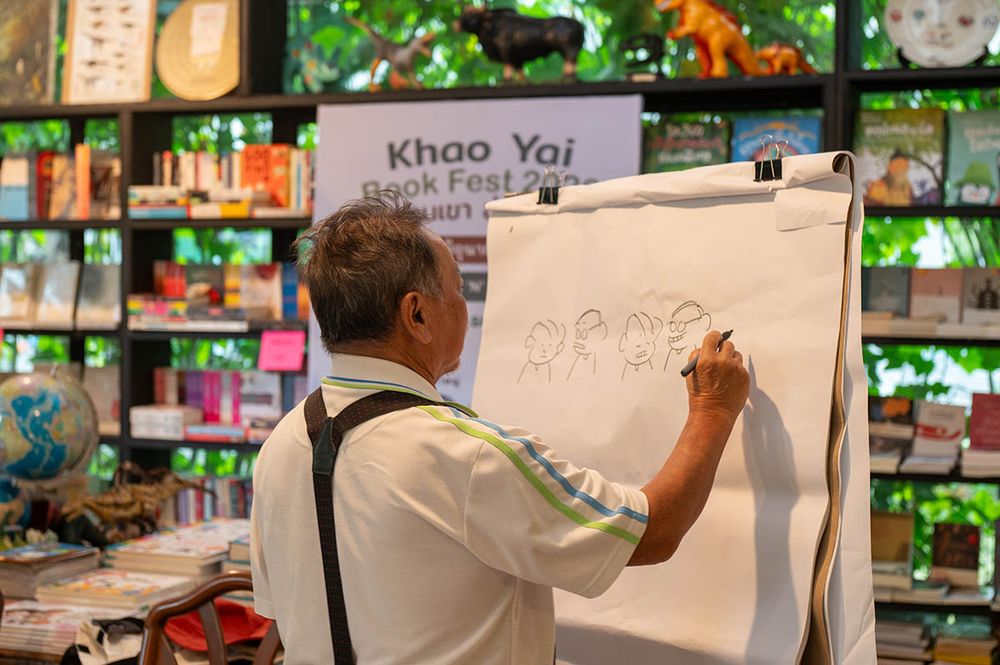
When it comes to creating three-panel cartoons, the essential thing is to do the research and then turn an issue into a cartoon.
‘Take the war between America and Iran. I used a conversation among motorcycle taxi drivers to make a point. In the first panel, someone says, “Violence only leaves people injured and dead.” In the next, someone asks, “You mean the Border Patrol Police shooting at a motorcyclist?” And in the last panel, the reply is, “No! America and Iran.” It’s satire, but I try not to lean towards either side.’
The veteran cartoonist adds that the hardest part of a three-panel strip is the third panel: it can take a long time to come up with a punchline that really lands.
‘I’ve hit a wall with three-panel cartoons too. I can have the issue worked out, but finding the gag is difficult. Still, something always comes at the last minute. You have to find words people can grasp straight away, and the hardest thing is the twist.’
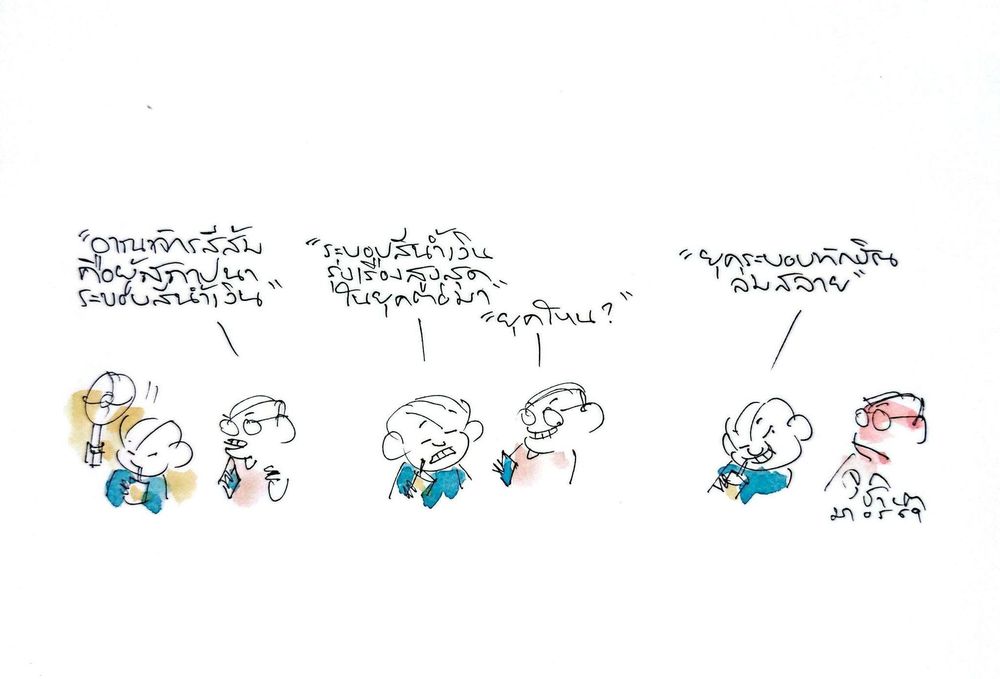
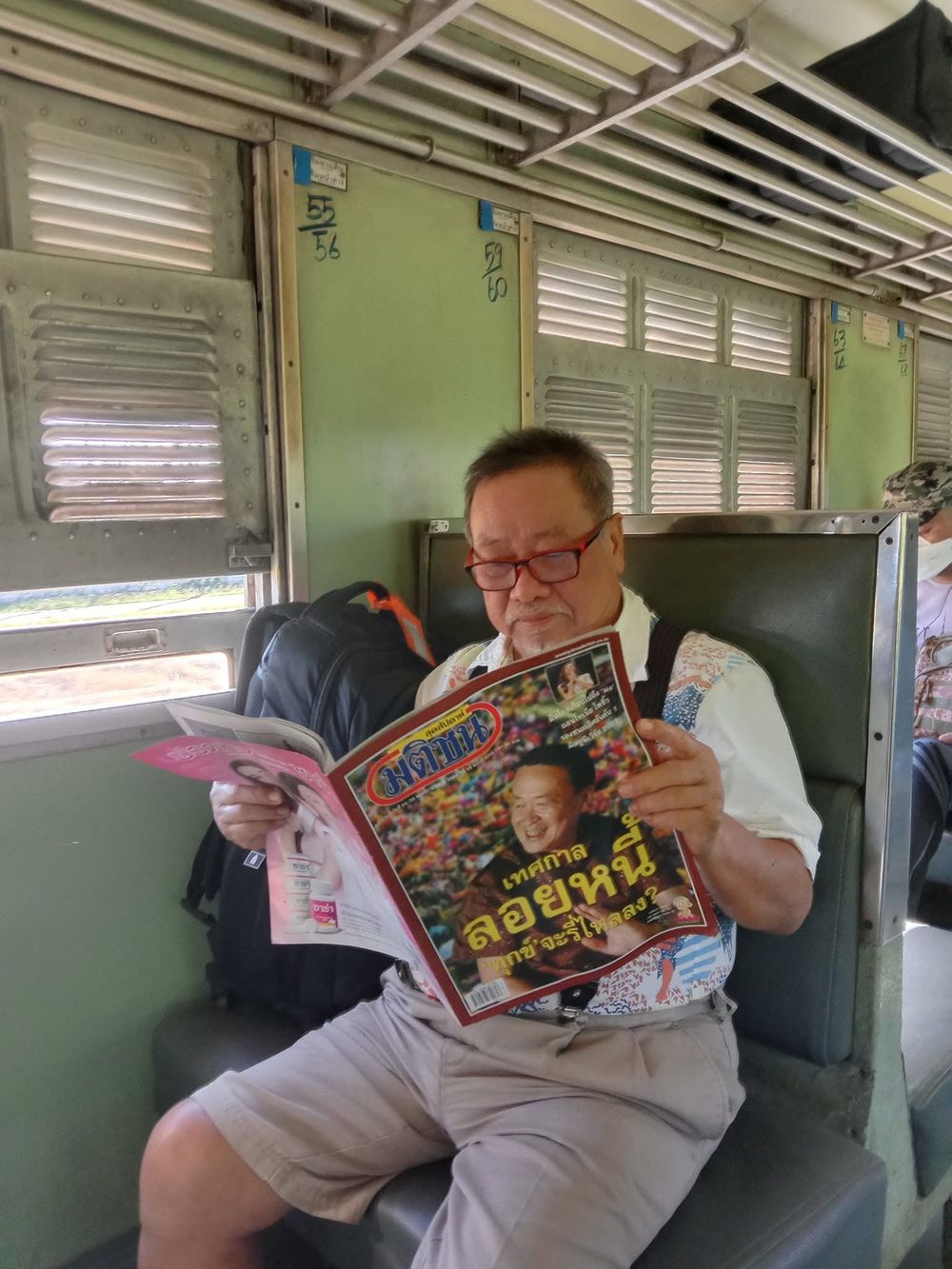
Now seventy-five, Thawisak Yaimueang continues drawing cartoons and following public affairs with the same enthusiasm he had as a young man. Although he has reached retirement age, his work still appears regularly in Matichon Weekly and the monthly magazine Thang Isan, giving his readers something to look forward to.
This is Thawisak’s life today: simple, yet still creative.
But go back to the events of 6 October 1976, and this same Thawisak was ‘Comrade Kham’, a makeshift dentist with countless stories from the jungle along the Thai–Malaysian border.
Khaoyai Connect looks back with Comrade Kham at those days and asks for his views on political struggle today, marking fifty years since ‘6 October 1976’, a wound in Thailand’s political history whose pain has never faded from memory.
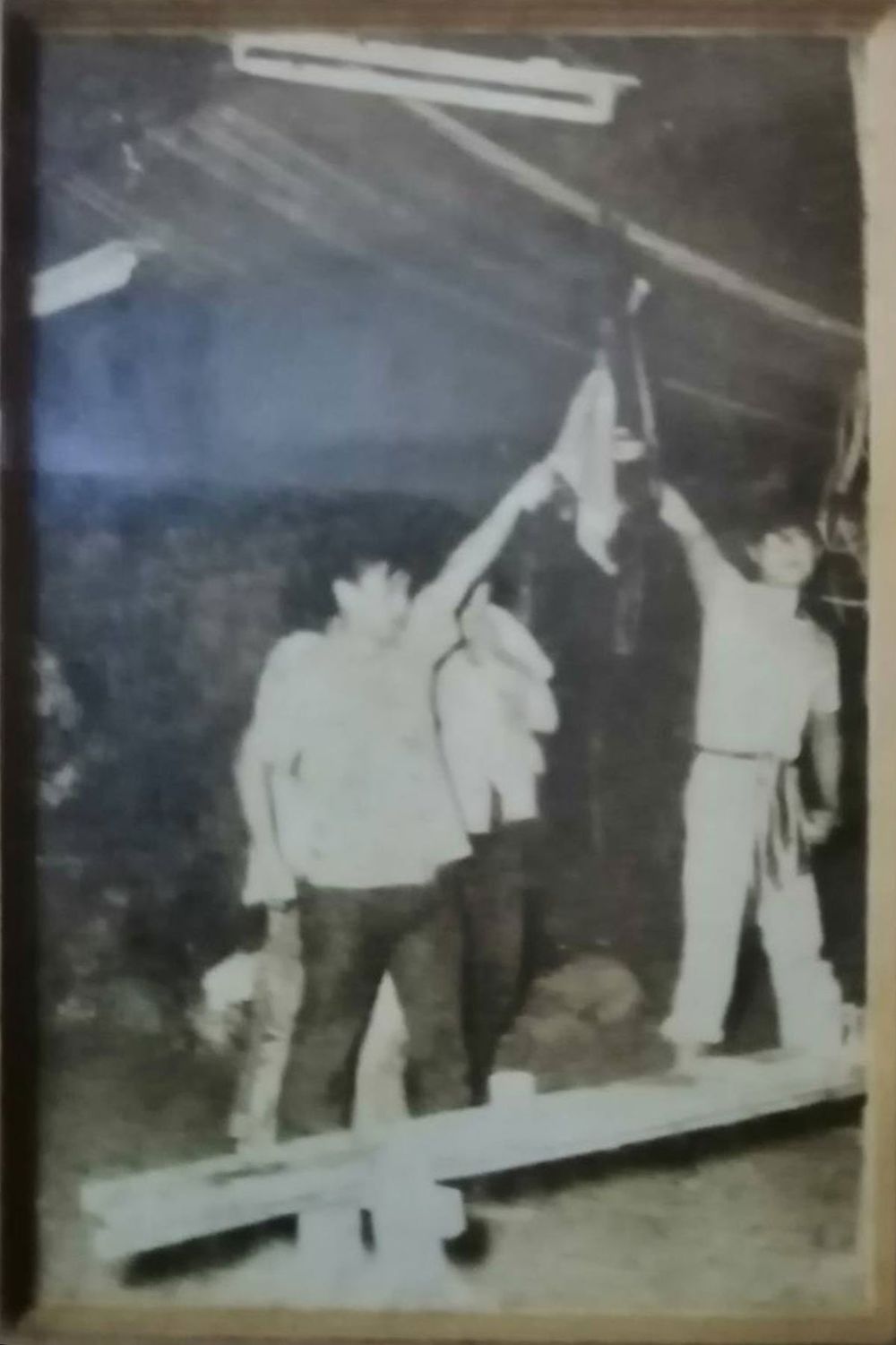
How did your life change from teaching art to taking up arms in the jungle against dictatorship?
I became very politically aware around the time of 14 October 1973. I was an art teacher then, teaching primary school children in the Yaowarat area. Those events awakened me politically and made me believe in the power of the people. Before that, no one had believed a dictatorship could be overthrown. So 14 October 1973 sparked something. It gave people the courage to come out and confront those in power, and faith in the strength of villagers and ordinary people.
What was your political outlook like at the time?
There was a sense of exhilaration, a burning desire to join the struggle against dictatorship. At first, though, I didn’t belong to an organisation. Whenever I heard there was a protest somewhere, I wanted to join in. During the 14 October demonstrations, there were different teams: the ‘cogwheel’ teams, security teams, medical teams. I tried to find a way to help. I joined a cogwheel team, linking hands to form a cordon, that sort of thing.
After 14 October, the political temperature gradually rose. Political awareness grew in every walk of life, especially among workers. There were strikes every day. Before that, standing up to the capitalists had seemed impossible. No one had dared imagine how workers could fight their employers. Even in schools where there was injustice, students began standing up for themselves.
As more causes emerged, from labour struggles to all kinds of social injustice, they took shape as a student movement. Small groups sprang up in every university, including those in the provinces. This was what 14 October 1973 had brought about.
Then, in the period before 6 October 1976, I was sent to work undercover as a janitor at the Ministry of Education, to organise people and spread ideas.
What ideas?
At that point, we weren’t using words like communism or socialism. The idea was democracy: making people aware of their rights and teaching them to fight for fair treatment.
Tell us about your time working undercover at the Ministry of Education.
I was helping out with Klum Sahaphap Raengngan Thai, the Thai trade union group, and Sun Prasan Ngan Kammakon Haeng Chat, the national labour coordination centre. The Ministry of Education happened to be looking for a janitor, so they had me apply. The salary was seven hundred and something baht a month. My duties were cleaning and serving coffee. It turned out I was a clever janitor with a good memory. When the education officials held meetings, I could remember exactly how each person took their coffee without having to ask again.
Once, I took some paper from the meeting room and drew on it. One of the officials saw it and wondered why this janitor seemed a little unusual. I was conscientious. My fellow janitors respected me. I was a model janitor: I worked hard, got on well with people and looked after the officials properly. After just four months, I was promoted to clerk. By then, my boss trusted Thawisak the janitor so much that he told me to find my own replacement, with no interview required. So the ministry got another excellent janitor. He used to be a musician playing in camps for foreigners. He worked hard as a janitor, and he had a special talent: he could play the piano. He would play for the civil servants during their lunch break. He also became close to a Western education specialist working at the ministry. But after 6 October, our cover was blown. They must have been quite shaken to discover that communists had infiltrated the ministry.
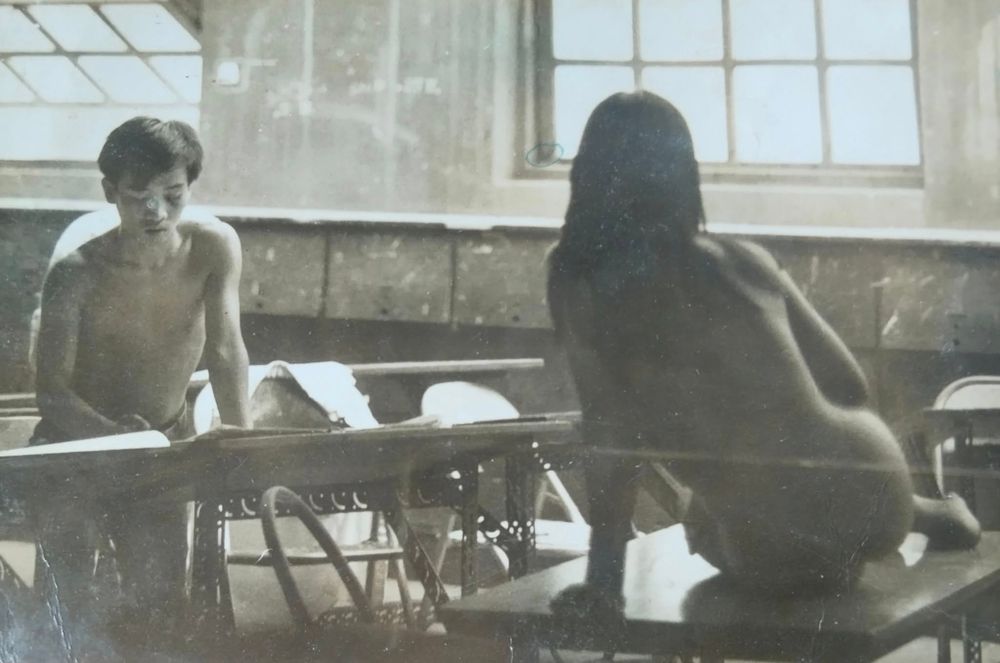
What made you go into the jungle?
After 6 October, I couldn’t stay any longer. At first, I planned to collect my things from work on 7 October, but a younger colleague intercepted me and said two policemen had come looking for me. I went home to find somewhere to hide, only to discover that my rented house had been searched. All my documents and activist equipment had been seized. Their intelligence was clearly very good, and they had been gathering information on me for a long time. I wasn’t even prominent. I wasn’t a leader or someone who got up and spoke into a microphone. They were very good. So I hid at a relative’s house in a slum and didn’t go out at all. I’d been in hiding for ten days when a friend in the movement brought word that I was to board the southbound train to Hat Yai at Bang Sue on 29 October. If I saw anyone I knew, I wasn’t to acknowledge them. I was to sit quietly. But when I got on the train, the whole carriage was full of people I knew. (Laughs.) I just sat there, afraid even to clear my throat or smile.
Someone would meet us when we got off. By then, we were part of the Communist Party’s movement. A communist contact would guide us.
A contact met us off the train. He told us to look for a child wearing trainers with the laces undone and follow the child without saying anything. Then a songthaew, a shared passenger pickup, would come for us. It turned out that everyone we’d seen on the train got into the songthaew too. (Laughs.)
How did you feel then, knowing your life was about to change?
I’d been preparing myself for some time. As we became more deeply involved in the movement and the situation developed, we discussed it and concluded that sooner or later we would definitely be surrounded and crushed. And they did crack down on us on 6 October. Before that, we’d already made plans for what to do if a crackdown came.
Actually, they were going to send me to Isan, the Northeast. I was told to meet someone at noon at Memorial Bridge. The code was this: outside the Empire cinema, I was to look for a person in a white shirt holding a Thai Rath newspaper, with a pen clipped to the left pocket. I was to ask, “Are you going to Prachin?” If the answer was “I’m going to Khorat,” it was the right person. Any other answer meant it wasn’t. They made me memorise it thoroughly. But when I reached Memorial Bridge, it had just opened, raised high to let a boat pass. I didn’t make it in time, and the person didn’t wait, so we missed each other. They arranged another contact and sent me south instead, to Songkhla.
After getting off the train, we took a songthaew for less than an hour to a place near Hat Yai town called Kho Hong. We got out in a rubber plantation. Once we went in, there were people in military uniforms carrying M16s, all speaking Chinese. We were puzzled. It turned out to be an area where the Communist Party of Malaya operated. Most of them were Malaysian Chinese. It was as though the Thai Communist Party had asked its sister party for a favour: a group of students would be arriving on this train, so please meet them. They looked after us very well, with food, changes of clothes and shoes, because we had to disguise ourselves. Women who had never worn lipstick had to put it on. Men with long hair had it cut short so they wouldn’t stand out. In those days, left-wing students were easy to spot. The women didn’t dress up, their hair was untidy, and some wore mo hom, those indigo-dyed work shirts. But now they had to dress in a more feminine way, wearing lipstick and high heels. We had a good laugh about it.
From the rubber plantation, we had to go on foot, wearing the same sort of shoes as the villagers so we wouldn’t leave suspicious footprints. Along the way, some of us city people, unused to walking long distances, became ill and our feet swelled up. The Malayan comrades had to carry us. We didn’t know where we were going, but we didn’t ask. When told to go, we went. When told to eat, we ate. We walked for nearly ten days before reaching a Malayan communist military camp. About 99 per cent of the party members there were Chinese; apart from them, there were just one or two Muslim comrades. It was in Sadao district, in an area that is now a tourist attraction. The army never managed to overrun it then. It was a communist cave stronghold with formidable military defences. They had dug tunnels deep inside, and the tunnels were fully equipped.
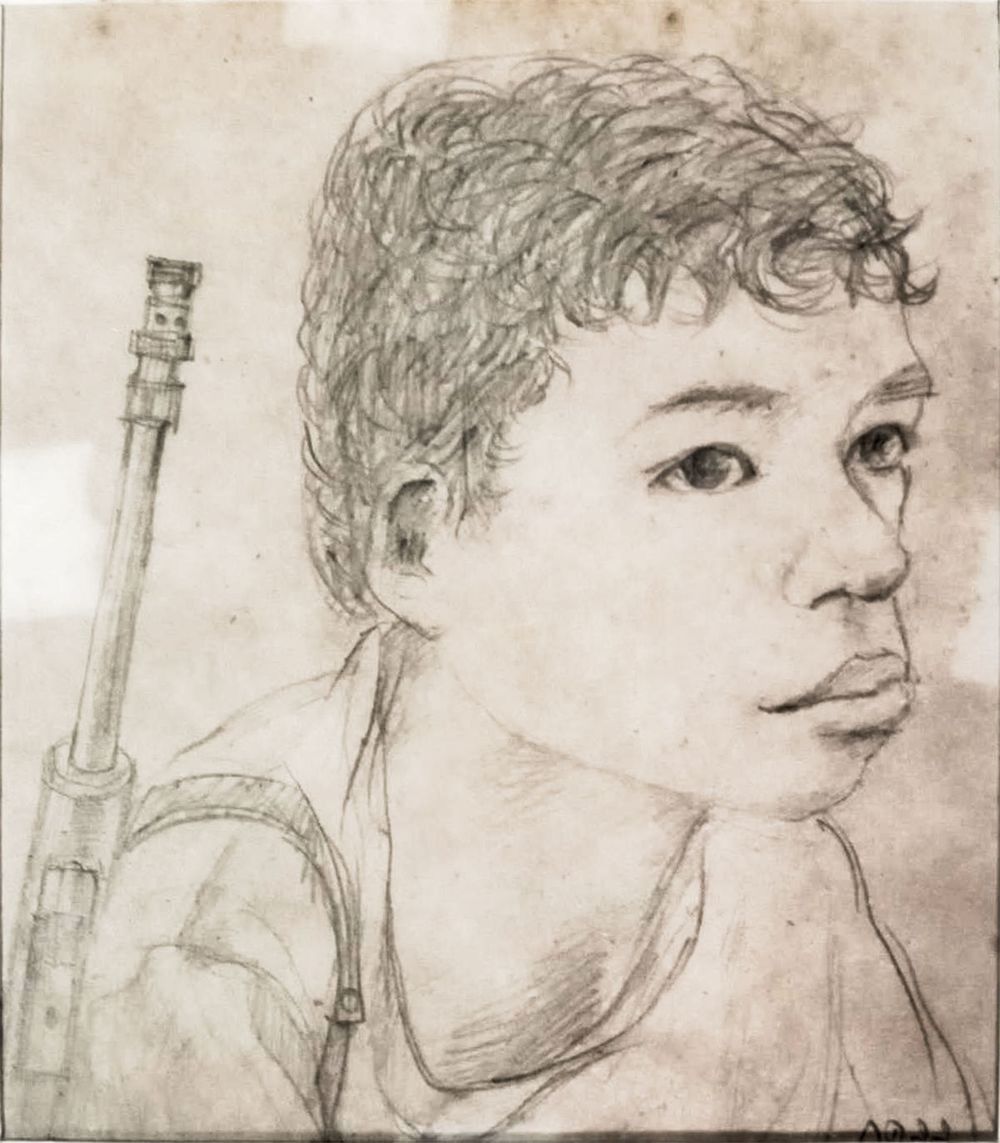
What did you do once you were there?
In the jungle, we called the leadership chat tang, ‘the organisation’. The leadership called me in and said they would send me to Bangkok to learn dentistry. In the jungle, I was known as Khun Kham, because everyone had to change their name when they went in. I chose Comrade Kham. As a child, my aunt used to call me bak kon kham, bak kon kaeo kon kham: her little lump of gold, her little gem. I remembered that, so when they told me to change my name, I didn’t have to think about it.
They said, “Khun Kham, I’m sending you to Bangkok to learn dentistry.” This was what we called thatsana chat tang, an outlook of obedience to the organisation. You had to go wherever the party needed you and do whatever it asked. When they told me to learn dentistry, I asked why. They said, “You’re good at drawing, so you should be able to make nice dentures.” That logic doesn’t really hold up. (Laughs.) I wanted to go back to Bangkok anyway, so I went and studied for six months. The dentist who taught me was also part of the Thai communist movement. He didn’t teach me theory. He just showed me that if you were going to extract a tooth, you injected anaesthetic, worked the forceps here and there, and pulled it out. He taught me to make dentures and let me practise. My first extraction was on a blind person, a tooth that was already about to fall out. It was to build my confidence.
The first person I made a full set of dentures for was called Mo Chu. Mo means ‘mother’. I made her dentures very carefully. She had lost all her teeth. After I fitted them, the villagers told me she walked around smiling all day. It turned out they didn’t fit: she couldn’t close her mouth. So I adjusted them. Still, the villagers were pleased. A full set cost a thousand baht. We only charged the cost of making them. An extraction was ten baht. But I only made one full set. Otherwise, it was one or two teeth at a time. Most of my work was extractions; I didn’t make many dentures.
My main duties as a dentist were, first, to serve the comrades and, second, the local people. Our clinic was a thatched shelter. I designed the chair myself, like a deckchair that could be raised and lowered, with a jute sack stretched over it for the seat. But all the instruments were standard equipment, including the extraction forceps: number one, number two, number three. We received a full set of instruments from Bangkok, and we had a generator too.
I did scaling, drilling and fillings. If someone had gaps between their teeth, I could add dentures to close them. I did it well enough for people to tease me: “Why didn’t you bring the equipment out and use it to make a living? Dr Kham would be rich by now.” (Laughs.) I had a dental assistant. She’d actually graduated in nursing from Prince of Songkla University. She helped Dr Kham, passing me the number-one forceps, the number-two forceps. I was the only dentist. Everyone in the village knew Dr Kham. Some days, there would be a whole crowd of patients waiting.
An extraction cost ten baht, and the anaesthetic cost five. I could give the injections, but I gave everyone the same amount. I didn’t check their blood pressure. There was some risk. The dentist who taught me had told me that people with diabetes were a danger because the bleeding wouldn’t stop. Once, a young Muslim woman came to me. I extracted her tooth in the morning, and that afternoon a relative came rushing over, out of breath, saying she wouldn’t stop bleeding. When I got there, there was blood all over the space beneath the house. Luckily, when I was training, they’d given me a Chinese medicine used by the Chinese army to stop bleeding. I gave it to her to bite down on, and the bleeding stopped. That really gave me a fright.
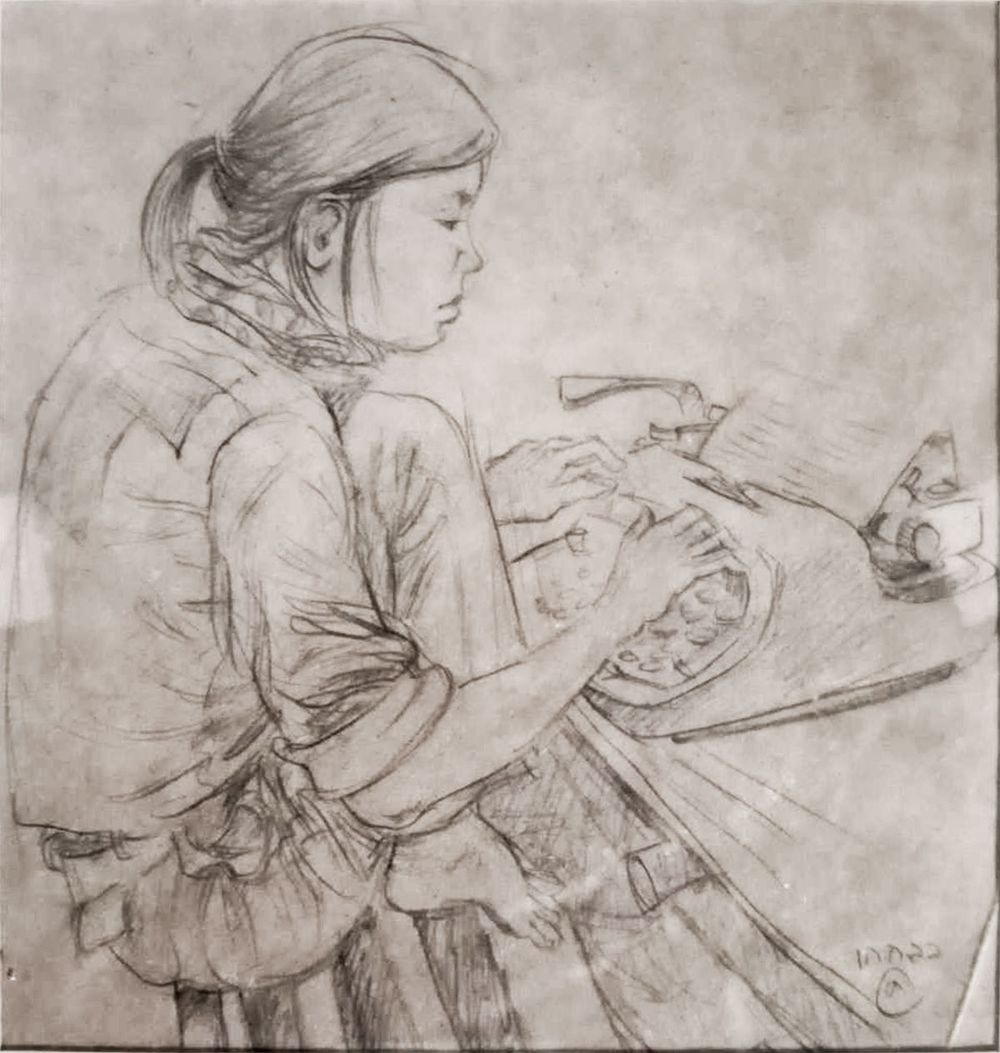
How long did you work as a dentist?
About a year. Then we reached the point we called the collapse of the communist movement. Everyone gradually left the jungle: what we called pa taek. That night when it all fell apart, we didn’t leave because we’d been surrounded and crushed, or because the government had driven us out. We fell apart ourselves. The international communist movement had split into different camps. There were conflicts within world communism. China went one way, Russia another, Vietnam another, Cuba another. Which way was Thailand supposed to go?
And in the three or four years of armed struggle since the students had gone in, the movement hadn’t grown. That was telling. People in Thailand weren’t ready to join the Communist Party. We had taken the Chinese model of using the countryside to encircle the cities. In China, peasants joined the communists and took up arms against Chiang Kai-shek. They were so poor that they flocked to the Communist Party to make a revolution. Thailand wasn’t like that. Where I was in the South, no one joined us in the jungle. They sympathised with us, bought things for us and were friendly towards us, but they didn’t want to come into the jungle. They weren’t poor. Even the laziest teenager, if he wanted a pair of jeans, could tap rubber for two days and buy them. If he wanted to see a film in town, he only had to collect rubber scraps and sell them. People weren’t living with that anxiety about what they would eat that day. Capitalism was also developing. In Europe and Scandinavia, people were saying that if you wanted a fair society and a healthy economy, you didn’t have to become communist. You could have a welfare state. In Sweden, people lived well and poverty declined. So why have a revolution? That made our approach wrong. So we left the jungle and came out to earn a living, as you can see.
Altogether, I spent more than four years in the jungle and did many different jobs. I was a dentist for the final year.
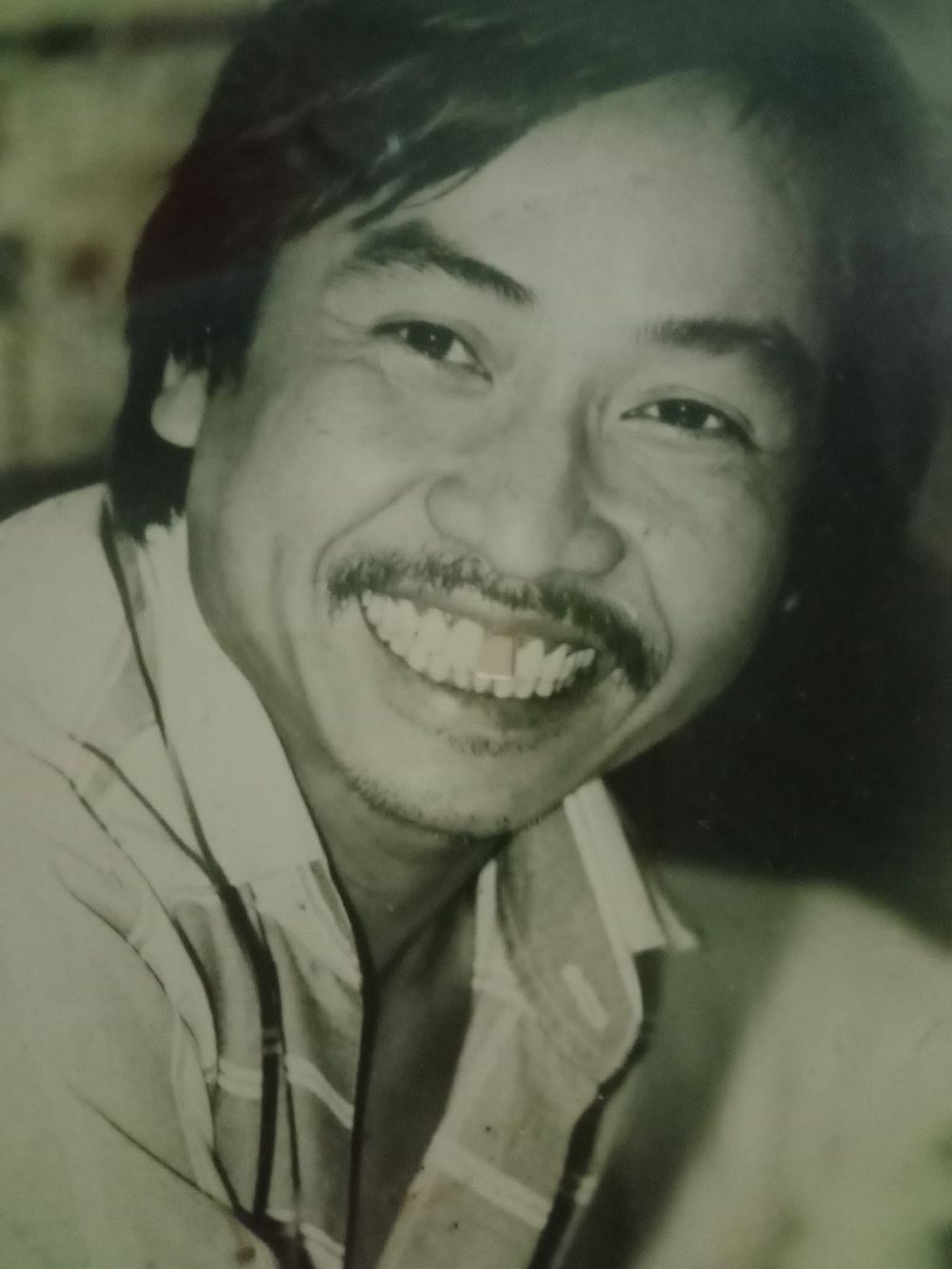
What did you do before becoming a dentist?
All sorts of things. If I’d been a civil servant, you could say I’d been transferred between several departments. Sometimes I was in the education unit, teaching rural children whose parents had gone into the jungle to become guerrillas. Sometimes I handled economic affairs, looking after our unit. If there were thirty of us, for instance, I had to work out how many sacks of rice we needed each month and ask villagers to buy it for us. When Comrade Kham was handling economic affairs, he had two hundred thousand baht in his backpack. That was a lot of money in those days. We had to manage food and daily life in the camp, asking villagers to buy things: shrimp paste, salt, and tinned fish for the sick. If you were ill, you got tinned fish. We foraged for vegetables in the jungle. Usually we ate vegetables, bamboo shoots and banana stems, with no meat. If we had meat, it might be a langur we’d shot. Later, shooting them was banned because we were near Muslim communities. They had religious objections, and if they knew we ate them, they wouldn’t cooperate with us. There were plenty of wild boar, but we couldn’t eat those either. There was some fish.
As far as food went, we were rather deprived. Sometimes it was revolting. We ate to stay alive. But mentally, we were in good shape. The communists had ways of keeping people’s spirits up. In the jungle, we hardly thought about personal matters at all. We got up at half past five and fell into line, and people would take turns speaking: “Brothers and sisters, while we’re here, our brothers and sisters are still going hungry. Workers are being oppressed.” It fired us up. We had military training every day. In the evening, we listened to Siang Khommiunit Haeng Prathet Thai, the ‘Voice of Communism of Thailand’. They gave us encouraging news: communist troops in Nan province had attacked the paramilitary rangers and killed seven of them. We’d cheer. They didn’t mention our own dead. It kept our spirits up. We had entertainment almost every week too, things like ram wong, circle dancing.
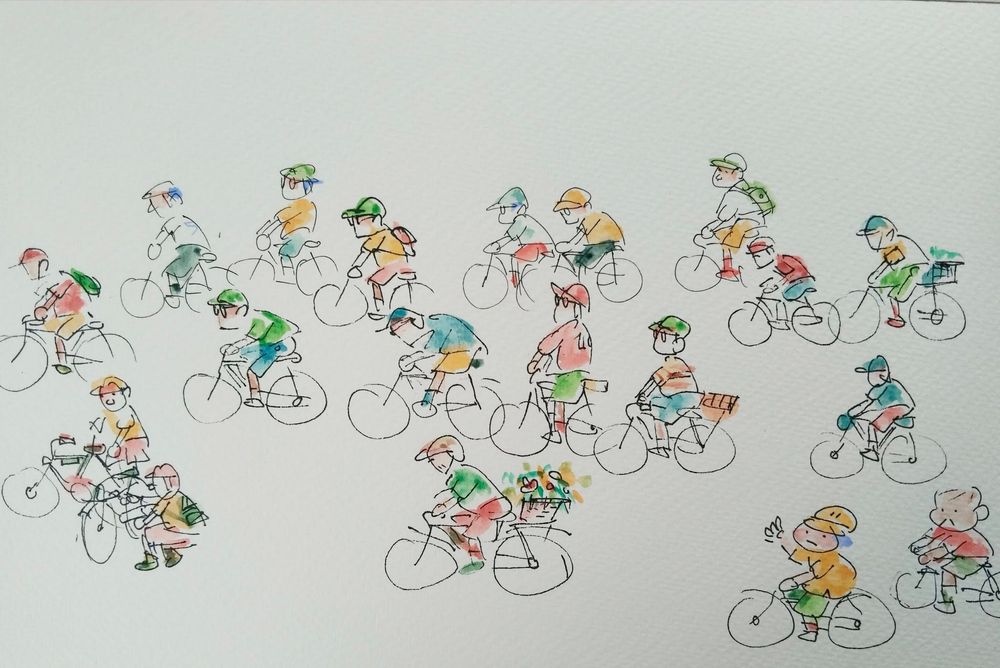
Many comrades fell in love in the jungle.
That happened. Young men and women, intellectuals, peasants: it’s human nature. Once people reach that age, they fall in love. But there were principles to bear in mind. We were at war and could die at any moment. If you didn’t have a lover or a partner, don’t get one. If you had one, don’t marry yet. If you were married, don’t have children yet. Those were the principles, but really they were restrictions. They made rules. Male and female comrades weren’t allowed to court each other openly. If you wanted to declare your love, you had to go through an intermediary. I acted as intermediary for several couples. We would sit there together. Usually it was the man who spoke. One day, we were in a meeting when a male comrade said, “Er, Khun Mali, please stay a moment. Khun Kham, you stay too.” Once everyone else had gone, he said, “Er, Khun Kham, I’d like to declare my love for Khun Mali.” She was taken aback. She said, “Thank you very much for feeling that way about me. But I already had someone before I came into the jungle. He’s in the jungle in the North now.” The man looked crestfallen. He said, “That’s all right. I just wanted to tell you how I feel.” That evening, when we went down to bathe in the river, he tapped me on the shoulder and asked why I hadn’t told him beforehand, so he could have avoided the embarrassment. That was how the system worked. In practice, though, you couldn’t really stop people. It was a matter of freedom. Sometimes they wrote letters to each other.
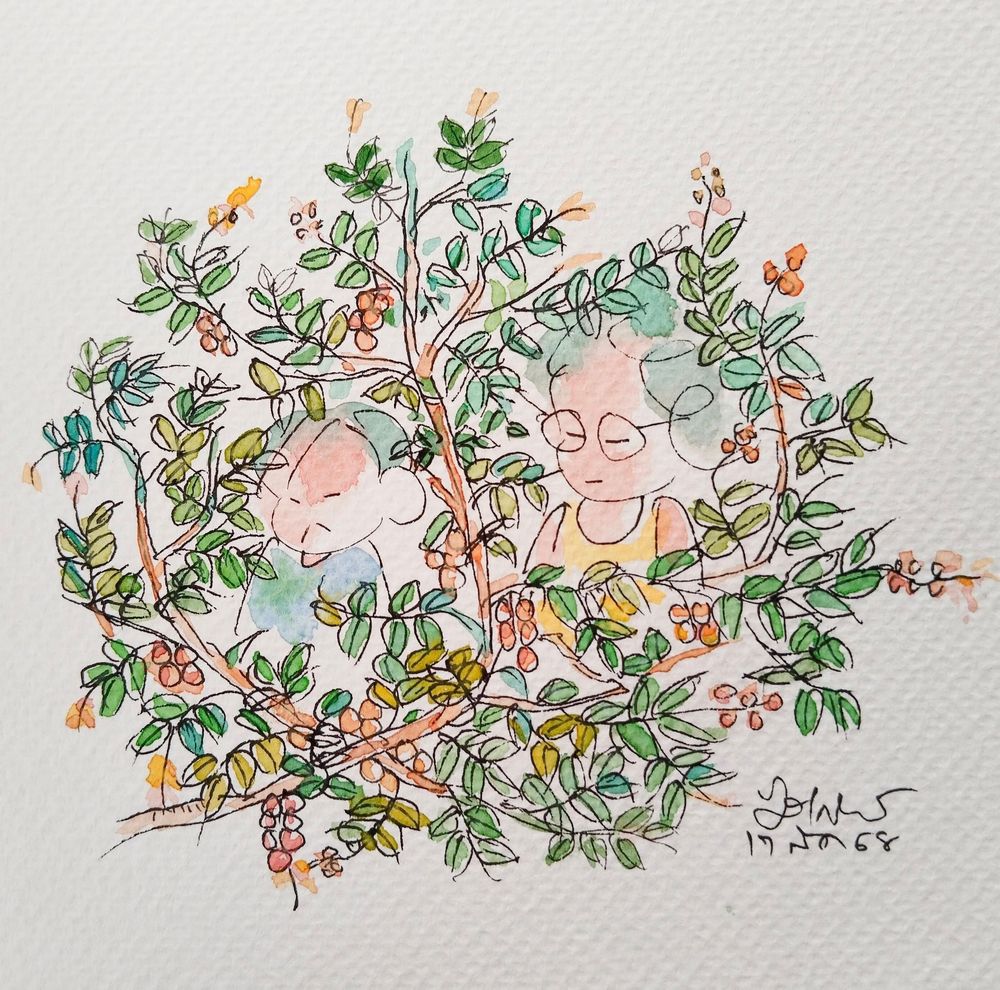
What were living conditions in the jungle like?
Mostly, there were sleeping quarters for the male comrades and for the female comrades. Married couples had houses of their own, and so did the leading comrades, who had trusted soldiers as guards. Ordinary comrades had communal quarters, what we called the men’s hut and the women’s hut. We slept in rows, bathed in the river and used pit latrines. That was pretty revolting too, but after a while you got used to it. We used leaves to wipe ourselves after going to the toilet. Really, I’m not joking. And the intellectuals couldn’t tell which leaves were poisonous and which weren’t. Some picked leaves that made them itch. It took time to get used to it, but we got through it. Before going into the jungle, we had been prepared for what to expect, especially the food and living conditions: eating vegetables and wild yams. We got something sweet once a week, just Job’s tears boiled with sugar.
Were you disappointed when the jungle movement collapsed?
It had been building up. By the third year, we’d begun to realise it would be difficult to carry on. I kept wondering why the revolutionary momentum was declining. Why wasn’t anyone joining? Our numbers stayed the same, with just one or two new people. The intellectuals were used to thinking things through, but if we asked the leading comrades, most of whom were peasants, they wouldn’t know. For example, we’d ask why China and Russia were in conflict, and they couldn’t answer. The communist system was hierarchical. All direction came from above. But intellectuals had been trained to think. Looking at the situation inside and outside the movement, the government was also winning people over by improving rural areas: groundwater, piped water, electricity. It was a battle for popular support. Conditions weren’t ripe enough for people to rise up and join the revolution. That was the main reason. Capitalism had also developed further. Before, it relied on oppressing workers, but later there were incentives to work. The more you worked, the more you earned. It had become fairer.
Then came the question: if the aim of revolution was to use armed struggle to overthrow the old state and establish a new one where no one was exploited and people could live better, perhaps armed struggle was no longer the right way. So some on the left came out of the jungle and took their struggle into parliament. Quite a few became politicians. I left in June 1981.
How did you see your own future at that point?
From the moment I stepped out of the jungle and boarded the Hat Yai–Bangkok train, I asked myself how I’d ended up here. First, I felt lucky to be alive. Second, I accepted the fact that we had lost. Third, I would start life again. Fourth, I would send word to my relatives to let my mother know I wasn’t dead, that I was coming back.
I came out of the jungle with five hundred baht for the train fare. By the time I got to Bangkok, I had two hundred left. I stayed with a friend for a day or two. In the morning, I went out to buy the Ban Muang newspaper and looked through the job advertisements. I circled them with a pen and took the bus to apply. They’d look at me, thirty years old, and wonder how I could still be out of work. I looked grubby too. People who’d come out of the jungle were easy to recognise: yellowish skin, a darkened complexion, cuts and scrapes all over. I applied to several places, but no one would take me. Then, when offers did come, three companies offered me work at once.
What kinds of jobs did you apply for?
I applied for a job designing clothes, but I’d only worked a few days when the company went bust. One job that lasted a bit longer was in the art department at Thai Watana Panich publishing house. At the same time, I got a job at the Imperial Hotel, doing art and design work as well. The hotel and publishing jobs had different hours, so I shuttled between the two.
Eventually, I got a job at Matichon in advertising art, designing advertisements. I’d actually wanted to work in the editorial department, doing art for the news pages, but there wasn’t a vacancy. They asked when I could start. In those days, Matichon understood people who’d come out of the jungle. The person who brought me in had come out of the jungle too. His name was Soem Bunwanit. Back then, perhaps half the newsroom were communists. (Laughs.)
I worked in advertising art, designing advertisements for products advertised across the group. Some advertisements came through agencies, so we didn’t have to do those. But we produced the smaller advertisements that hadn’t been given to an agency. Once I was promoted to head of the art department, I stopped doing the design work myself.
How did you start working as a cartoonist?
I just had the itch to draw. One day, there was a news story about Yantra, so I drew a cartoon poking fun at him and showed it to Phi Thian, Sathian Chanthimathon. He was in charge of Matichon Weekly at the time. When he saw my drawing, he asked, “So, you want to draw cartoons?” I’ve been doing it ever since, more than forty years now, and I’m still at it. My work is political parody and social satire.
You recently received the Narathip Award as a cartoonist.
Yes. The award doesn’t divide people into categories by the type of work they do. It honours people who have worked for society consistently over a long time, whether diplomats, NGO workers, academics, conservationists or writers. There are no separate categories. When they contacted me, they said they felt that Mr Thawisak had stood by his work consistently for many years, and that the work had a certain quality. It was encouraging to know someone valued what I did. I had no idea I would receive it. I’d never imagined or dreamed of it. I just did my work. I’d never thought about winning an award. Being able to make a living from my work was already wonderful enough.
Fifty years after 6 October, what effect do you think those events have had on the progress of Thai society?
I don’t think they’ve brought progress. It’s like the struggle for democracy: things have got even worse. I’m not saying the 6 October movement was wrong. There must have been many factors holding us back. But there has to be some kind of answer. I believe Thai people need to sit down and talk things through again, because everywhere you look, we seem to have reached a dead end.
I keep thinking that I want to see things change for the better. I want to see Thai people able to talk to one another as friends, disagree, have a drink together, and then each go home. But what is this? They’re ready to kill one another. Just look at social media. I want to see constructive politics with a democratic spirit. The principle is simple: listen to one another.
That comes through in my cartoons too. When I use humour, I don’t abuse people as pigs or dogs. They’re human beings too. If people don’t like it, that’s all right. I know that to get people to like something, or click ‘like’, you have to give them the satisfaction of seeing someone taken down. But that isn’t me.
Related Article: Thaweesak Yaimuang : From Comrade Kham to “๋Jook Chaikha,” One of Thailand’s Best-Known Cartoonists
© 2025 Khaoyai Connect. All rights reserved.
No part of this content may be copied, modified, or distributed in any form without prior written permission.
