


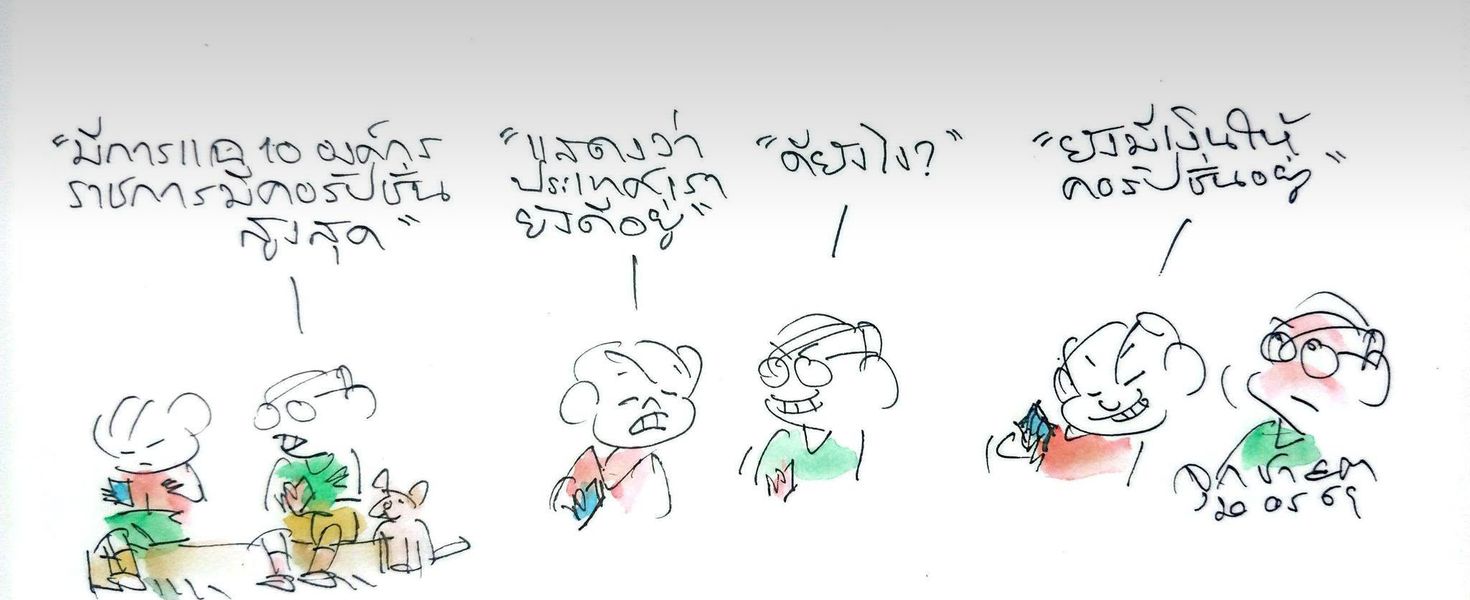
Thaweesak Yaimuang
From Comrade Kham to “๋Jook Chaikha,” One of Thailand’s Best-Known Cartoonists
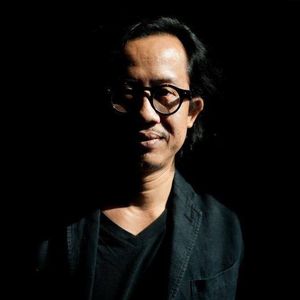
A Country Boy, a Janitor, and the Search for the Meaning of Life
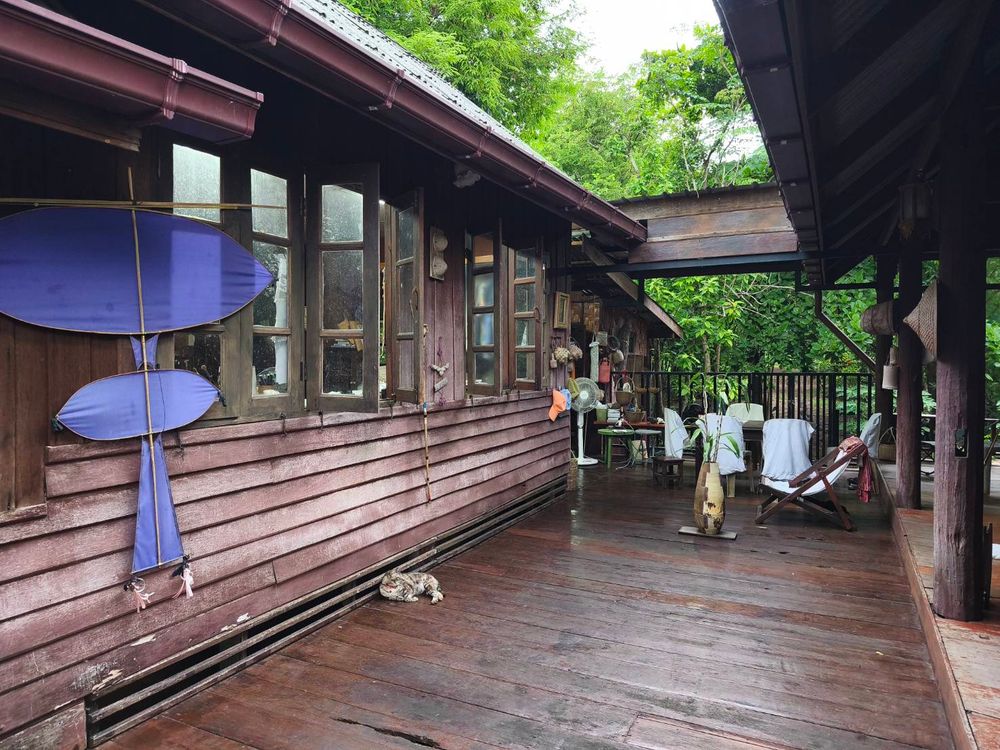
In a house embraced by trees large and small, if one were to define its architectural style precisely, this home would be called a “huean koei,” a traditional house that preserves a distinctive character while blending naturally with the abundance of the Khao Yai forest. A 75-year-old man sits behind his work desk on the open terrace where the raised platforms meet. The brush in his hand moves deftly across a sheet of white paper, before two characters gradually emerge from just a few lines of ink.
At first glance, it looks effortless. But before a single three-panel cartoon can come into being, the man behind the lines must read the news, think, analyze, and thoroughly distill the issues of society.
Many know him by his pen name, “Jook Chaikha,” a political cartoonist who has been with readers for more than four decades. Many know him by his real name, “Thaweesak Yaimuang,” whose highest position before retirement was Director of Advertising at Matichon Public Company Limited. His friends, however, may know him better as “Sia Wee,” because of his distinctive way of dressing—always wearing overalls over a shirt.
But before he became the many names by which people in different circles came to know him, he was an ordinary young man full of dreams from Uthumphon Phisai District, Si Sa Ket Province, who made his way to Bangkok to study at Poh-Chang. He had once been an art teacher despite never finishing his studies, a janitor at the Ministry of Education, a labor activist, and someone who had lived in the forest with the Communist Party of Thailand.
The life path of Thaweesak Yaimuang is therefore not unlike the political history of Thailand over the past half-century—only told through the eyes of one man who once believed he could change the world.
The Boy from Uthumphon Phisai
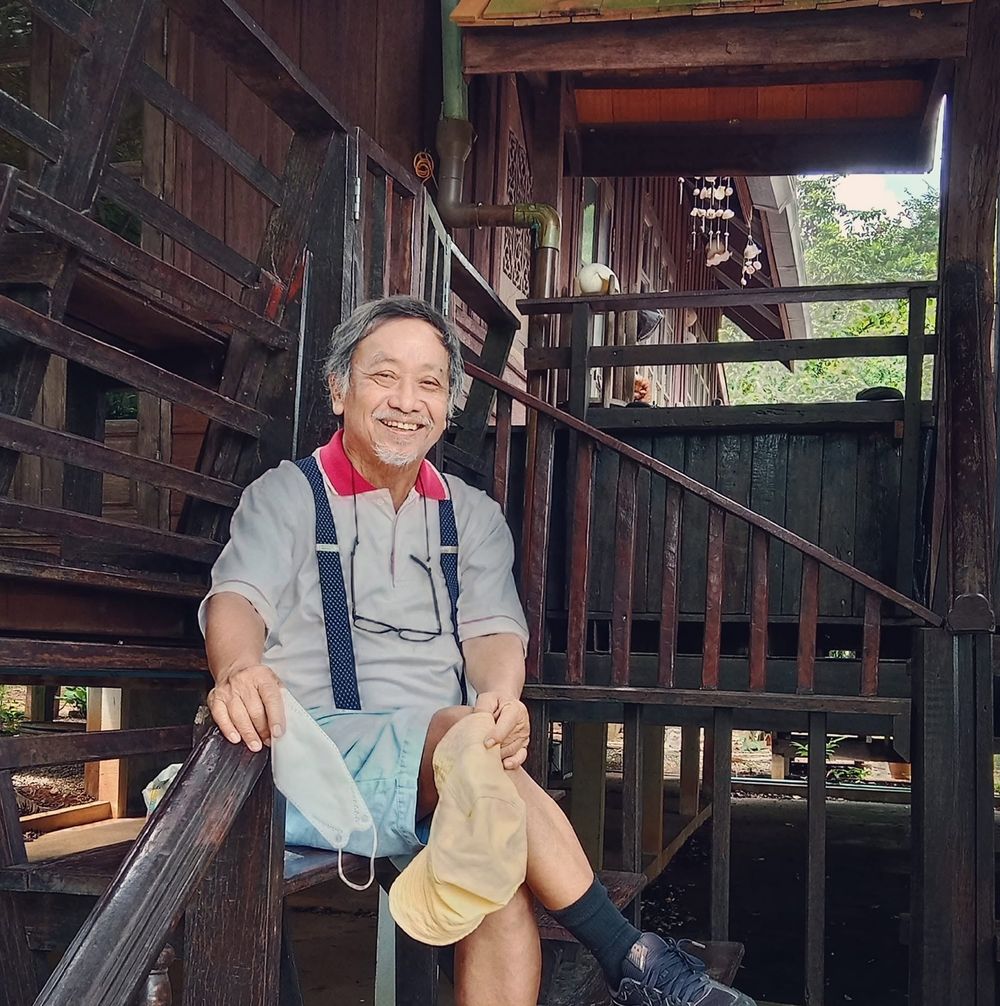
Thaweesak Yaimuang is from Uthumphon Phisai District, Si Sa Ket Province. He could hardly believe that he had passed the entrance examination for Poh-Chang College in Bangkok. In those days, the only way to get to Bangkok was by train, and he could not even imagine what the “City of Angels” would look like. Although his parents were schoolteachers, he had never been to Bangkok before.
“I finished Mathayom 6 at Kamphaeng School in Uthumphon Phisai District, Si Sa Ket Province, which was the only secondary school in the district. Back then, when I passed the entrance exam for Poh-Chang, it was a huge deal—almost like being accepted into Chulachomklao Royal Military Academy. I studied in the handicraft major, a program specifically geared toward becoming an art teacher.”
A new world was opening before him.
For many people, Bangkok is a city of opportunity. But for Thaweesak, Bangkok was a city of questions. He saw inequality everywhere. He saw exploitation and relentless competition.
Once he began living in the capital, his perspective and his life changed completely. The more he read literary works translated from foreign languages, along with the writings of several progressive Thai authors, the more questions he began to ask himself.
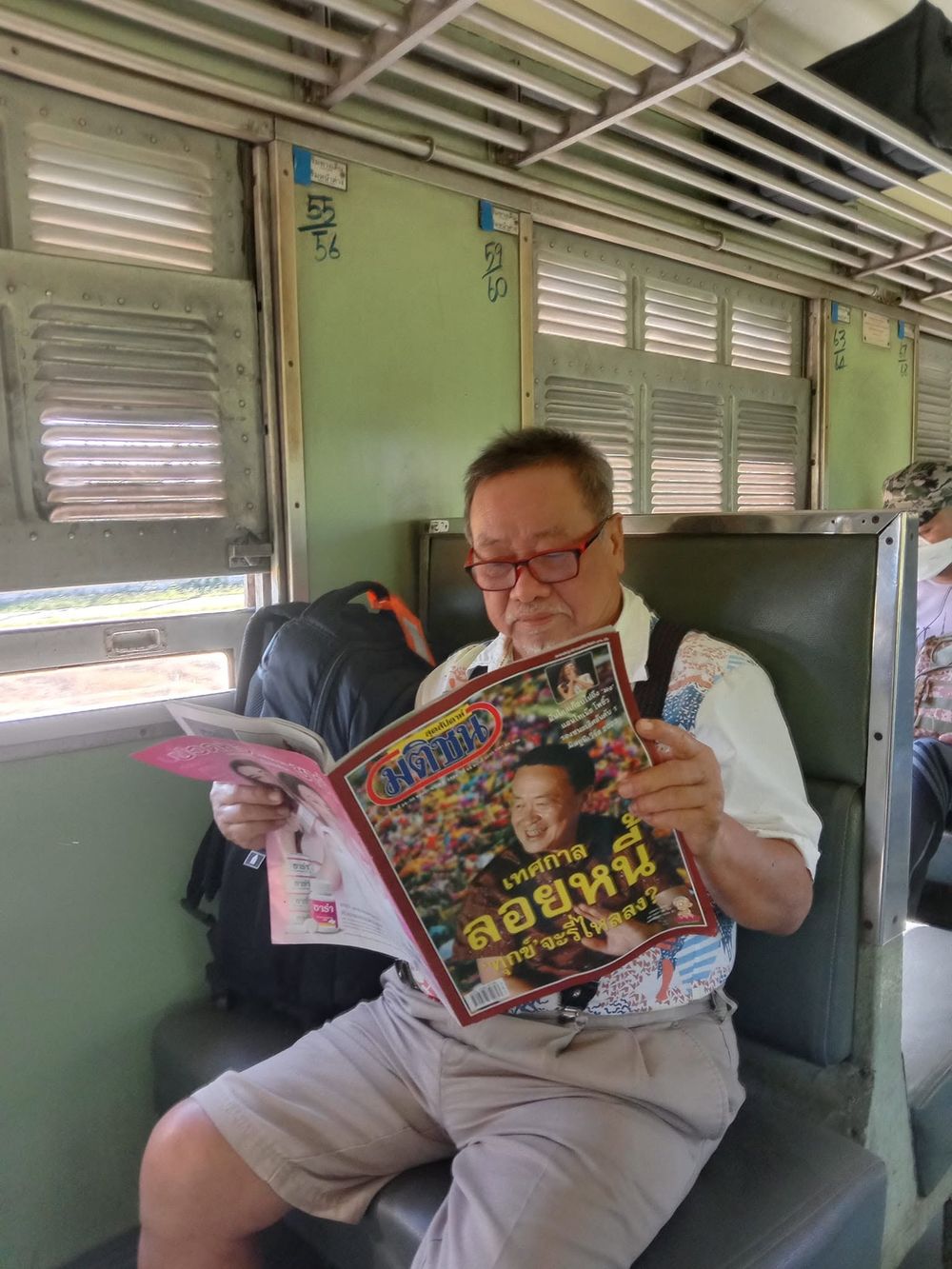
Books That Changed a Life
Within the walls of Poh-Chang, he did not learn only about art. He encountered another world he had never known before—the world of literature, the world of ideas, the world of social and political questions.
“I read a lot of literature. I started having some friends at Thammasat, and I got to know thinkers and writers such as Surachai Jantimathorn, or Nga Caravan. That was when I began entering the questing movement. My heart leaned in that direction. So I only studied halfway through. But the reason I didn’t continue wasn’t only political. It was also because things were difficult at home. My father had passed away, and my mother alone had to support several children through school. So I decided not to continue.”
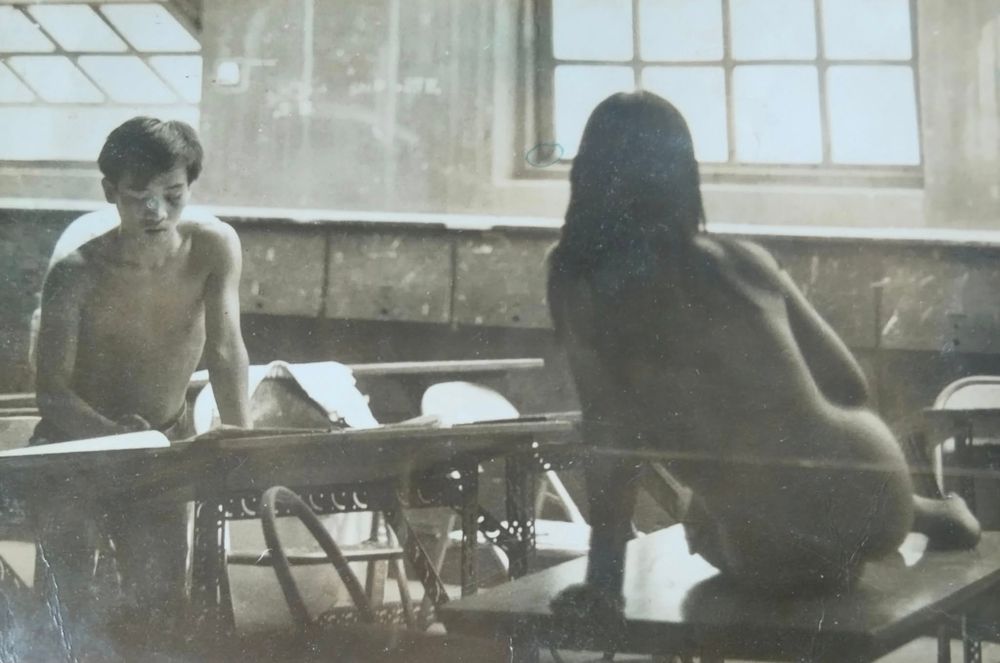
The Art Teacher Who Began to See Another Side of the World
The knowledge he had managed to gain over three years at Poh-Chang was still enough to help him find work and support himself. He became an art teacher at the Tia Aia Association, or Saman Suksa School, a Chinese school in the Yaowarat area, where he worked for three years.
Life went on simply. By day, he taught children how to draw. By night, he read books. But the more he read, the more questions grew in his mind. Thailand was changing. The student movement was beginning to mobilize. Workers were starting to demand their rights. Farmers were questioning the economic structure. And Thaweesak himself was also searching for certain answers.
The Janitor with a Secret Mission
“I joined the Workers’ Coordination Center of Thoetphum Chaidee and Thianchai Wongchaisuwan, or Yuk Si-ariya. By then I had resigned from teaching and begun doing political work seriously. My comrades sent me to work as a janitor at the Ministry of Education. I mopped floors and cleaned bathrooms there. The goal at the time was to organize workers inside the ministry.”
Because of his love for art, even if his hands were sometimes dirty, he could still draw well. Even while doing serious clandestine work, he could not help but let his artistic talent show.
“At that time, I still wasn’t a Party member. I was only part of the Youth League of Thailand, or S.Y.T. Even though I was just a janitor, people in the ministry saw that I could draw a bit, because someone had seen me doodling. So they offered me a clerk position as a temporary employee with a monthly salary of 800 baht. I was assigned to draw cartoons for Warasan Chaoban, which was overseen by Dr. Ekkawit Na Thalang. I was a very famous janitor back then, you know. I remember Khunying Amphon Meesuk, the Director-General of the Department of Curriculum and Instructional Development at the time, even came to see for herself which janitor it was who could draw so well. After that, the events of October 6 happened, and the whole thing was exposed. Everyone then knew there was a communist hiding there.”
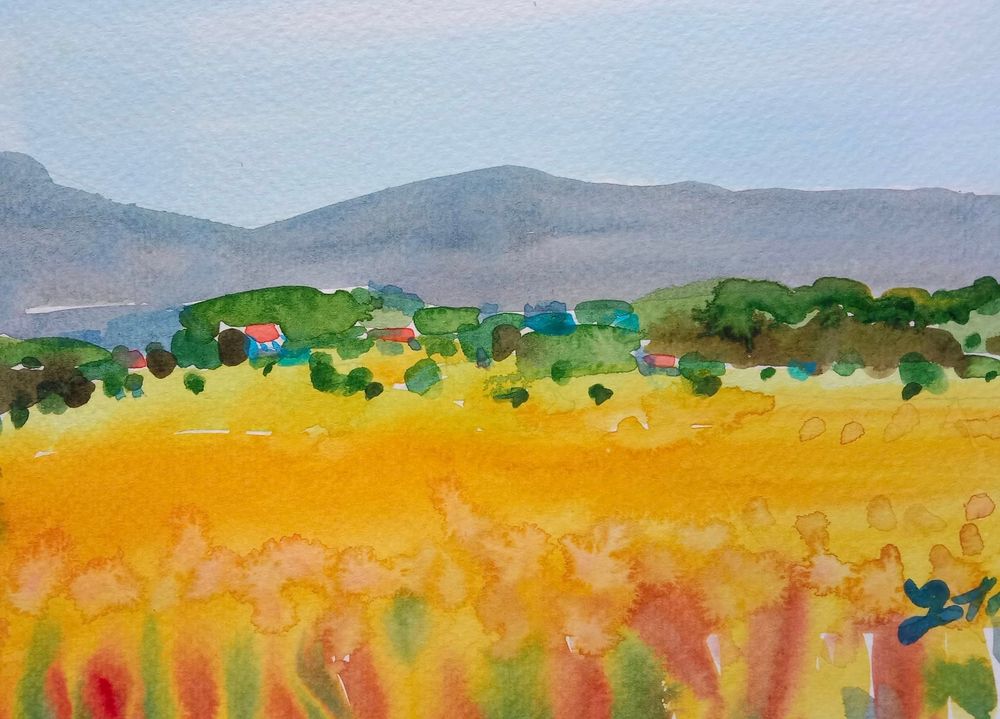
The Day the World Changed
After the events of October 6, 1976, Thailand changed. For some people, the incident may have been merely news on the front page of a newspaper. For others, it may have been a wound in history. But for a number of young people, it was a turning point in life—including a man named Thaweesak Yaimuang.
He was no different from other leftist students who went into the forest and took up arms. But his life always seemed to carry the kind of unexpected punchline found in cartoons. Whenever he encountered something serious, even life-threatening, colorful incidents would somehow intervene and sweep his life in another direction. Perhaps this was because, as an artist, he possessed an innately optimistic way of looking at the world.
“I went down south to Songkhla. I stayed at Khao Che Te, farther away than my friends, right in the middle of a Muslim community. After I had been there for a while, they organized the Thai Muslim Liberation Army. In the forest, everyone called me ‘Comrade Kham.’ The reason was that my aunt often called me ‘bak kon kaeo kon kham,’ an Isan expression. I stayed in the South for four years, long enough that I almost learned to speak the local language. My main duty was to be a dentist.”
That is the twists and turns of his life: from a country boy to a teacher at a Chinese school, from a fake janitor to an accidental fake dentist. He may not have held a license to practice the healing arts, but at least he had studied art before. (Laughs)
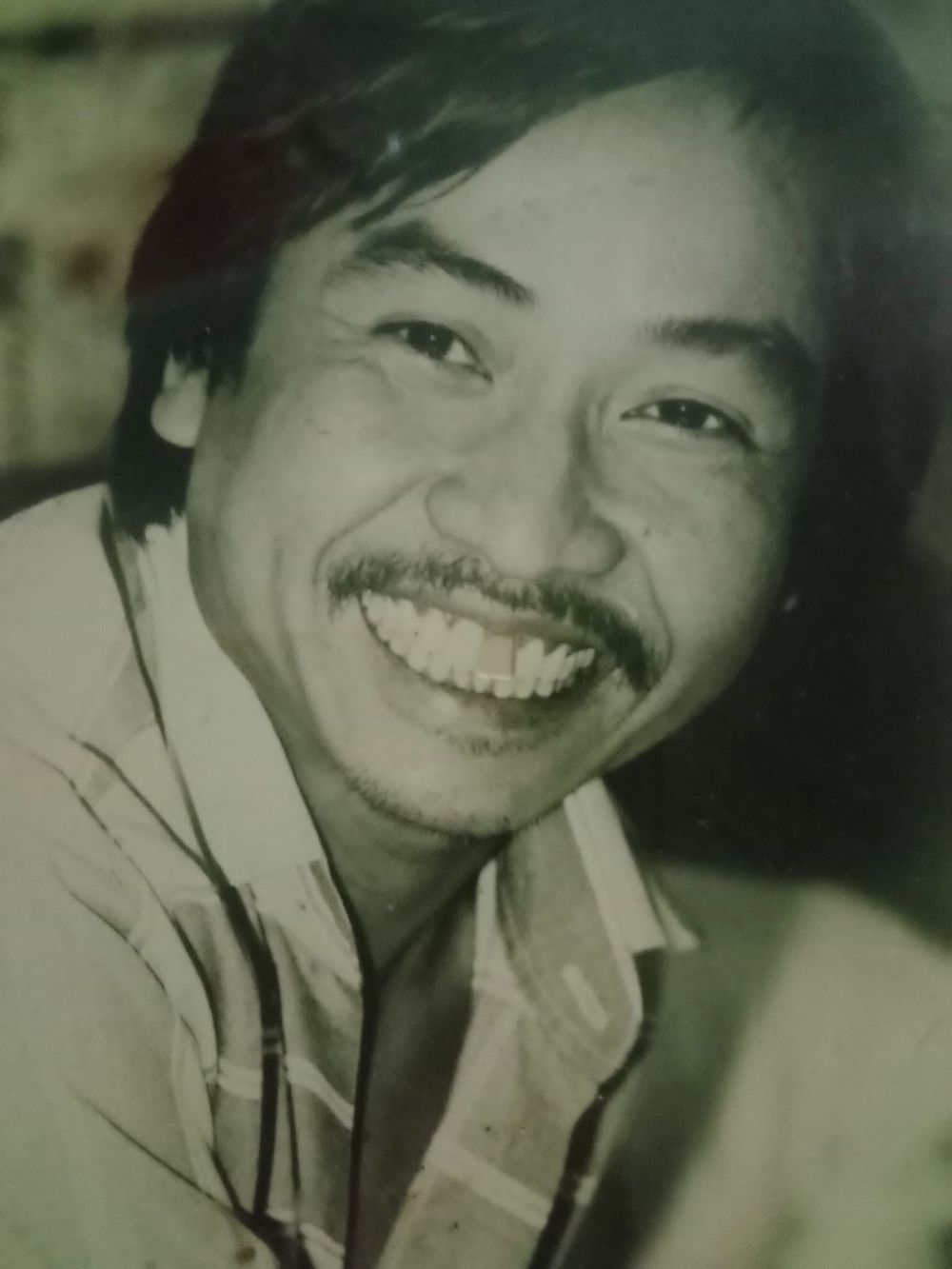
Comrade Kham, the Forest Dentist, and the Dreams of a Young Man
“They sent me up to study dentistry.” (Laughs) “I came back to Bangkok and learned dental work from a dentist who was a member of the Communist Party. After secretly studying until I understood everything, I returned to Songkhla and opened a clinic in the secure zone. We built a makeshift pavilion. I had a proper-looking gown to wear, though it wasn’t white—because in the forest it would get dirty and be hard to wash clean—so I wore blue. I remember that pulling teeth for people in rural communities was very easy, because most of their teeth were already so decayed they were about to fall out anyway. What required more skill was filling teeth. I remember that extracting a tooth cost only 10 baht: 5 baht for the anesthetic, and the other 5 baht went to the Party as a contribution to the army. Actually, I was no ordinary man, you know. I could do dental work just like a real dentist. I could make individual false teeth. I could make a full set. I could drill teeth and build them up. I made the dental chair myself. For the face covering, I cut up a jute sack and used that. The villagers there called me ‘Boe Mo Yi Ki.’ Some called me ‘Yi Ki Kham.’ Nobody cared whether I was a real doctor or not. I could treat them, and everyone willingly called me ‘Doctor.’ But even if I was fake, the nurse was real. She came from Prince of Songkla University Hospital and helped pass me forceps one and forceps two. I worked as a dentist for a little over a year.”
Comrade Tul
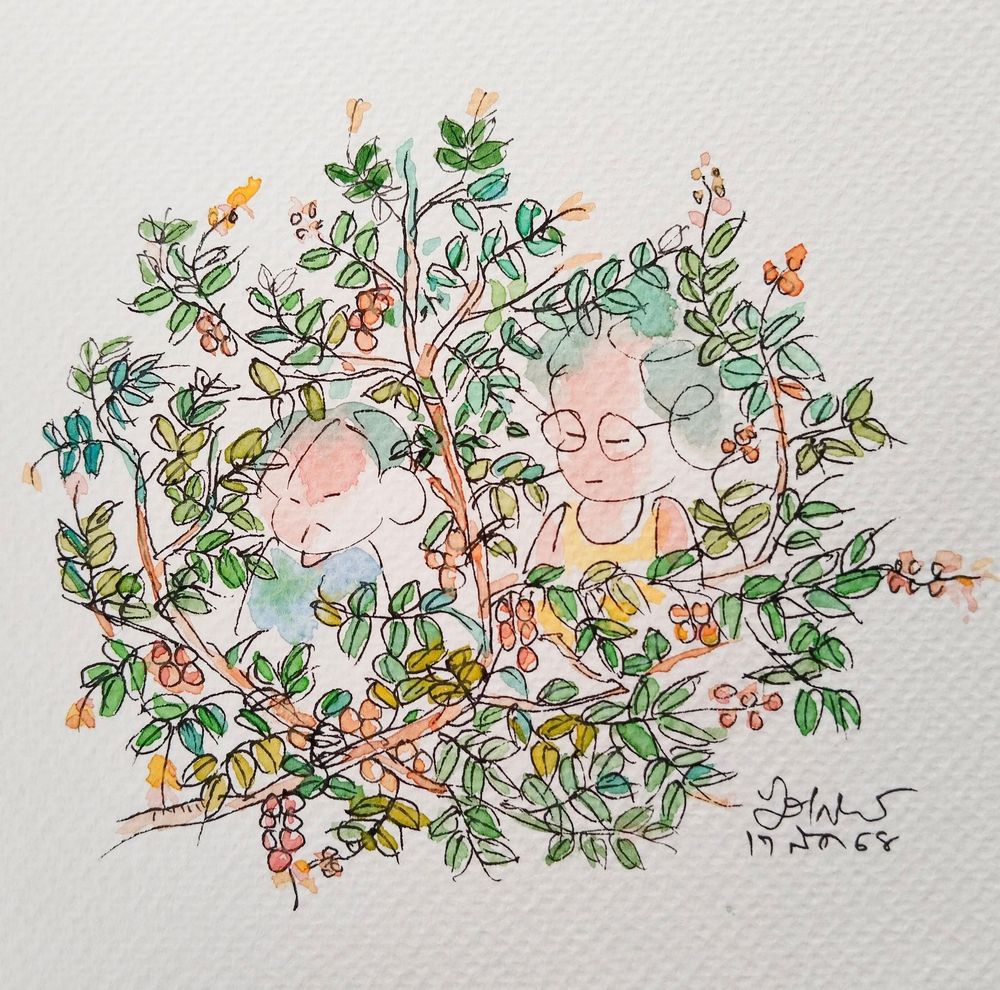
All that past was buried along with antique dental tools that could no longer be used. But his time in the camp was not entirely wasted. When the day came to return to the city, he did not come out empty-handed. He came out holding hands with “Comrade Tul.” She was a fair-skinned woman of Chinese descent. Before going into the forest, she had studied at the Faculty of Political Science, Thammasat University. The two have shared their lives together until today.
“I went in as one and came out as two.” (Laughs) “I was a janitor, and she was a political science girl.”
The Day the Dream Began to Change Shape, and a New Chapter of Life
After graduating from “the forest,” he returned to the normal system of life. He opened the classified pages of Ban Muang newspaper, looking for work among the many job advertisements. By then, he was 30 years old. His body was dark and sunburned from having lived in the forest and mountains for so long. Wherever he went for a job interview, people asked why someone his age was still looking for work. But it did not take long before he began a new working life that made full use of his abilities without having to go undercover anymore. His first place of work was Thai Watana Panich Printing House. He then moved to the art department of The Imperial Hotel, owned by Akorn Hoontrakul. Finally, on the recommendation of “Serm Phunphanit,” the owner of Pimdee Printing House, he moved to Matichon.
“In those days, Khun Kanchai was considered to have done a great service for people who came out of the forest. He did not look down on them. He even let people start work without filling out any job application forms. He trusted that if someone dared to apply for a job, they must surely understand the work process. So he hired them immediately. Actually, I wanted to be in the editorial department as an assistant or to do illustrations, but they already had people there. So I had to work in advertising, and I stayed in that department all the way until retirement.”
And this was the beginning of Thaweesak Yaimuang’s life as a cartoonist...
The Birth of “Jook Chaikha”
“At first, I worked in advertising art design. Later, I became director. I remember that at the time, the Yantra news was very big. So I tried drawing a cartoon and proposed it to Sathian Chanthimathorn, who was then the editor of Matichon Weekly. He said, ‘Go ahead. Draw more.’ That was how I became a cartoonist from then on. Later, Praphan Phonlasawok asked me to draw for Technology Chaoban magazine, and today I still draw for I-Shann Ways Magazine.”
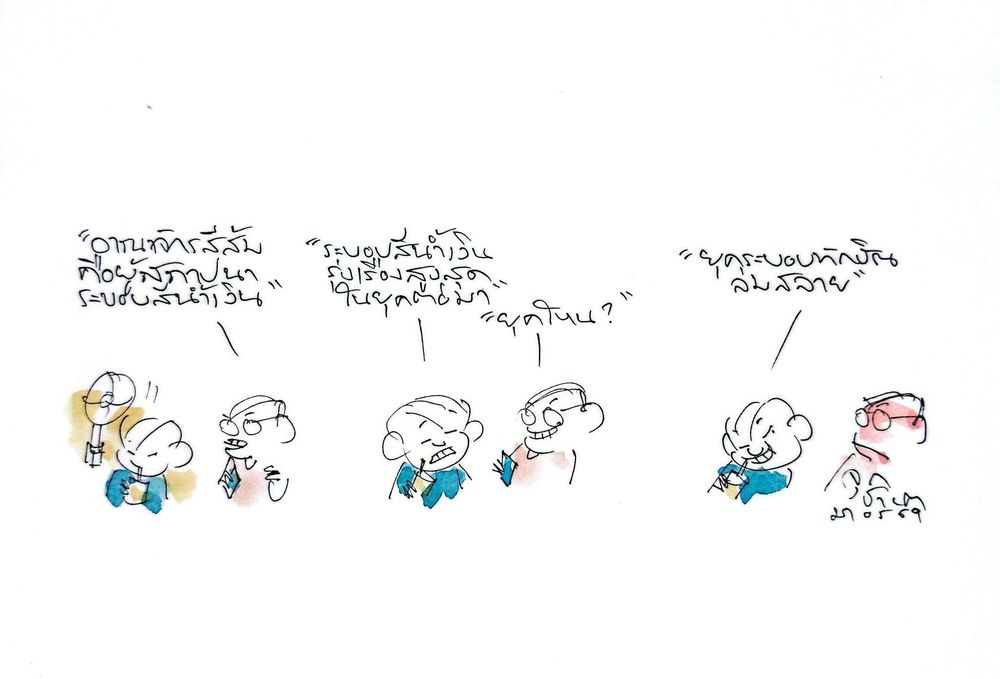
Anyone who is a fan of “Jook Chaikha” will know that the lines and colors of his work are unlike anyone else’s. His characters are drawn with very few lines, yet they have distinct personalities. There are only two or three main characters, but primarily there is one serious character and one who delivers the punchline. Every once in a while, a third character appears to help tell the story, but usually two are enough. As for the colors, readers will see that “Jook Chaikha” uses watercolor to paint. He does not use computer coloring in any way. From the beginning of his regular work until today, he has preserved the same charm of watercolor.
“I feel that watercolor suits me, so I have stuck only with watercolor. I have never painted in oils or acrylics. I like watercolor because it has a moist, refreshing quality, even though it is more difficult to use than other kinds of paint. But I do it every day, so I can now control it as I wish. As for drawing cartoon lines, I don’t sketch. In the early days, I did make pencil sketches, but when I inked over the pencil lines, the lines turned stiff. So I stopped sketching. I draw directly every time, following what I have already thought out in my head, and I have done it this way until my hand has become used to it.”
What is harder than drawing the cartoon is thinking of the story. He has to read the news and watch the news. He must identify which issues are heating up, which stories are worth following, and analyze them clearly. Then he sits down and distills how to tell the story, how to land the punchline, whether the gag should be serious or humorous, and what words he should use to make it as short, concise, and direct to the main point as possible. So the process behind the cartoons that readers see as only a few panels has, in reality, already been through a great deal of inner struggle.
“Normally, I submit cartoons every Wednesday. So I have to have the idea ready by the night before. Or if I still can’t think of anything, I wake up in the morning and watch the news again. Sometimes I may get an issue that has just come up. Once I have the issue, I have to think about how to satirize it, and it has to be a little funny too. The hardest part is how to end it. Once I have finished thinking everything through, it takes me only five minutes to draw the cartoon. But the thinking process takes a long time. Actually, I feel a bit bad for the readers, because my work looks so easy.” (Laughs)
Today, the pen name “Jook Chaikha” has been with readers for more than 40 years. He himself always checks with the editors to ask whether people are still reading him, whether his work is still contemporary. If there are no readers left, they can tell him, and he is always ready to stop. Yet the editors have never rejected his work. That shows that readers have continued to welcome his work warmly all along.
Characters Who Never Grow Old
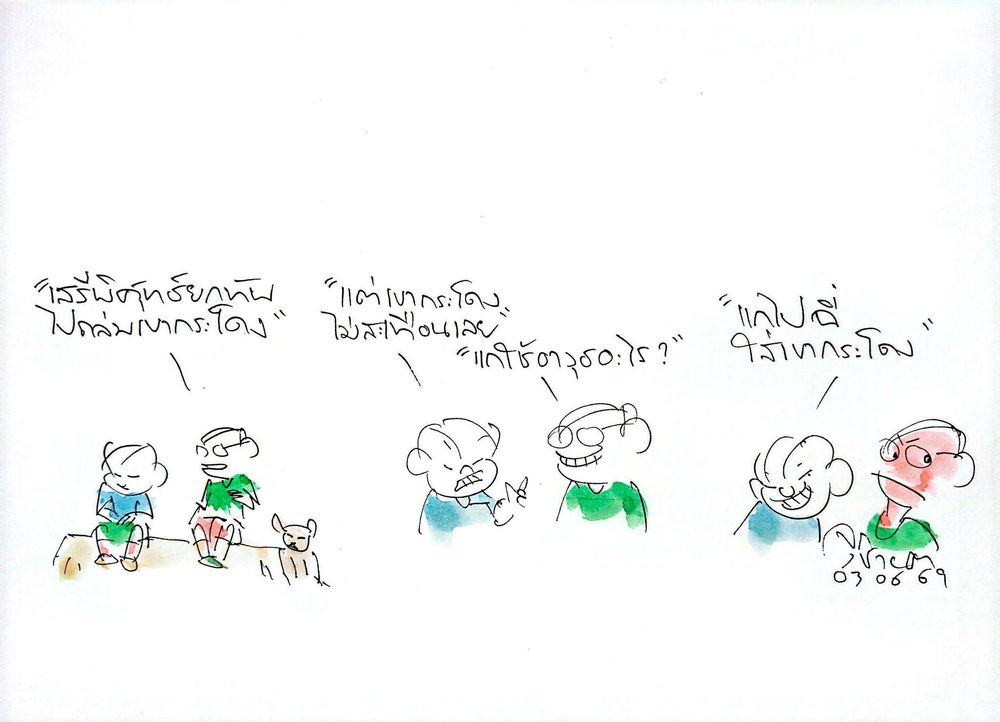
“My cartoons mainly have two characters. The first one is me. The other is Suphot—Suphot Chaengreo, the former editor of Silpa Wattanatham magazine and a close friend. Most of the time, I have Suphot start a conversation with me, then I answer him. In the third panel, there will be a little twist. I draw the mouth to look slightly mocking, as if to say, ‘See? This is how it is.’ Then my own character says, ‘Huh,’ as if asking, ‘Is that really so?’ That is exactly the style of my three-panel cartoons. See? It takes less than five minutes to draw, so I feel bad for the readers.” As Thaweesak speaks, he draws, showing just how precise his hand is in capturing the characters—and how quickly he can still draw, almost like the hand of a young man.
“I chose Suphot as the model for the character because, first, we are close, and second, he has the personality of a scholar and looks easily irritated. His way of dressing is always immaculate and never changes. His hair is combed perfectly flat, he wears glasses, and he carries a James Bond briefcase. His personality is easy to remember, so I used him as a model. Most of the time, I draw him with his brows furrowed. There used to be another character named Prayong, but I stopped drawing him because having three characters made it harder to play with the gag.”
The body of work he has accumulated over many years, with such a clear identity, led a master’s degree student from Mahasarakham University to call and interview him in order to study his work for a thesis.
“He asked what kind of cartoon style I have. I told him it is social satire that reflects politics. The standpoint of Jook Chaikha’s cartoons is this: not aggressive, friendly, able to satirize but not crossing the line too far. The people being satirized may feel a little annoyed, but not furious, because I am not insulting anyone’s parents or anything like that. In addition to always keeping an eye on ourselves, we must also listen to feedback from the editorial team. If our cartoon affects the person being referred to too much, it may affect the work of the editorial team. It may even affect advertising revenue. In Thailand, the Matichon group can be considered to have a high working standard. If compared to boxing, it is the Rajadamnern Stadium. Once we get to fight here, we have to do our best to preserve that reputation.”
The Inspiration Behind “Jook Chaikha”
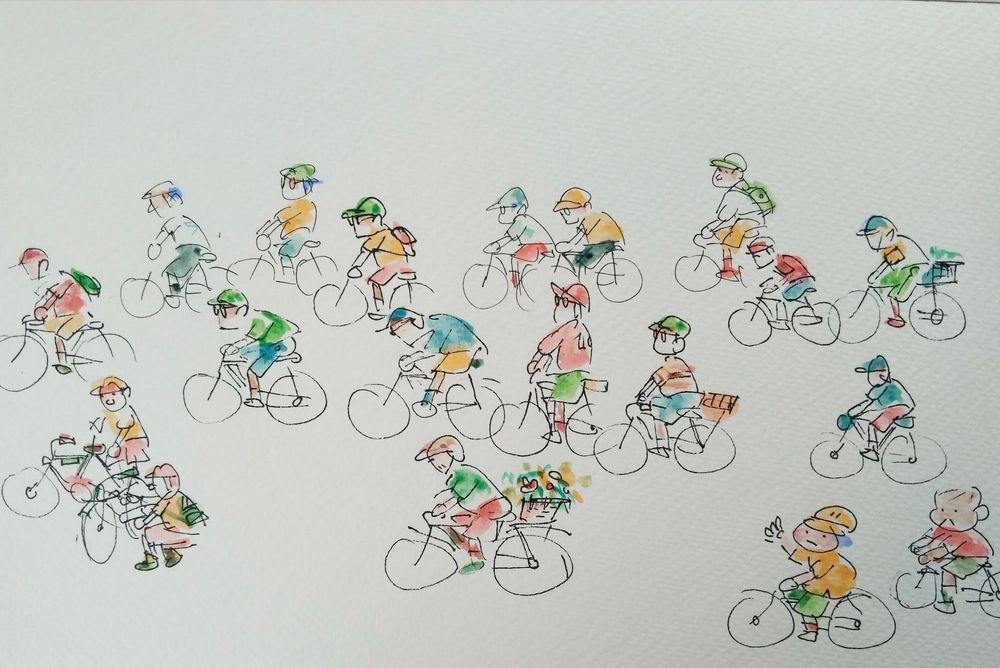
As for the inspiration behind his creative work in this field, he does not deny that Charles M. Schulz, the creator of Peanuts, whose main character is Snoopy, is one of them. Another work he read and loved was The Adventures of Tintin by Georges Remi. Among Thai cartoonists, he admired Prayoon Chanyawong, followed later by Chai Rachawat. At the same time, several classic literary works that have driven his life all along have greatly influenced his way of thinking and working. These include Phi Sat by Seni Saowaphong, which he read over and over until he wanted to become “Sai Sima” and “Chanthra Non Din Daeng.” He read Mother by Maxim Gorky, and many works by John Steinbeck.
Today, Thaweesak Yaimuang can be called one of the few remaining comic-strip cartoonists in this country, and he continues to produce work consistently. He still submits cartoons every Wednesday. He still follows the news of the country. His thoughts and judgment remain clear. And when he talks about the books he loves—books that unexpectedly changed his life—his eyes shine even brighter, befitting that one period of his life when he once thought of changing this country for the better, according to the set of ideas in which he believed.
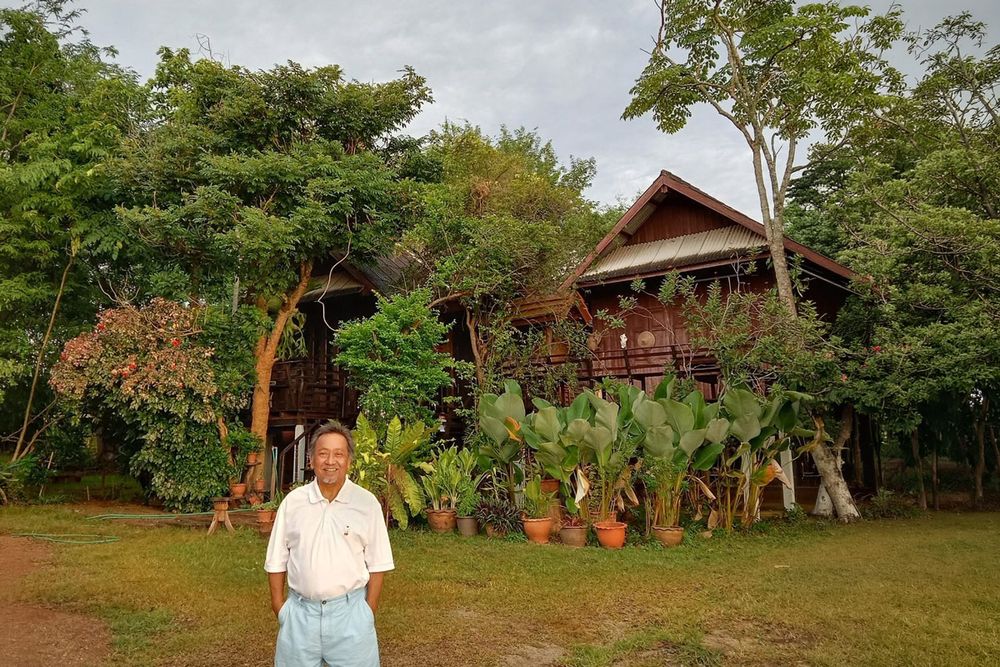
Although time and thought often work in opposite directions, they seem to have had very little effect on this proud man. His inner vision remains clear. And this is precisely what allows “Jook Chaikha” to continue existing—and to continue sparking ideas in readers, as he always has.
© 2025 Khaoyai Connect. All rights reserved.
No part of this content may be copied, modified, or distributed in any form without prior written permission.
