


Walking Nakhon Ratchasima, Part 3 (The Finale)
Stroll along "Chomphon Road," the Golden Dragon Route, explore Samran Chit Alley, the home of green lantern brothels from the G.I. era, enjoy the King Rama VI-era architecture, and conclude by paying homage to the deities at the Phra Narai Shrine.
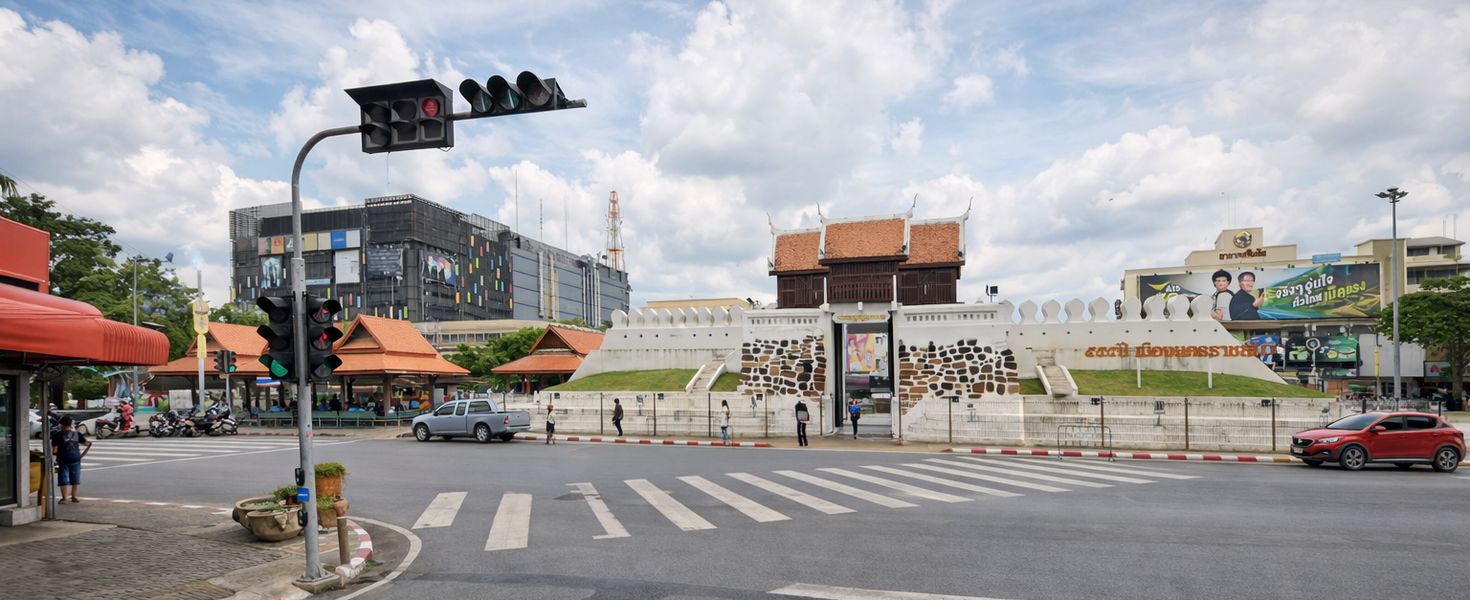
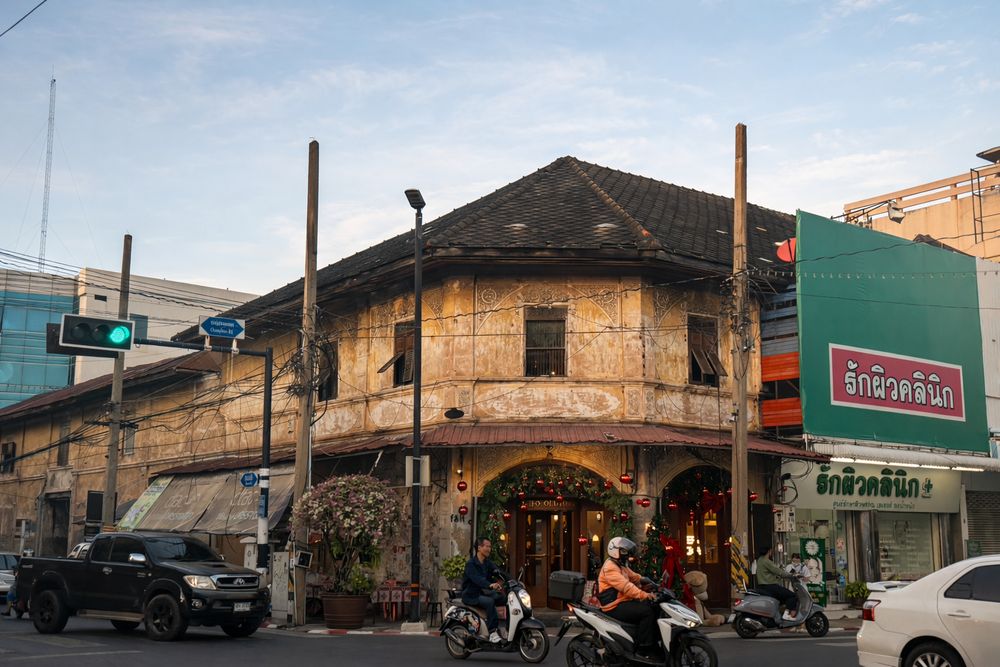
Chomphon Road, a commercial district in the heart of Korat, was originally named Chumphon Road after the city gate located at its front. Later, when the Chinese migrated in, it was renamed Charoen Phanit Road. Then, in 1938, it was changed again to Chomphon Road, named after Field Marshal Plaek Phibunsongkhram.
Looking from the Chumphon Gate down the path ahead, we can see Chomphon Road winding back and forth, but we just learned that the road wasn't originally curved like this.
"Originally, this road was not curved, but when the Chinese settlers moved in, they laid wooden planks along the entire stretch and intentionally twisted the road to make it a dragon road like Yaowarat. The area right at Chumphon Gate acts as the dragon's head, stretching all the way to the City Pillar Shrine as the dragon's tail. The Bun Phaisan Shrine serves as the dragon's belly, which is considered a wealth-receiving basin and the best Feng Shui spot. If anyone wants to pray for money, they should go pray there," explained Asst. Prof. Phithakchai Chatthuchai, or Ajarn Ta, our tour leader, briefly describing the road's characteristics before leading us on the walk.
Undoubtedly, Chomphon Road was a modern commercial district in the past. However, taking a slow stroll along the path also allows us to see various traces of history, learning far more than just commerce. This ranges from the only remaining ordination hall with Ayutthaya-era art in Korat and the Isan region, and the King Rama VI-era architecture of buildings and houses—some of which are still perfectly intact and have been registered for conservation—to Korat's first hotel with an elevator. It also covers the history of prostitution in Samran Chit Alley during the Vietnam War, the City Pillar Shrine which was dismantled by Chao Anouvong's army in the past, and Wat Phra Narai, named after the Phra Narai deity statue and presumed to have once been the site of three Khmer sanctuaries.
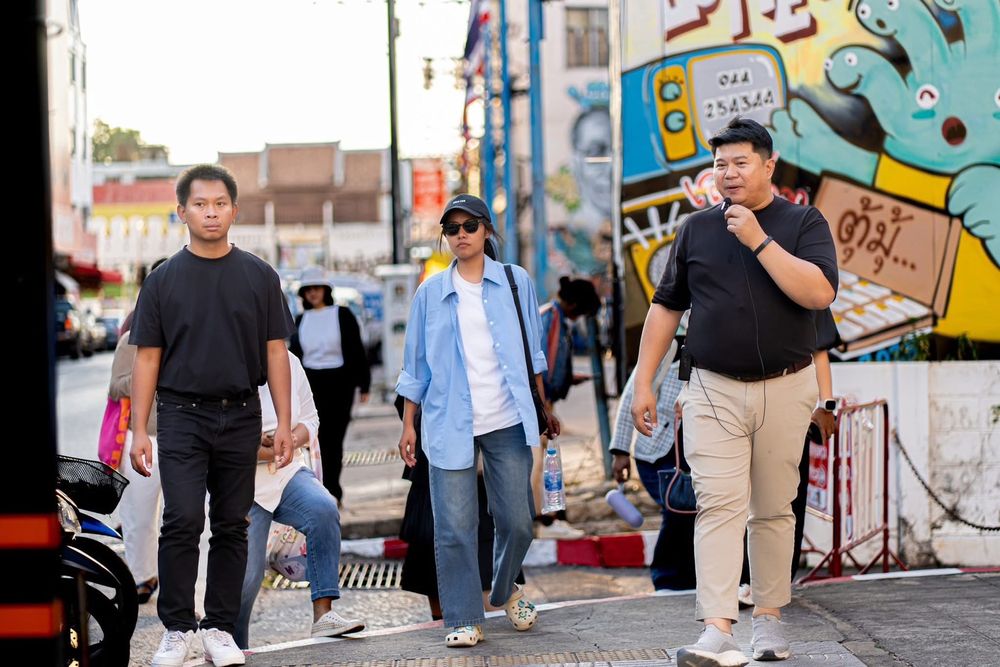
Slowly walking along the route while listening to stories of Korat across different periods gives us a much clearer understanding of what Korat is today as well.
"Korat is a sun-baked city; the best time for a city walk is during the late afternoon. It's the time when various buildings perfectly block the sunlight for us," Ajarn Phithakchai told the tour members after experimenting with walking at several different times and discovering that late afternoon is best for Korat.
We began our walk toward the road known for playing a highly significant economic role in the past. It was a densely populated Chinese community, where the Chinese immigrants who arrived in Korat during that time consisted of two main groups: the Teochew Chinese and the Hakka Chinese.
Samran Chit Alley, the Green Lantern Brothels of the Vietnam War Era
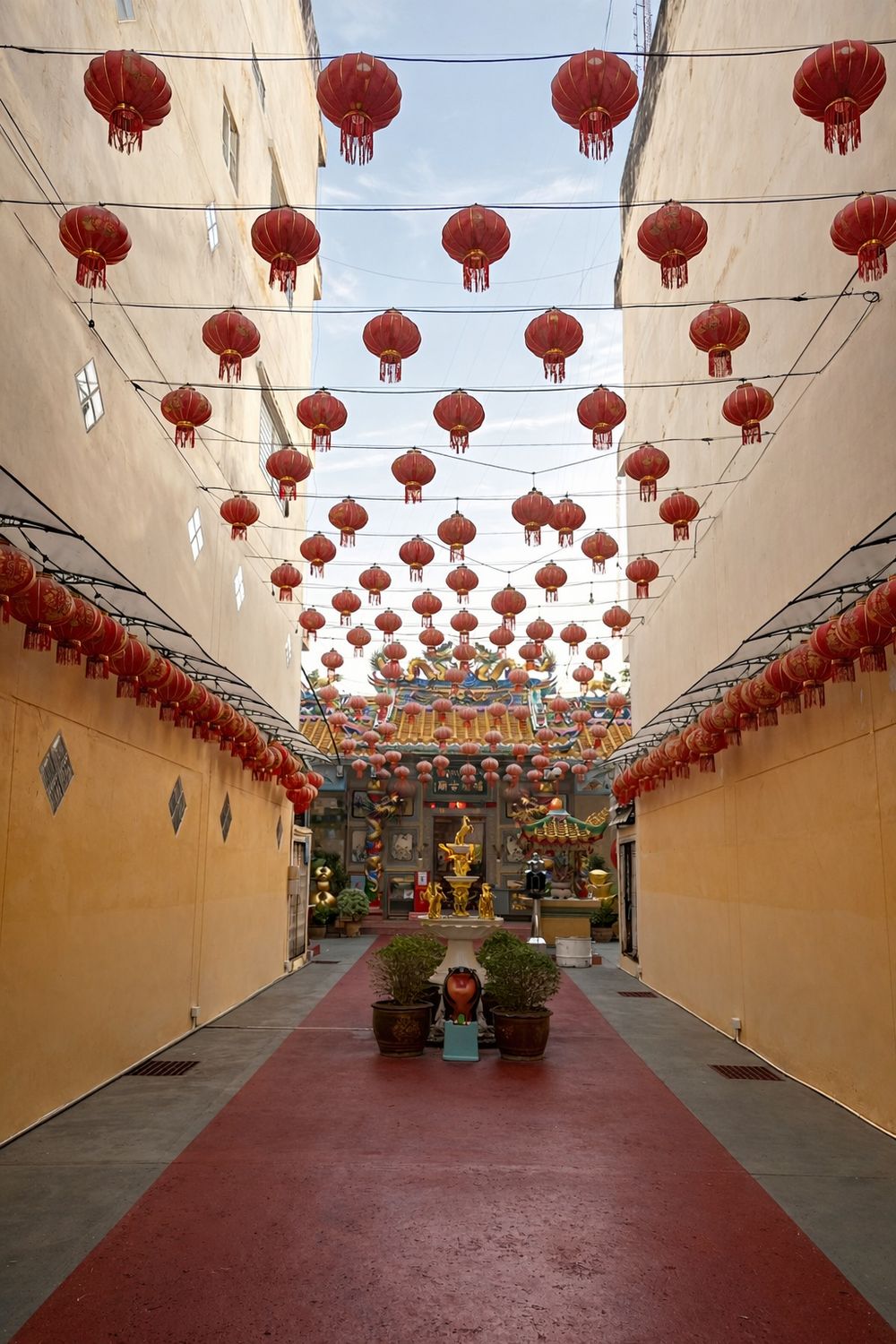
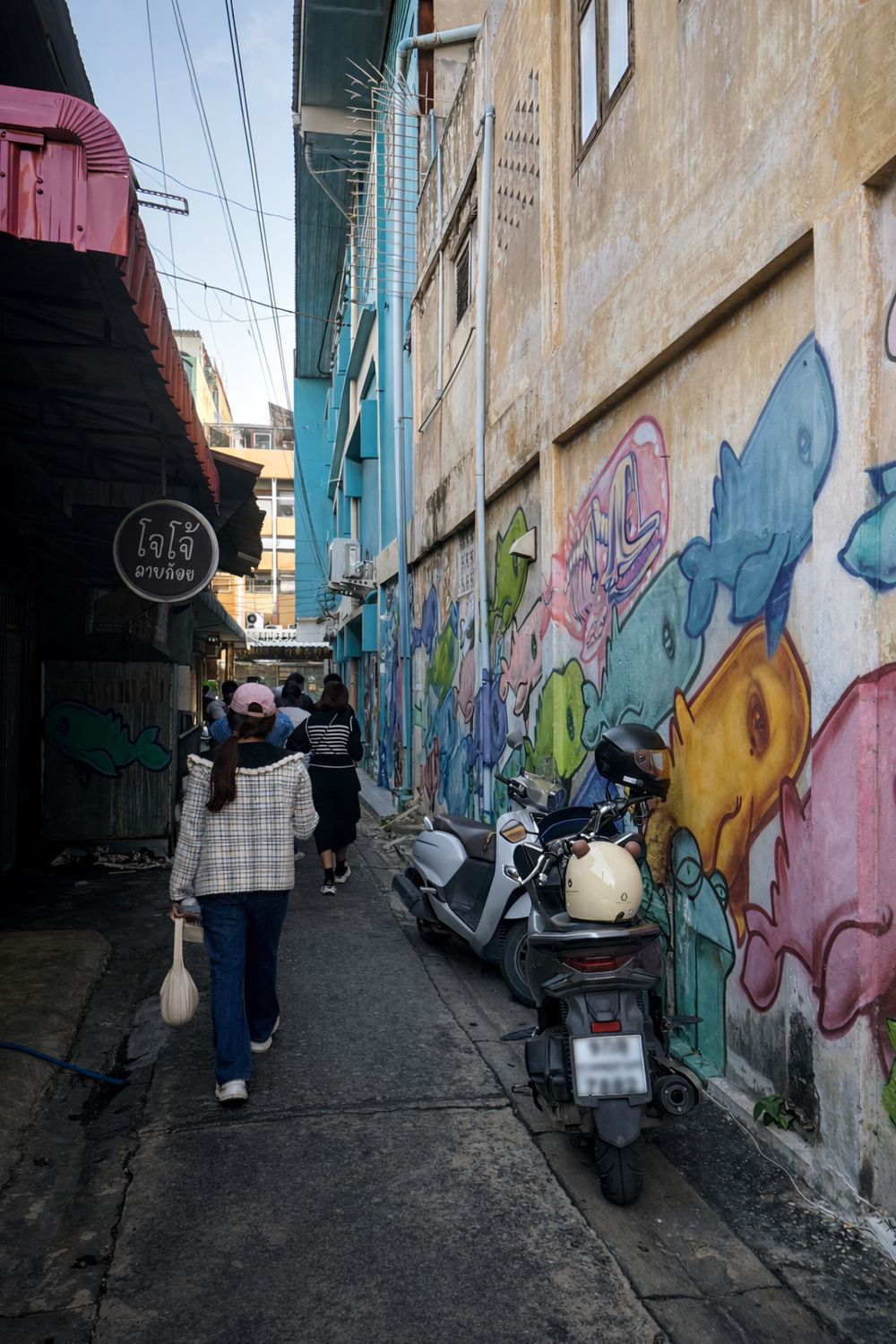
Not far in from Chumphon Gate, Ajarn Phithakchai invited the trip participants to stop at an alley called Samran Chit Alley. It is a small alley flanked by street art all over the walls. Moving a little further inside, there are cute little cafes and a very hip Larb restaurant, providing a perfectly blended atmosphere of a modern city where one can hardly imagine that this alley was once home to nightclubs, pubs, bars, as well as brothels catering to G.I. soldiers who arrived in Korat during the Vietnam War, around 1967-1975.
"During the Vietnam War, a huge number of G.I. soldiers came to Korat, giving rise to an honest profession: prostitution. At that time, Korat was full of prostitutes, but you have to distinguish between prostitutes and 'rented wives.' And in many alleys, there were brothels, as well as nightclubs, pubs, and bars, which caused the prostitution industry to flourish tremendously during that period."
Although it's true that the prostitution profession flourished during the Vietnam War, it had already been legally established since the reign of King Rama V.
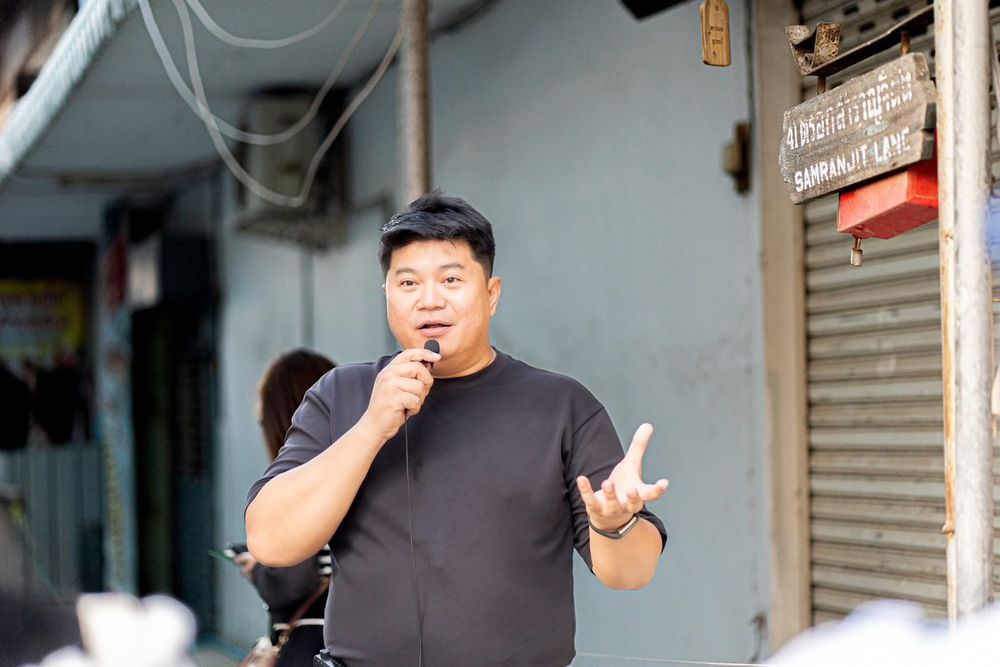
"Honestly, it only became illegal much later."
The tour leader's narration about prostitution continued, seeing as it had garnered a great deal of interest from the tour members.
"Prostitution during the King Rama V era was very modern; there were health check-ups every three months, just like massage parlor workers today. Don't think it wasn't safe. If it was found that no one had any diseases, they would be allowed to renew their tax at a rate of 12 baht every three months, which was considered very expensive. And if the brothel had duly paid its taxes, they would be permitted to place a green lantern out front, which is the origin of the term 'green lantern brothel.' The green lantern was not a symbol for a brothel, but a symbol that taxes had been paid."
In the same era, apart from flourishing nightclubs and prostitution, another highly profitable profession emerged that many might not expect: the pedal trishaw driver.
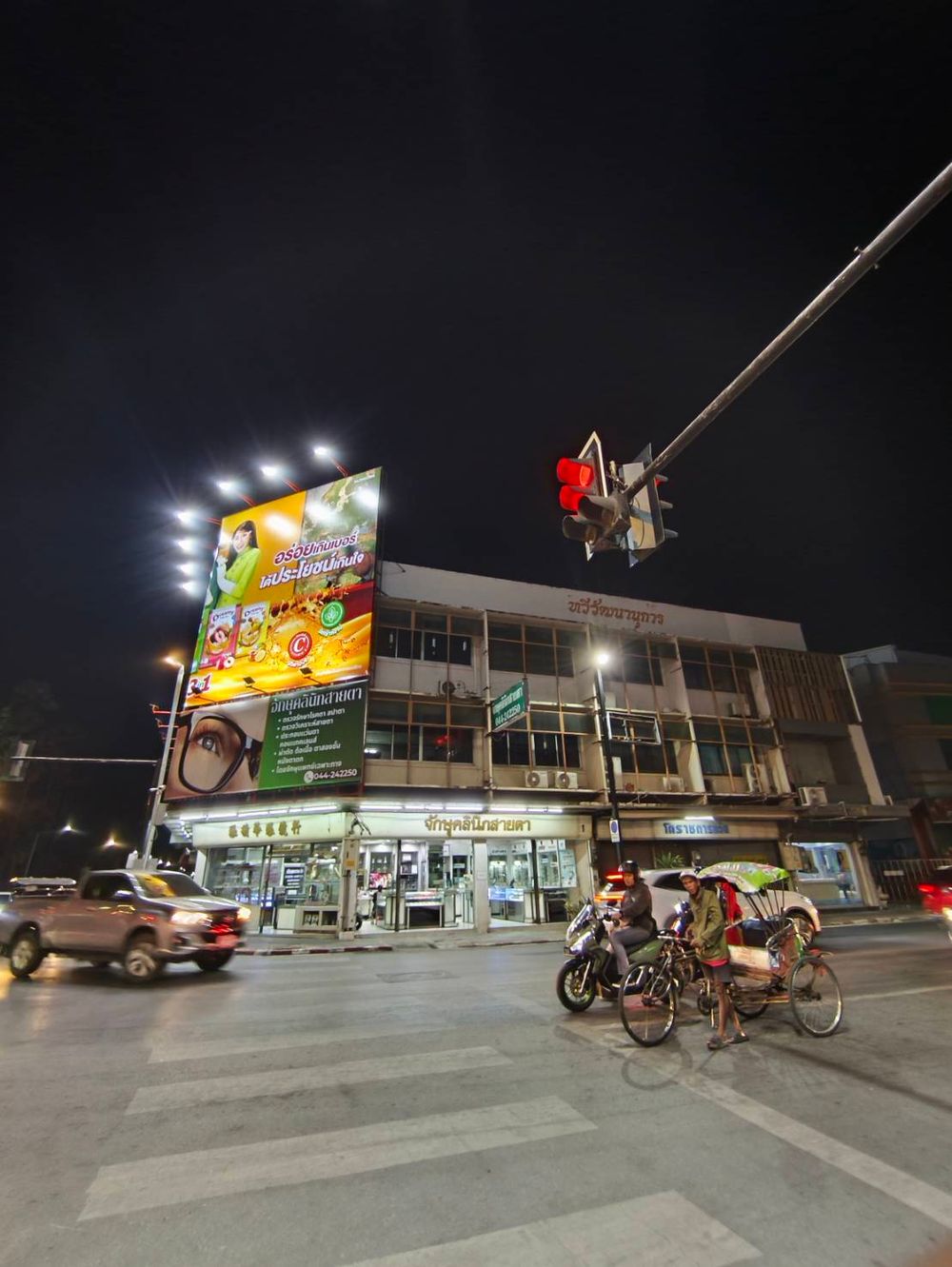
"Pedal trishaws actually originated in Korat. Around 1933-1934, trishaws were produced in Korat, but they weren't like the ones we see today. They were more like 'Saleng' sidecars, meaning a bicycle with a side attachment where a rattan chair was placed, and there was a bamboo tube to insert an umbrella. If the sun was hot, you would pull the umbrella out and open it. However, they later evolved into the pedicabs we are familiar with. Currently, Korat has only 32 pedicabs left, because the youngest driver right now is probably 70 years old. In Bangkok, however, trishaws were discontinued in 1961 because Field Marshal Sarit banned them, citing that they caused traffic jams."
The Flourishing Architecture of the King Rama VI Era
Inside Samran Chit Alley, if you walk in a bit, you will see a large building built during the King Rama VI era called the Tong Ao Building. It was the first building in Korat to sell imported cigarettes, and lamp oil had to be purchased here as well. The building is divided into three sections: the very front is a shop, the middle is like a connecting walkway, and the house is situated at the back. The architecture clearly retains the King Rama VI style, such as the separate stucco window frames and push-out louvered windows, among other features.
Leaving Samran Chit Alley and returning to Chomphon Road, walking a bit further you'll spot a long row of prominent yellow buildings, also featuring King Rama VI-era architecture. Later, they were declared buildings worthy of conservation in 2018 by The Association of Siamese Architects under Royal Patronage. It consists of three adjoining buildings: Mi Chong Mi, Saeng Fa, and Chi An Tueng.
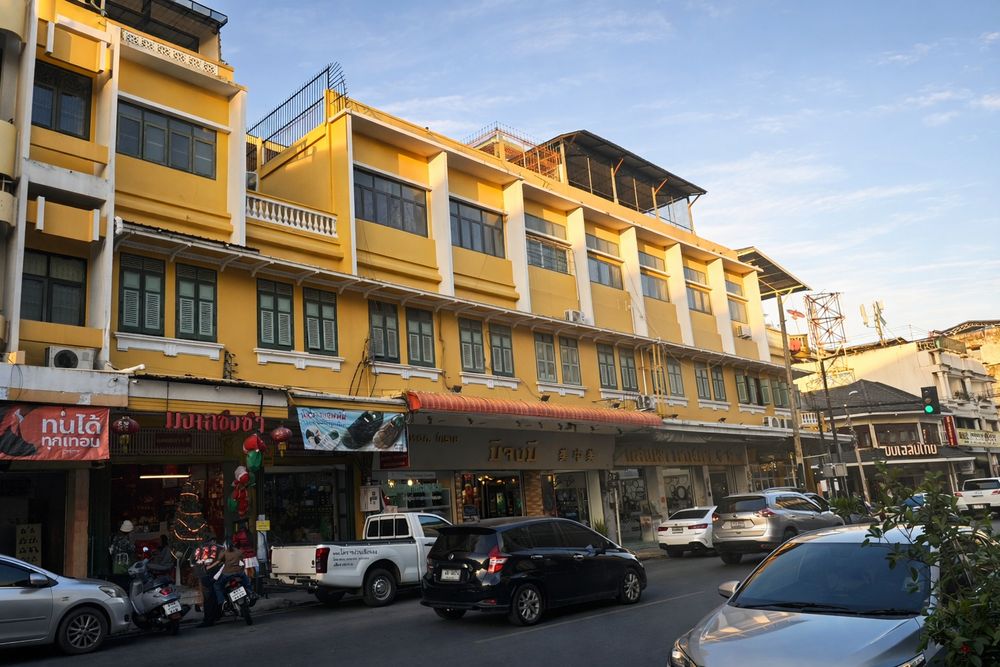
"Notice the push-out louvered windows; the bottom edges are decorated with stucco ornaments, and the top has a stucco awning extending outwards. Everything is still kept in its original condition. Originally, it was a hotel and housed the first and only rooftop nightclub in Korat. It was very modern, had a great atmosphere—a rooftop vibe where you could sip beer, sip wine, and listen to soft music."
The Ordination Hall of Wat Bueng: The Only Remaining Ayutthaya Art in Korat and Isan
We continued strolling along the streets in an atmosphere that wasn't too sweltering. Ajarn Phithakchai led us into Wat Bueng, advertising that he would take us to see an ordination hall that is the only remaining Ayutthaya-style art in Korat and the Isan region.
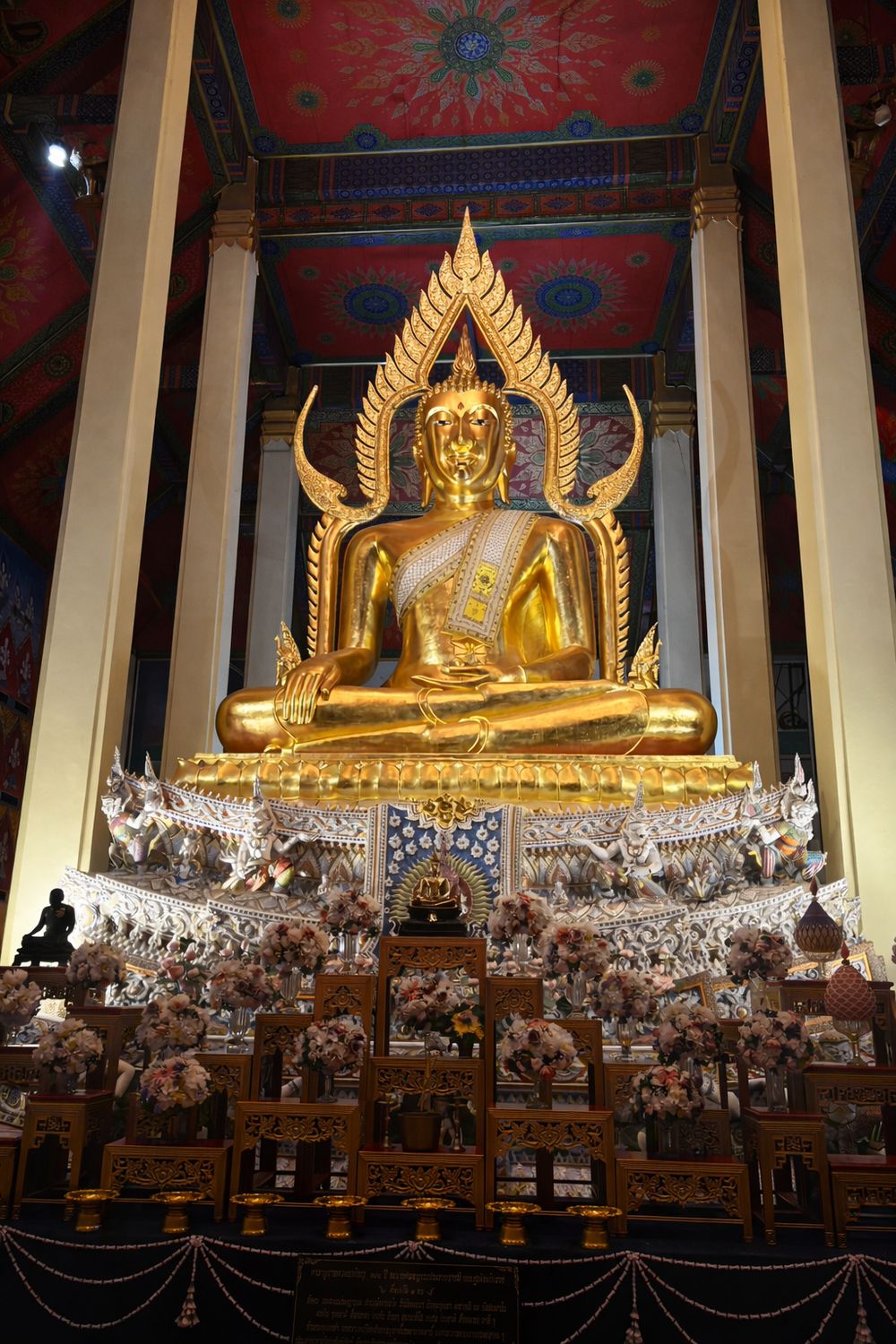
And then we stopped at the ordination hall, casting our eyes from the roof, which features Cho Fa, Bai Raka, and Hang Hong finials, to the gable frame depicting the god Indra riding the Erawan elephant facing east. Additionally, the building has a curved "junk ship belly" base, which is characteristic of Ayutthaya art.
"When we read some books, they say it's an 'elephant belly curve,' but I don't really agree with that. Calling it an 'elephant belly curve' goes against the underlying beliefs. If we talk about the true belief, it must be a junk ship, because we consider the ordination hall as a place where we perform merit-making rituals. And inside the ordination hall, there is something important: the Buddha statue seated above the Chukchi pedestal, which has another meaning as the Buddha's throne. Whenever this world perishes, the last thing to disappear is the Buddha's throne, and whenever the world is reborn, the first thing to emerge is the Buddha's throne. Therefore, whenever we enter the ordination hall, whether for an ordination ceremony or a merit-making event, the ordination hall acts like the Ship of Dhamma that will guide us across Samsara—the cycle of rebirth—so that we do not return to be born again. That is the origin of the 'junk ship belly' style ordination hall. And what we are looking at is authentic Ayutthaya art, the only one remaining in Nakhon Ratchasima province and the only one in the Isan region."
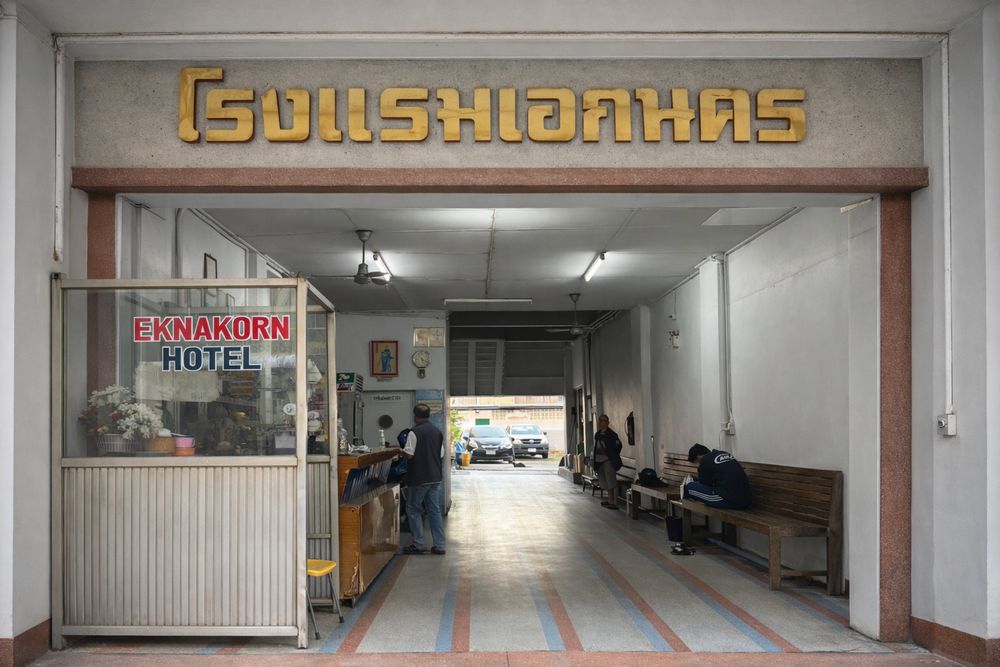
Returning to Chomphon Road, we continued walking unhurriedly. Suddenly, the tour leader's eyes caught sight of the Ek Nakhon Hotel, and he quickly walked over to point it out and tell the tour members that this was the first hotel in Korat to use an elevator. Formerly named the Damrongrat Hotel, there is even a possibility that it was the first place outside of Bangkok to have an elevator.
This reinforces the fact that Korat is truly the economic center of the Isan region.
Finally, the tour group arrived at the dragon's belly portion, which is the Bun Phaisan Shrine, the only old Teochew shrine located within the city. As for the original building, it does not appear in old photographs, so historians do not know its exact construction date. However, what is known is that restorations began around 1927. Since then, it has become the spiritual center for the Chinese people in Korat, especially during Chinese New Year when this shrine sees a massive number of worshippers because of its excellent Feng Shui. People popularly come here to pray for wealth and money.
Walking a bit further, you'll see a bright pink building built during the early King Rama VI era. The entire structure remains in its original condition, except for the roof which has been replaced.
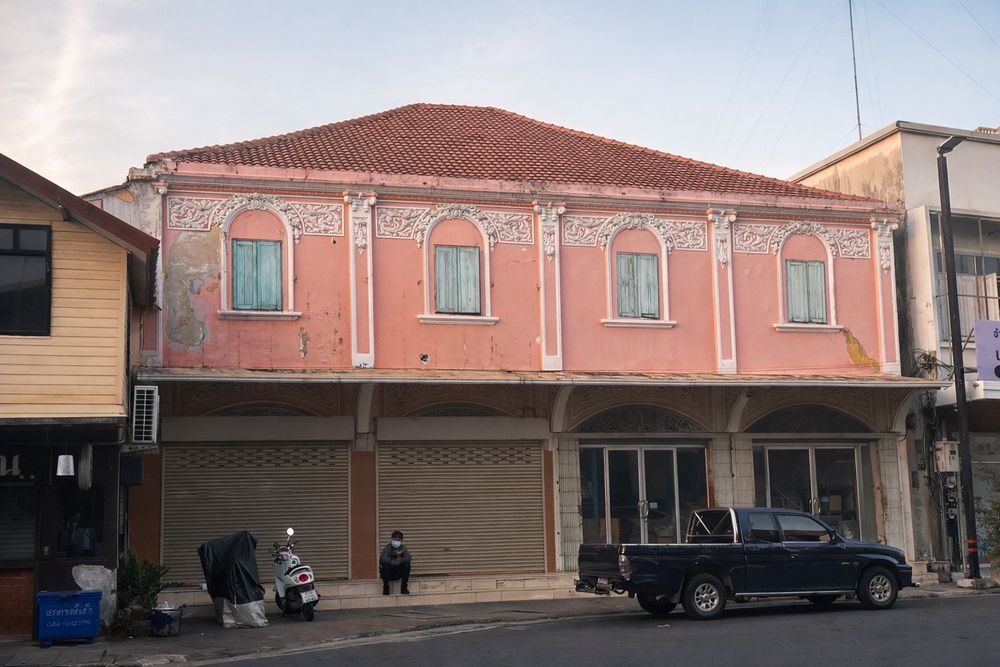
"Notice the arched doors; the top is intricately carved as ventilation holes with a botanical motif. Moving up slightly, there's a Western floral pattern. The building's windows feature arched frames adorned with Western flowers. The windows might have been changed—originally they were push-out louvers—but all the decorative stucco patterns are original from the King Rama VI era."
Meanwhile, the oldest building is the Yung Sun Nguan Building. Originally, it was a factory producing fermented soybean paste and lemonade (Nam Manet). Inside, there are two more buildings: a row house turned into rental rooms, and another house belonging to the owner. The exterior visible to us functions as a storefront. The paint on this building is still in its original state, complete with original window frames, original push-out louvered windows, and perforated ventilation at the top. Only the decorative glass is new.
Ajarn Phithakchai recounted that this neighborhood still has a fair number of buildings of this type remaining. However, one of Korat's lost characteristics is the earthen house (Baan Din), which came with the Chinese immigrants. In fact, earthen houses were not actually residences, but rather storage warehouses, though many people mistakenly believed they were houses.
The Uprooted City Pillar and the New City Pillar in the Reign of King Rama IX
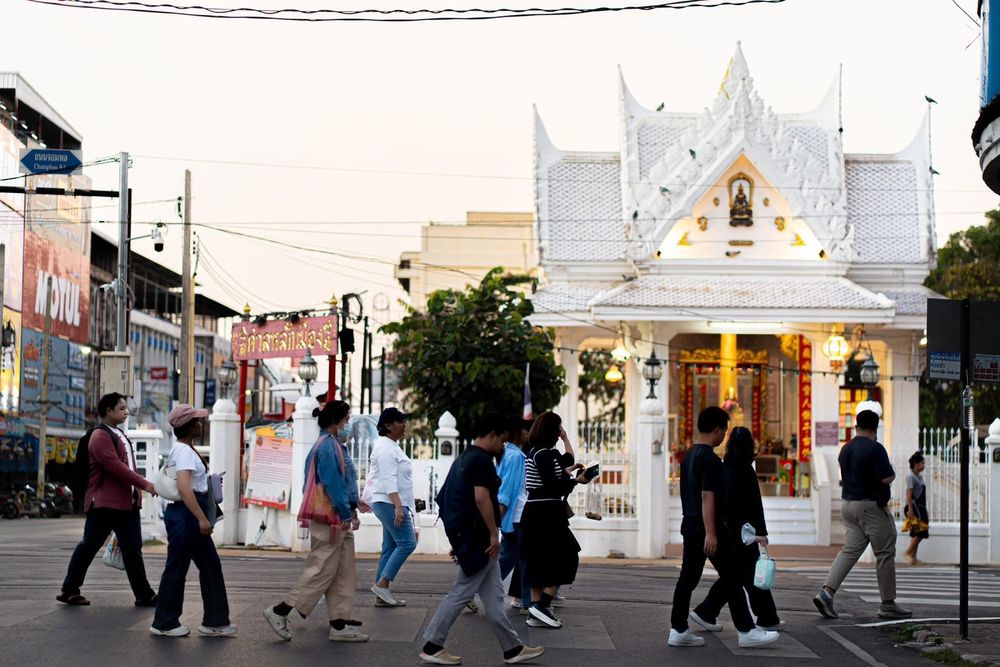
We began our city walking tour in the late afternoon, and time passed until early evening when the group arrived at the dragon's tail, which is the Nakhon Ratchasima City Pillar Shrine. Although this shrine is small in size, its past history is not small at all.
Since the Siamese-Vientiane War, when Chao Anouvong brought his army here, the first thing he did was order the Nakhon Ratchasima city pillar to be uprooted and placed aside, hoping to strip the city of its auspiciousness. When King Rama V went on a royal tour, he had the original city pillar enshrined back in its place. Time passed until the reign of King Rama IX, who made a royal visit to perform a ceremony to replace the city pillar with a new one, and then the original pillar was taken to be kept at the Maha Weerawong National Museum.
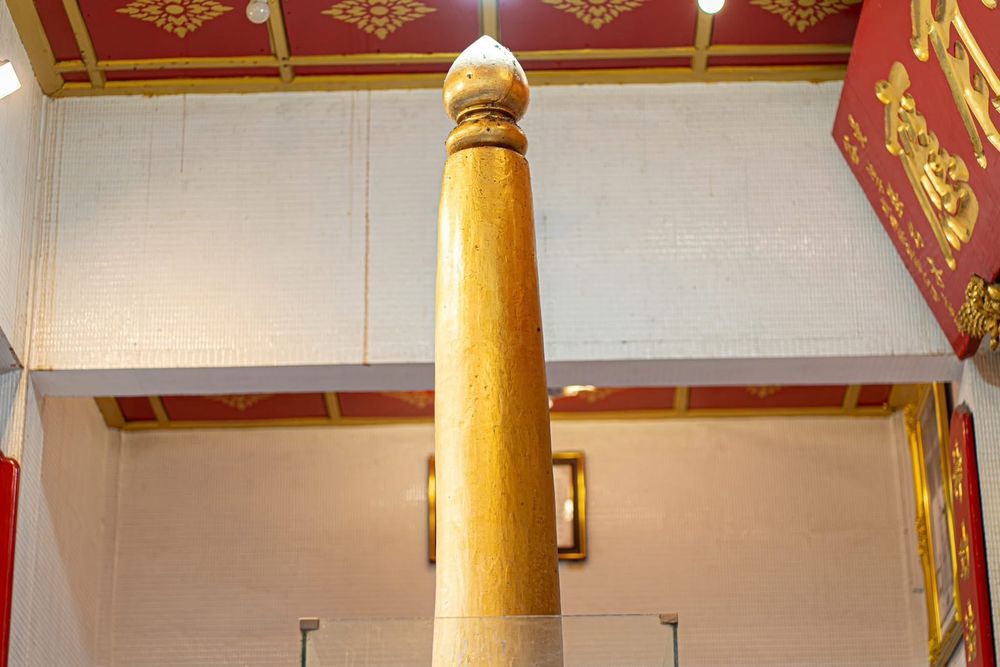
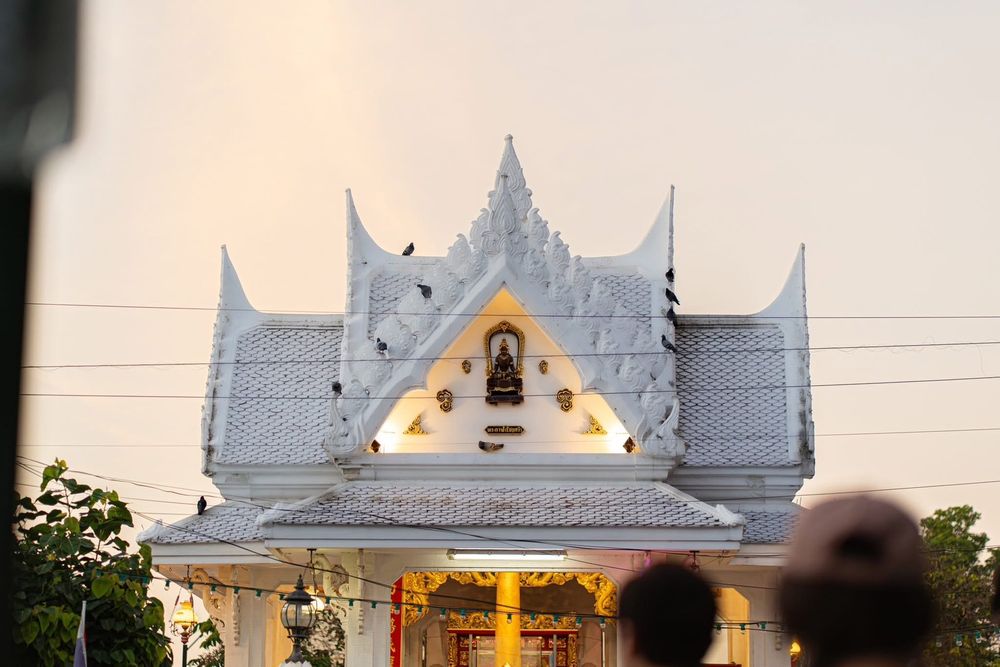
"There is something fascinating hidden and embedded within this City Pillar Shrine. Notice how the shrine faces south? This was intentionally done to face directly towards the 'Ghost Gate' (Pratu Phee). This indicates that this City Pillar Shrine holds the status of protecting the city against inauspicious things or ghosts and demons that might try to enter. This belief is a tradition that has been passed down in many cities."
Wat Phra Narai and the Phra Narai Shrine: Piecing Together Historical Traces
Many people might misunderstand that Wat Phra Narai was named after King Narai the Great. In truth, Wat Phra Narai got its name from the Phra Narai deity statue unearthed here. Later on, King Rama IX bestowed the name 'Wat Phra Narai Maharat' to the temple because he saw that the locals understood the name Wat Phra Narai to have come from King Narai the Great, who built the temple.
"Originally, we called this temple Wat Klang Nakhon. Later, locals called it Wat Phra Narai after the Phra Narai statue found here. This temple has an ordination hall in the middle of a pond. The interesting thing is that the area inside the ordination hall is quite wide and is surrounded by a pond. I established a hypothesis back in 2013 that a Khmer sanctuary used to stand right here at the ordination hall. From photographs taken when Prince Damrong visited, we found that statues, lintels, and building ornaments were piled up on the side. The appearance of those architectural fragments shows that they must have definitely been dismantled from a sanctuary. Based on the terrain's characteristics, being surrounded by a moat like this is a specific type of building construction in Khmer architecture. I hypothesized further that it was likely three sanctuaries situated on the same base, surrounded by a crystal wall, with a Gopura entrance arch in the front. However, they were entirely dismantled to be used for constructing the city gates in each direction. Once dismantled during King Narai's reign, he graciously ordered an ordination hall to be built over it, that's all. One piece of evidence is that when the temple pumped the water out, we found several laterite alignments, which further reinforces this hypothesis. Nevertheless, further study is still required."
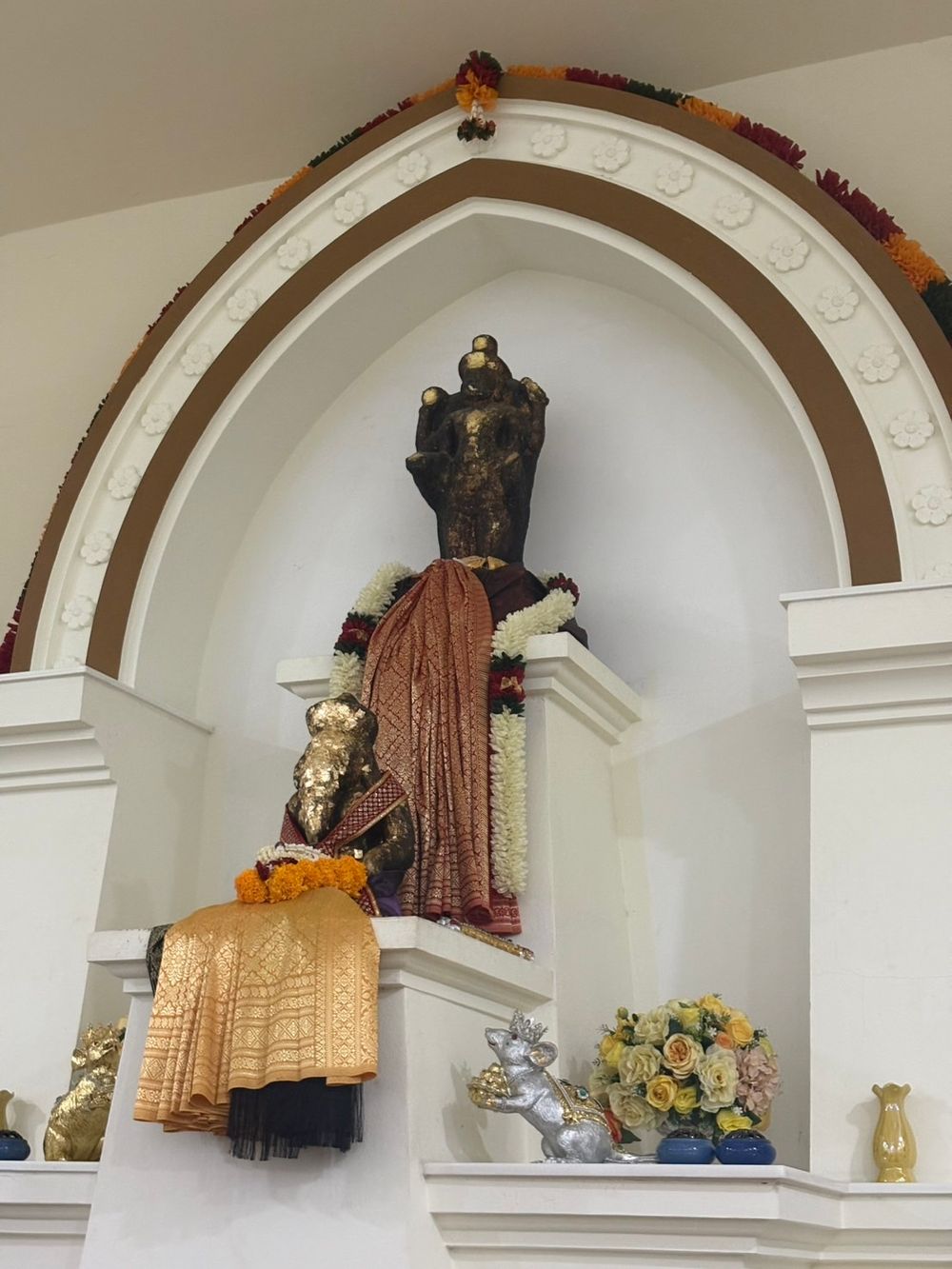
Not far from there is the Phra Narai Shrine building. Currently, it houses two important ancient artifacts: 1. The Phra Narai statue, which is the original reason the temple is called Wat Phra Narai, and 2. The Lord Ganesha statue, of which two were originally found. Currently, one is kept at the Maha Weerawong National Museum, and the other is preserved at the Phra Narai Shrine.
"These two are the real deal; they are considered precious treasures right in the middle of Korat."
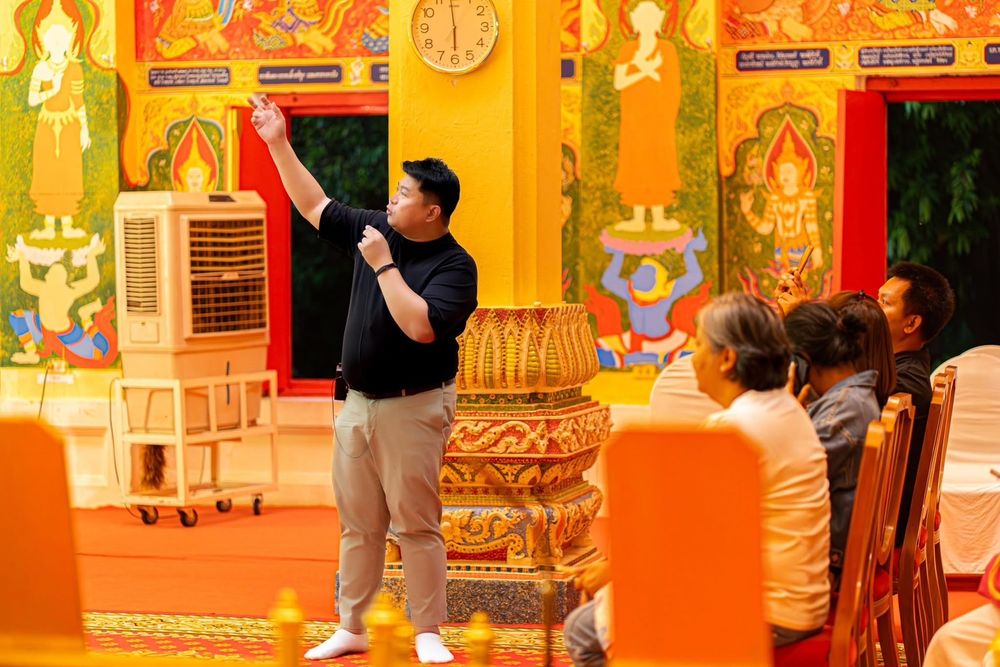
Ajarn Phithakchai gave his closing remarks before it was time to disperse, affirming that Nakhon Ratchasima is a fascinating city. It starts right from the city's name, where King Borommatrailokkanat, the city's founder, combined the auspicious names of two cities: Nakhon Raj and Sema.
"Many people understand that Korat relocated from the ancient Sung Noen city of Gorakhapura, but that is actually not the case. The city of Korat is an entirely different city that did not originate from Gorakhapura in any way. Instead, King Borommatrailokkanat combined the auspicious names of two cities that were Korat's originators: one was named Nakhon Raj, and the other was named Sema. Sema and Sima mean the same thing. As for Nakhon Raj, I understand it was a Khmer city. Then, Korat people like to shorten words; Nakhon Raj became Khon Raj, and ultimately became Korat."
As the tour leader's voice faded, it marked the end of this highly enjoyable city walking activity. Everyone received a truly fulfilling experience. If it were a meal, it would be considered fully complete in both flavor and nutrition.
© 2025 Khaoyai Connect. All rights reserved.
No part of this content may be copied, modified, or distributed in any form without prior written permission.
