

Walking Nakhon Ratchasima Part 2
Strolling Ratchadamnoen Road, Checking in at the Ya Mo Monument, and Soaking up the Atmosphere of Chumphon Gate—The Divide Between Old and New City
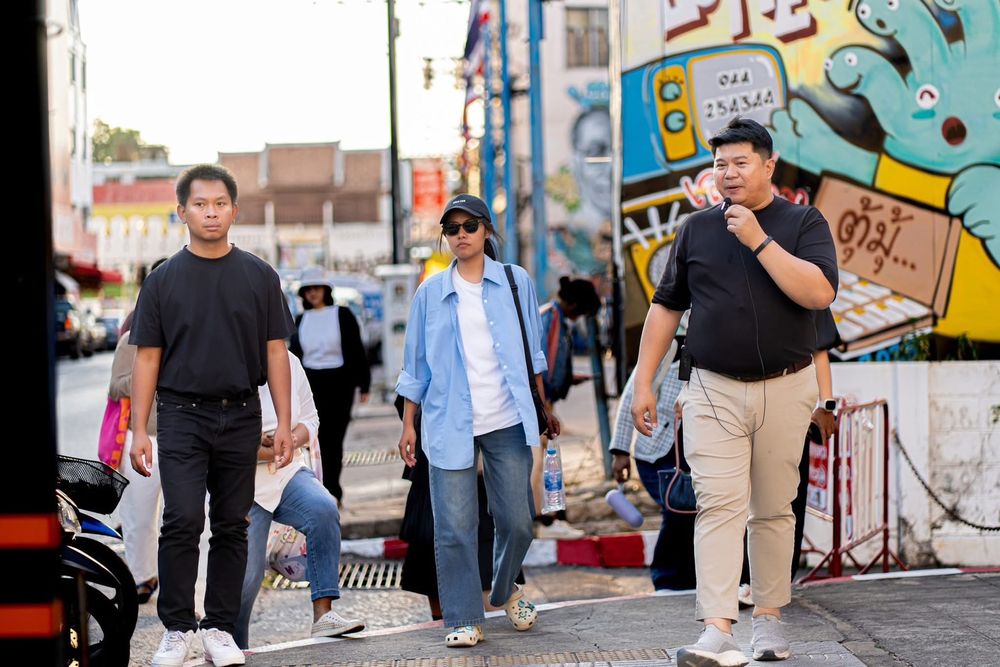
After finishing at the Maha Veeravong National Museum, we followed our trip leader, Asst. Prof. Phitakchai Jattuchai (or Ajarn Ta), onto Ratchadamnoen Road toward the Thao Suranari Monument and Chumphon Gate, the landmarks that serve as the boundary between the old and new city areas.
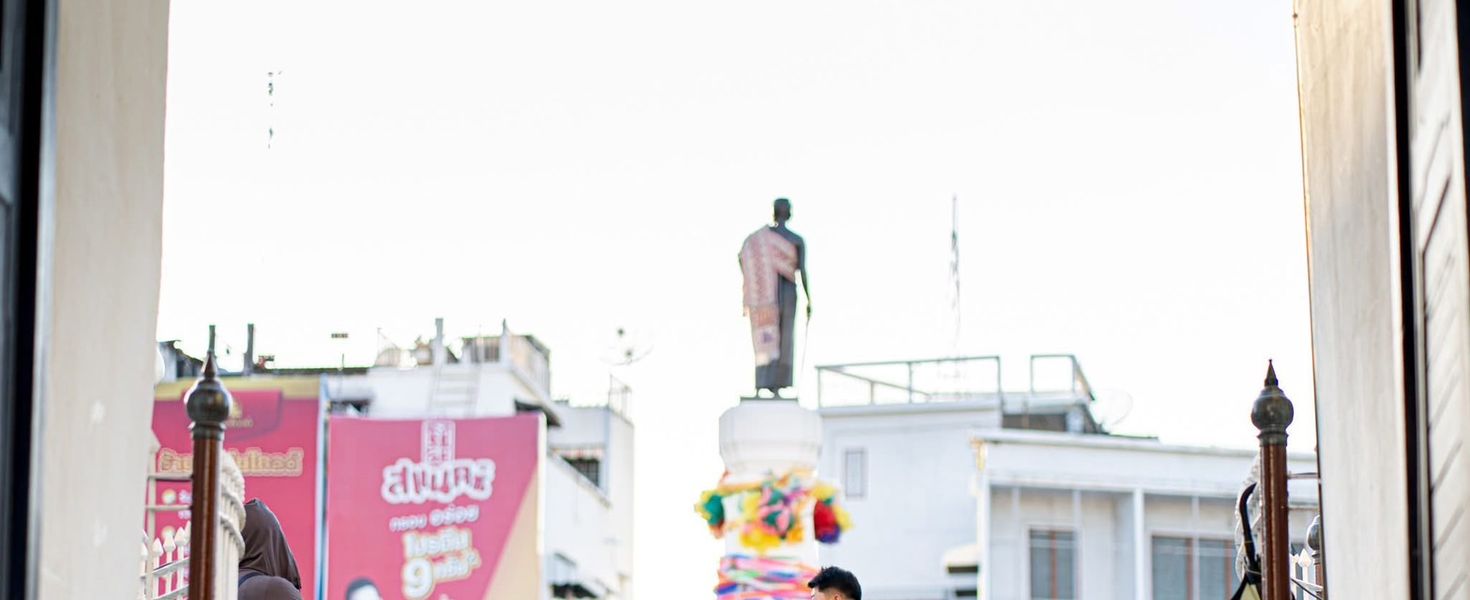
Today, Ratchadamnoen Road is bustling with people, shops, and neatly lined buildings. From the museum, just a short walk along the sidewalk brings the Thao Suranari Monument—or Ya Mo, whom Korat residents deeply respect and revere—into view, standing prominently ahead.
Along the way, Ajarn Phitakchai pointed out a wooden house known as a "Korat House." It is a raised wooden structure with a gable roof, built in the style of "Por Kong’s Korat House" located at Nakhon Ratchasima Rajabhat University.
Reaching the intersection opposite the Thao Suranari Monument square, there is a road stretching all the way to the Railway Station Five-Way Intersection called Pho Klang Road. This road is another historically significant commercial hub of Nakhon Ratchasima.
"It is called Pho Klang Road because there were originally three Bodhi (Pho) trees. One was at Wat Chaeng Nai, another on the opposite side—which still stands today near the Roj shop—and a third in the middle (klang) of the road. Thus, it was named Pho Klang. This road also houses the Ha Seng Tua Vegetarian Hall, the oldest in Korat."
In the past, Pho Klang Road was economically vital. The area was once called "Talat Lao" (Lao Market) due to the large Lao population. Later, as more Chinese immigrants moved in, it became known as "Talat Chin" (Chinese Market). When the population grew denser, some Chinese residents moved to Chumphon Road in the heart of the old city. That road was later renamed Charoen Phanit Road before finally becoming Chomphon Road.
As for the area from Chumphon Gate up to the railway tracks, it is considered the "New City" zone. The city progressed rapidly once the railway reached Nakhon Ratchasima.
"Nakhon Ratchasima prospered by transporting Korat’s prized goods by train to sell in Bangkok—such as timber for railway sleepers, forest products, animal hides, horns, and salt. Did you know Yaowarat bought huge amounts of salt to use as a medicinal ingredient? Meanwhile, the most popular item Korat people bought from Bangkok was ice, brought in via train. Consequently, people in Korat were among the first in Isan to consume ice. Prince Damrong Rajanubhab wrote very clearly that Korat people were very modern, eating ice from Bangkok and roofing their houses with galvanized iron. The railway truly modernized Korat, making it more advanced than others."
At the time, the railway served not only commerce but also the transportation of troops from Bangkok to suppress the "Holy Man" (Phi Bun) rebellions in the Isan region during the reigns of Rama V and Rama VI.
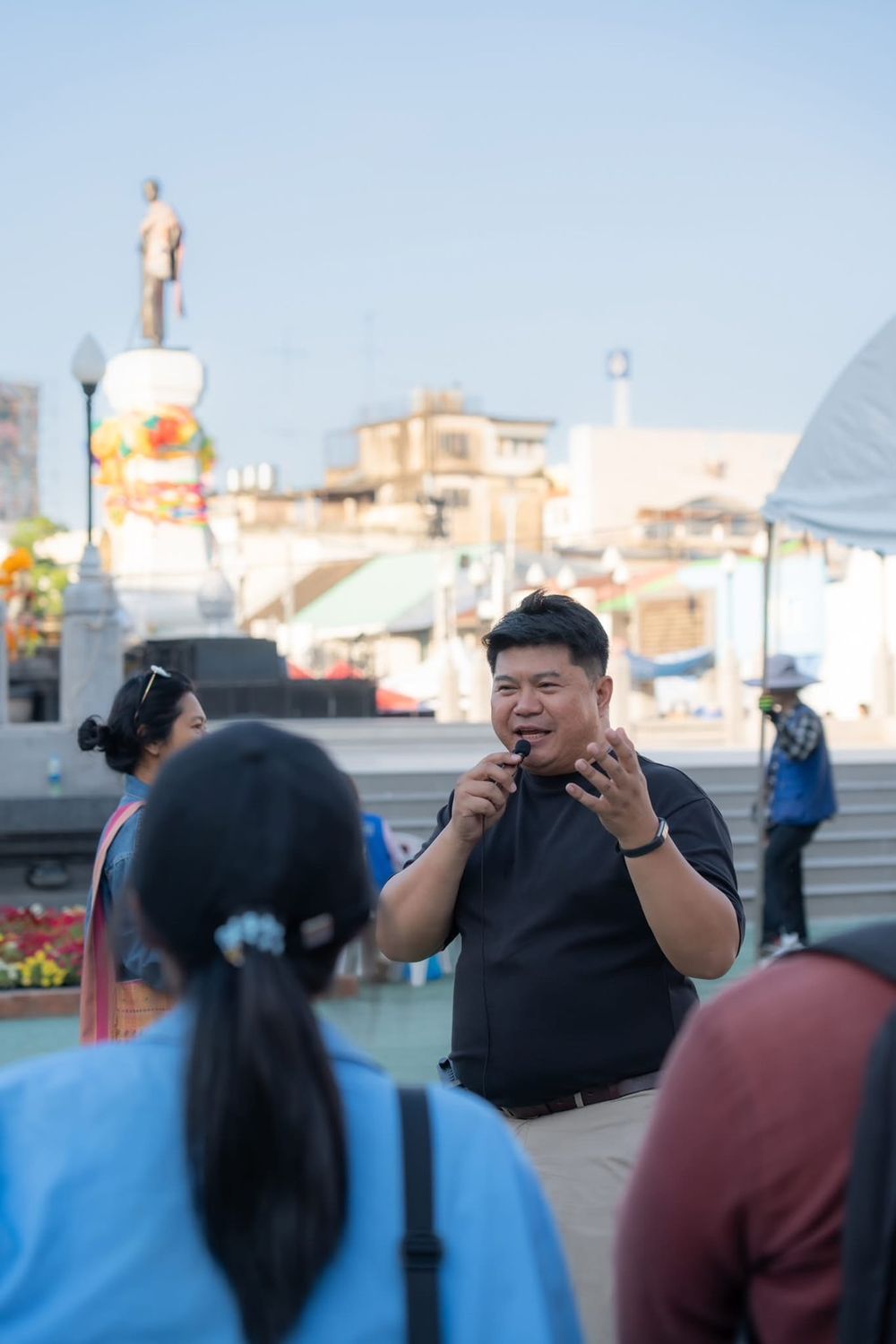
Thao Suranari Monument: Thailand’s First Monument to a Commoner
Ajarn Phitakchai shared that after the 1932 revolution, the Boworadet Rebellion occurred in Korat in 1933. By 1934, the Thao Suranari Monument was constructed, becoming the first monument dedicated to a commoner in Thailand.
What many may not know is that beneath the base of the monument, a portion of Ya Mo’s ashes is enshrined in a golden casket weighing 25 baht (approx. 380 grams).
That golden casket was placed inside a Khmer jar, which was then set into the base before the entire structure was sealed.
Enshrining the ashes in such high-value gold clearly demonstrates the immense faith the people of Korat have in Ya Mo.
"If you observe closely, Ya Mo’s facial features are those of a Korat local. She has a graceful appearance but holds a sword in one hand. However, her attire and hairstyle are not related to Korat at all; they resemble those of court ladies. This is because the designer, Professor Silpa Bhirasri, had never been to Korat and likely didn’t know Ya Mo personally. I understand that there might have been several models for the sculpting."
The monument faces west toward Bangkok to symbolize loyalty and the relationship Nakhon Ratchasima maintains with the capital. Crucially, it was intentionally positioned with Chumphon Gate as its backdrop.
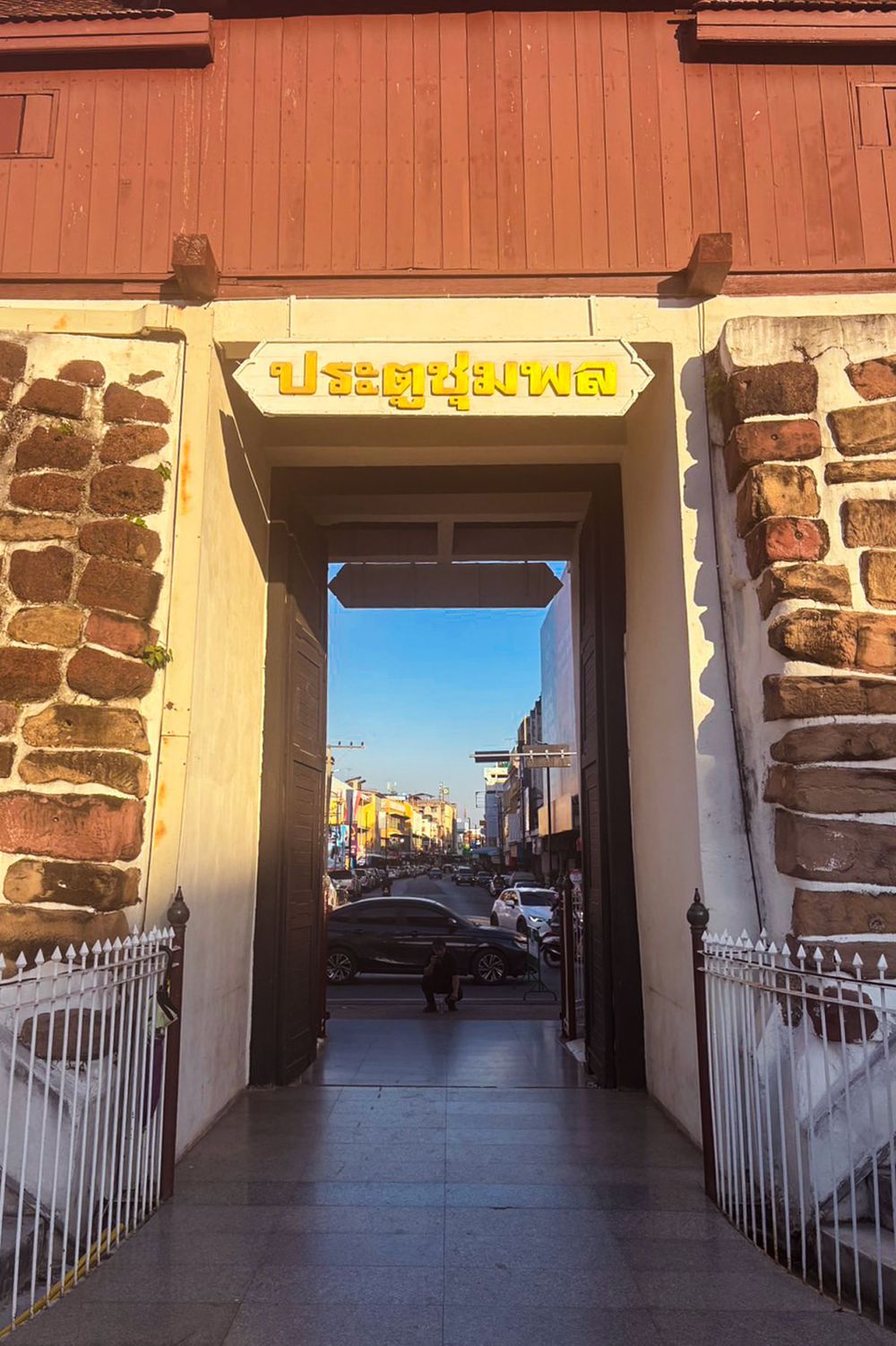
Chumphon Gate: The Vital Link Dividing the Old and New City
The "Old City" refers to the area of Nakhon Ratchasima enclosed by a moat and city walls. The city was 900 meters wide and 1.7 kilometers long, containing six temples. None of these temples have crematoriums, as having them inside the city was considered inauspicious.
There were four gates surrounding the city, one in each cardinal direction, all originally designed the same way. Today, the gate that remains in its most original state is Chumphon Gate on the western side.
"The name 'Chumphon' means 'gathering of forces.' This area used to be a wide field where troops would assemble before marching out to other locations."
The other gates are: Phon Lan Gate (East), Phon Saen Gate (North), and Chaiyanarong Gate (South).
"Korat people often call Chaiyanarong Gate 'Pratu Phi' (Ghost Gate) because there was a cemetery beyond it. When someone died, their body would be taken out through that gate. Later, bodies could be taken out through any direction as temples were established to support each side, such as Wat Sakae, Wat Samakkhi, Wat Thung Sawang, and Wat Sala Ngoen/Sala Thong."
Ajarn Phitakchai asked us to notice the gate’s shape, which is very narrow—allowing only one elephant or one cart through at a time. The gate arches were built using sandstone and laterite taken from a Khmer sanctuary that once stood in the center of Nakhon Ratchasima before King Narai had it dismantled to build the city gates. The adjacent city walls were built with bricks 3 meters thick and 5–7 meters high. There were 16 cannon forts and 4,302 "Bai Sema" (battlements), also called "Bai Bang" because they could shield (bang) against enemies. These battlements featured 1,600 loopholes for firing at foes.
"In the past, there were Buddha images on top because passing through the city gate was considered a blessing. Today, there are still Buddha images and statues of Ya Mo up there. High-ranking officials often bring swords to offer to Ya Mo at the top."
The presence of battlements around the city signified its importance. The King would send his relatives to govern it because Korat was a "Phraya Mahanakhon" city—one of the eight major frontier cities of Siam.
Nakhon Ratchasima was established during the reign of King Borommatrailokkanat, not King Narai
Many believe Nakhon Ratchasima was built during the reign of King Narai the Great. However, inscriptions from Khun Si Chaiyarat Mongkhonthep and the Royal Chronicles of Ayutthaya (Fragment 2/K 125) clearly state that King Borommarachathirat II (Chao Sam Phraya) led an army to conquer Khmer territories. After that, he intended to suppress two more cities: Phimai and Phanom Rung, but both surrendered first.
"The name Nakhon Ratchasima appeared in the Palace Law during King Borommatrailokkanat’s reign. New records copied during the reign of Rama I found that the city was established in the year 830 (Chula Sakarat), on Saturday, the 6th day of the waxing moon, 5th month, Year of the Rat. This corresponds to Saturday, March 18, 1468 (B.E. 2011). To this day, Nakhon Ratchasima is 557 years old. We were established in the era of King Borommatrailokkanat, but the brick walls were built during King Narai’s time. The walls in the earlier era were earthen mounds—an outer mound with a moat and an inner mound reinforced with logs. It wasn't until King Narai's reign that the logs were replaced with the brick walls we see today, which are about 360 years old."
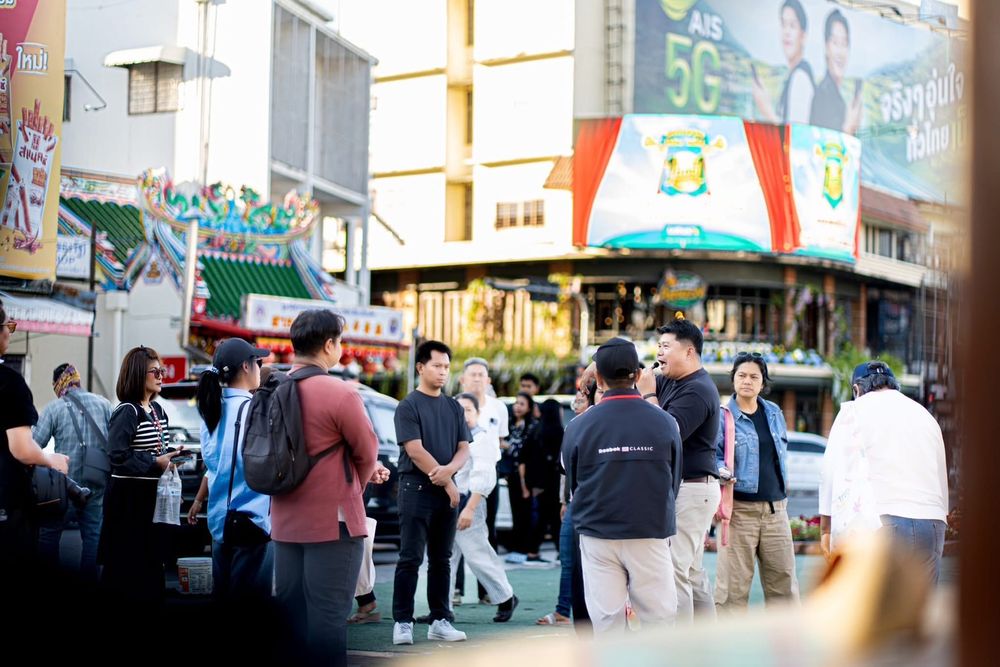
Phleng Korat: The Unique Identity Beside the Ya Mo Monument
After admiring the beauty of Chumphon Gate and the walls, looking through the gate into the old city reveals three Thai-style wooden buildings. These are known as "Rong Mo Phleng," where Phleng Korat (Korat folk songs) are performed.
"When I first moved to Nakhon Ratchasima, I didn't like listening to Phleng Korat at all. But after living here, I found it very beautiful and unique. It is sung in the Korat dialect without musical instruments. I often define Phleng Korat as 'Phleng Choi' or 'Phleng E-saew' where the performers forgot to bring their instruments. That’s why they have the hand-cupping-the-ear gesture—to hear their own voice and keep the rhythm."
Many worry that the younger generation won't listen to it and that Phleng Korat will disappear. Ajarn Phitakchai insists this is unlikely. As long as Korat has the Thao Suranari Monument, Phleng Korat will endure because of a strong local belief: the best way to fulfill a vow (kae bon) made to Ya Mo is through Phleng Korat.
"Vows made to Ya Mo are usually about work and career. The only thing you definitely cannot ask for is to be exempt from military service. Once their wishes are granted, many pay back their vows with Phleng Korat. The hiring prices vary based on the duration of the performance. Today, Phleng Korat is well-preserved and provides a good income, and there is even a Korat Singers Association."
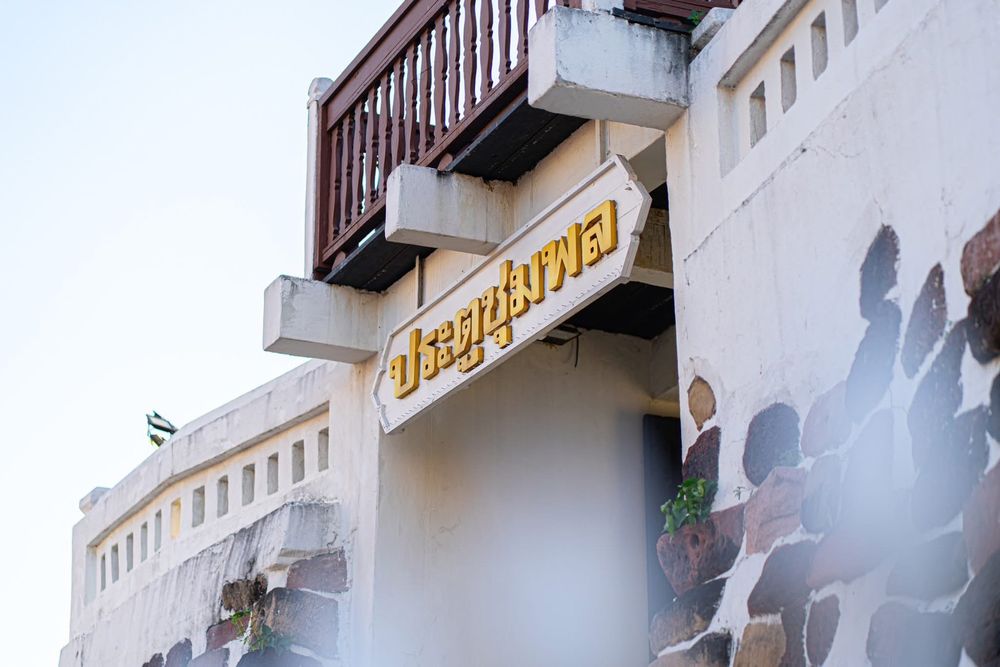
Another widely discussed belief among visitors to Korat concerns walking through Chumphon Gate.
"It is said that walking through Chumphon Gate once ensures you will return to Korat. Twice ensures you will return to work here. Three times ensures you will find a partner here. The correct method is to walk from outside the city to inside, then back out—that counts as one round. And it must be done continuously; you can't do one today and add more another day," Ajarn Phitakchai said good-naturedly.
While listening, I caught sight of a young man walking in and out of the gate exactly three times. Seeing that, I couldn't help but smile, because it was obvious that he had already fallen under the spell of some Korat lady.
© 2025 Khaoyai Connect. All rights reserved.
No part of this content may be copied, modified, or distributed in any form without prior written permission.
