


From Engineer to the Artist Controlling Smoke
Songs of the Journey and Positive Food of ‘Ko Im Bom’
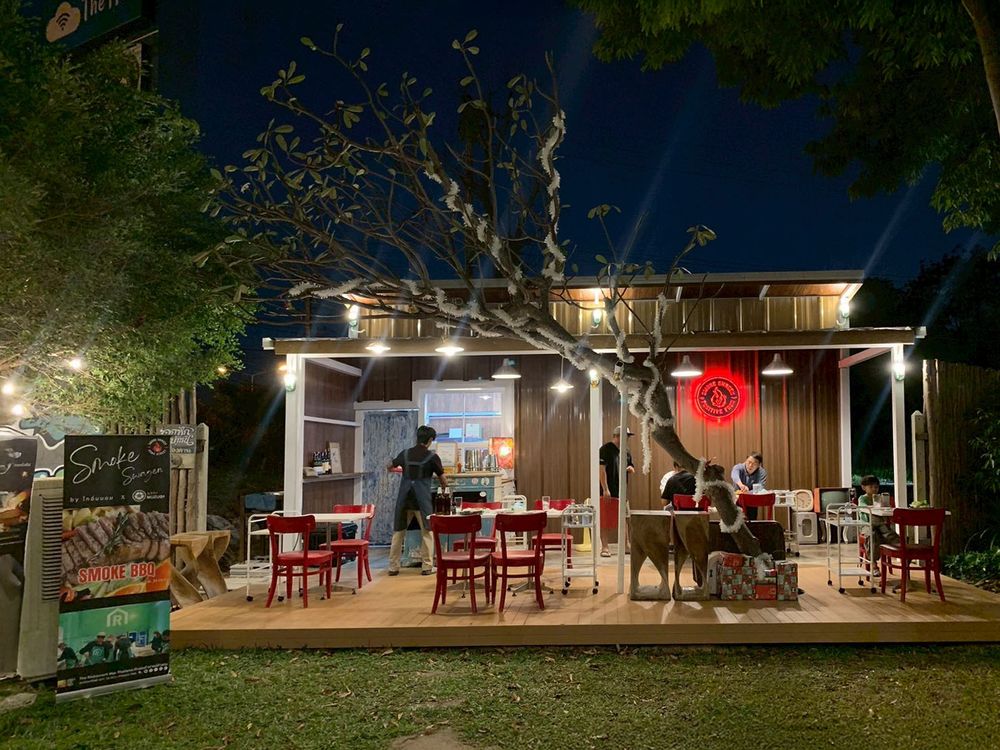
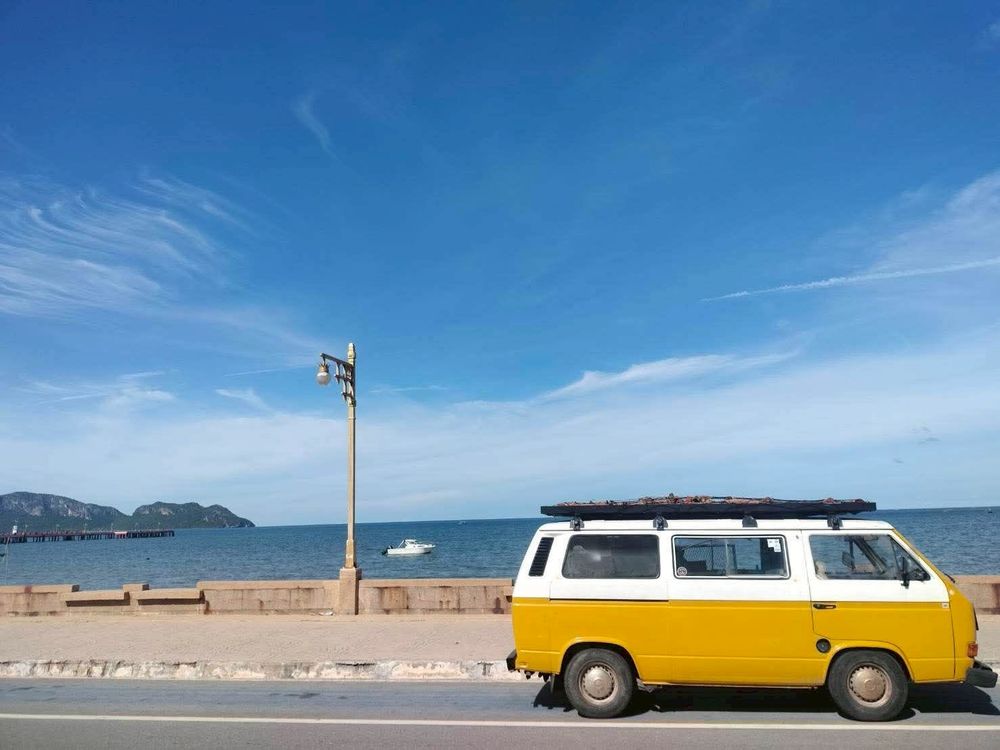
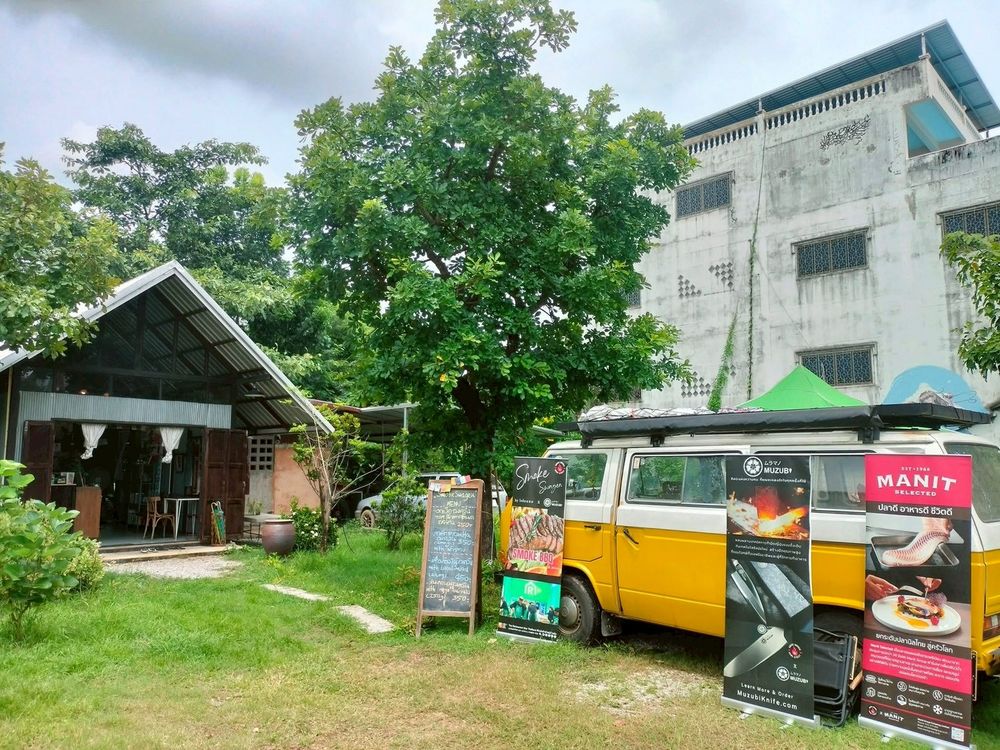
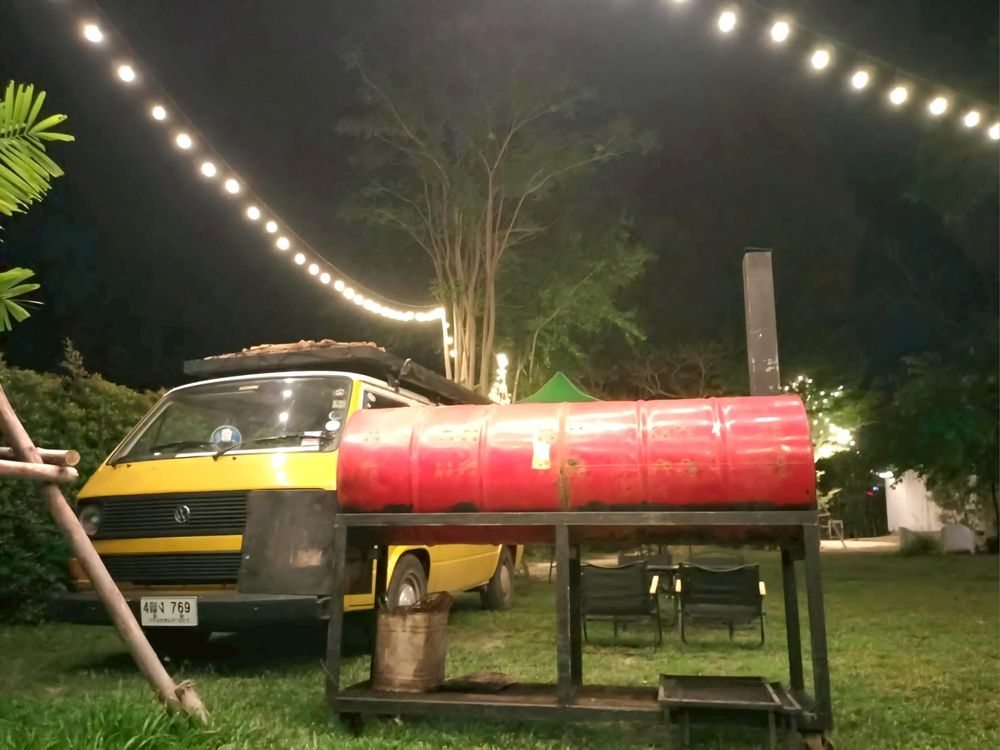
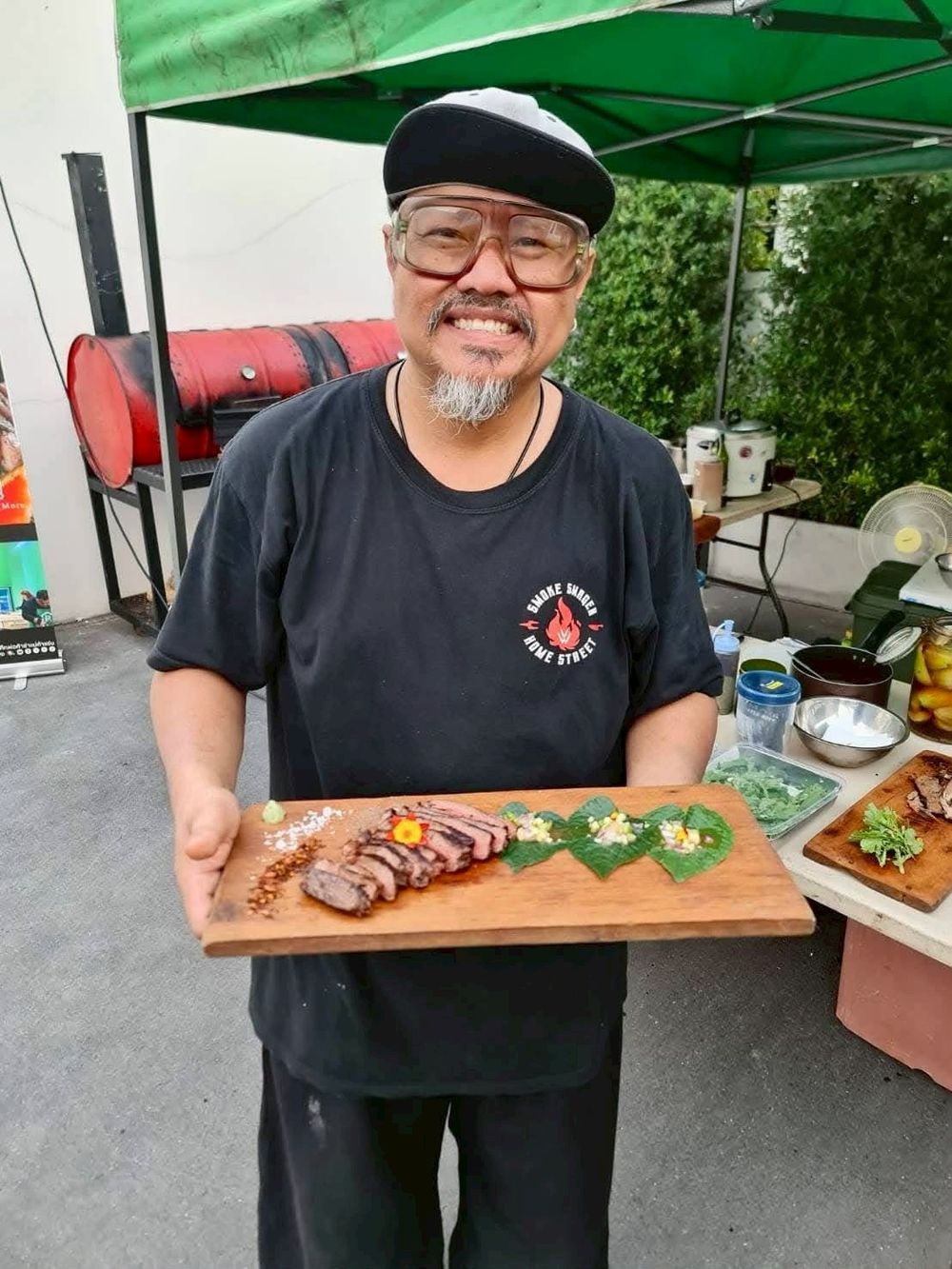
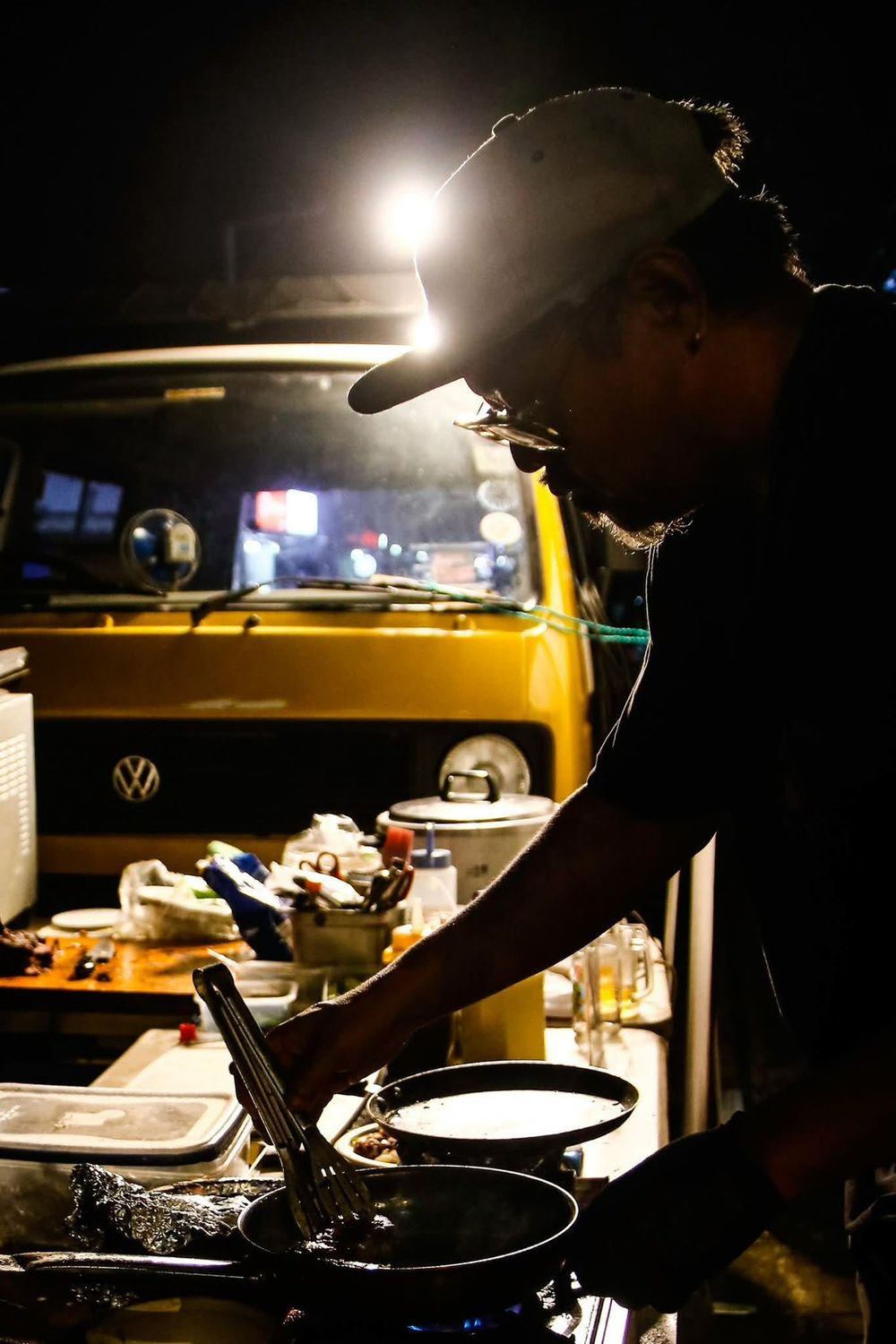
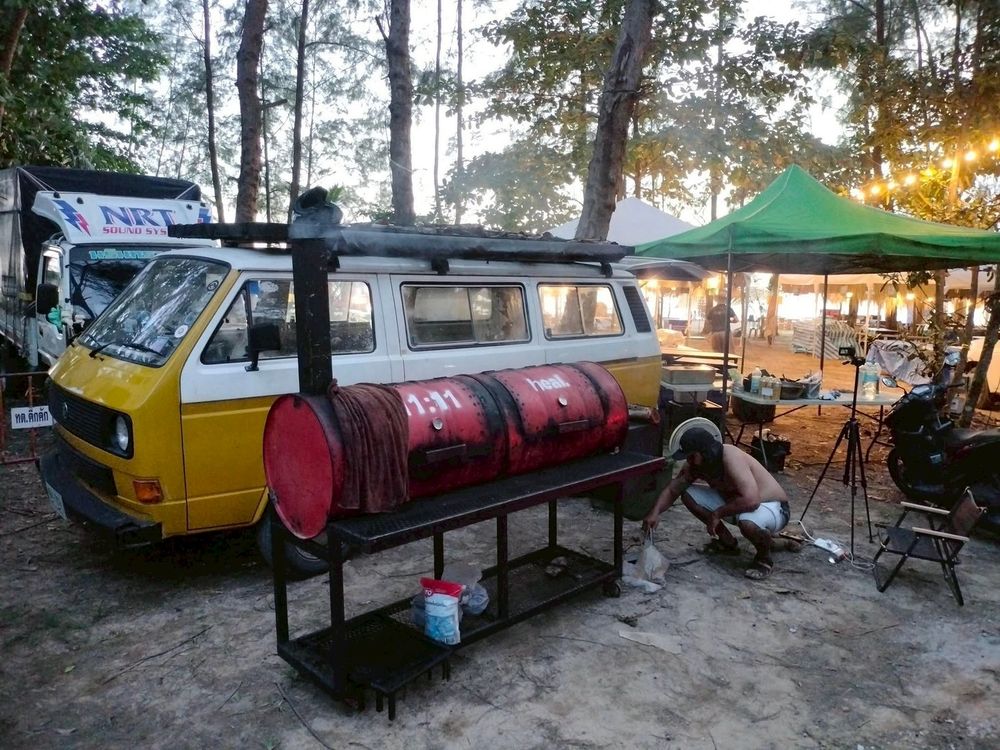
If anyone passes by the Route 3218 area, Khao Hin Lek Fai zone, Hua Hin District, Prachuap Khiri Khan Province, they might be caught by the sight of a white and yellow Volkswagen T3 van parked in front of the “Pliewiwake” (Solitude) coffee shop. Beside the car, the letters 'Smoke Swagen' are stamped. Yes, it belongs to none other than Mr. Nattaphol Nakphong, or Ko Im Bom, a former contestant on The Restaurant War Thailand Season 1. After the competition ended, Ko Im Bom used this van to drive up north and down south to bring his cooking skills to meet local ingredients, then cooked them into special dishes served to customers along with the sound of music from his trusty guitar.
Then, a suitable timing allowed him to open a shop in Hua Hin, which is not far from his hometown in Phetchaburi Province, a place where he could be close to his mother and share time to take care of her as intended.
Kitchen Memories from Father and Grandmother
His culinary path began by watching his grandmother cook.
“Grandma’s house was in Hat Chao Samran. As a child, sometimes I would stay there. Grandma would wake up at 3 AM to collect coconuts to squeeze milk for cooking. The backyard had everything—lemongrass, kaffir lime, galangal, ginger—whatever was needed, we just went to pick it.
My father served as a police officer. Later, when he left the service, he opened a curry and rice shop. We would go help sometimes, but I wasn't really into it back then because I was in my teenage years, but I started absorbing it.”
Meeting Music Helped Him Survive Teenage Challenges
Before getting serious about the culinary path, he passed through many different paths. One thing that almost fused with his life was music.
“Before taking cooking seriously, I was a musician. Music took us to many places—to islands, to mountains, to stay in 5-star hotels—it took us everywhere, allowing us to see reality more than just sitting at home reading books.
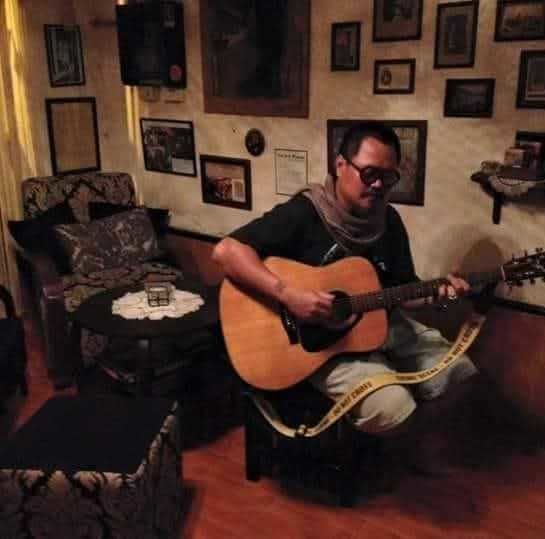
I found music when I wanted to escape from a teenage life that was heading in a bad direction. At that time, I went to see my older brother in Bangkok. He rented a house with friends behind Ramkhamhaeng. They played music. I saw my brother's guitar, so I asked for it. I hugged that guitar on the bus back to Phetchaburi, and after that, I rarely went out anywhere.
Because if I went out, I couldn't help but go with friends and get into trouble again. There was a songbook my brother left behind, so I took it and practiced by myself. I practiced for 3 months. When I came down from the building, I could carry the guitar and play a show. Once I found music, I felt my mind became gentler. It changes people, making us more humble towards this world.”
Overcoming Accusations with Perseverance: From a Wayward Kid to an Engineer
His teenage life wasn't very smooth. His father wanted him to study anything except music, so he chose to study what was popular. Most people expected their children to study medicine or engineering. Fueled by a teacher's insult, he successfully passed the entrance exam for the Faculty of Engineering at Kasetsart University. But once admitted, his father only had money for tuition fees. For the rest, he had to work part-time to cover living expenses in Bangkok. And it was music that allowed him to earn income during his studies, until someone saw his potential and invited him to play in a shop with higher pay, giving him the chance to know many skilled musicians.
After graduating as his father expected and bringing the degree as a gift to him, he asked to pursue his dream, entering the music industry full-time with the goal of being a producer.
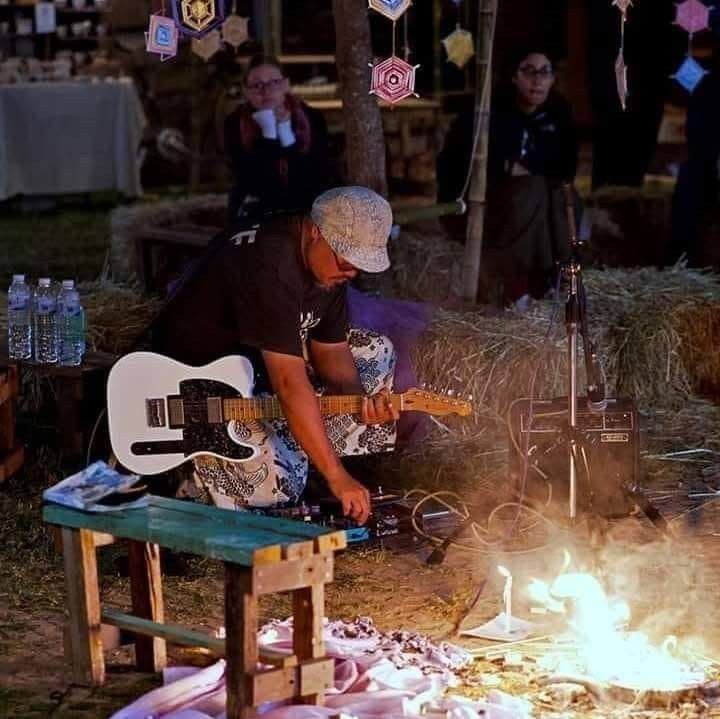
“At that time, I felt music had become my life. I started knowing what I wanted to do, so I asked a friend to learn music production at Grammy. Every week I had to go to Green Beans at the Grammy building. P'Krit (Kritsana Warin) taught us songwriting, laying a very good foundation for us. After that, I went to RS, then Sony. At Sony, we did a lot of TV drama soundtracks, commercial jingles, program themes, and played as backup for artists.”
But then one day, life's rhythm changed. From having music gigs in Phuket and thinking of settling there, there was a reason to separate from his long-time lover. So, he drove his trusty Volkswagen heading north to find his older brother in Chiang Khan.
One Car, One Guitar, and a Journey Without a Destination
“I had one car, one guitar, intending to visit my brother. He went to run a homestay in Chiang Khan called ‘Baan Mueang Khan: Ok Hak Phak Baan Nee -- (Baan Mueang Khan: Heartbroken? Stay at this house.)’. In my heart, I wondered if I would make it. It took over 6 months to reach Chiang Khan. I stopped in every province. When money ran out, I busked. With the money earned, I filled the gas tank. I met people, started liking the diversity of places, and started enjoying tasting food in various locations. Actually, I had been a foodie since Phuket. Because playing music in hotels allowed me to taste diverse foods. At that time, the internet was starting, so I could search for information and started gaining more food knowledge. When I reached Chiang Khan, I took on the role of musician, sold drinks, and mixed cocktails. But food was missing, so I took the duty of the cook, making little things to sell. When people started increasing, my brother wanted to move out. He wanted to go to Nan, so we moved to Nan together to open a homestay called... ‘Ror Rak Rim Nan’ (Waiting for Love by the Nan River), which was the second series of Ban Muang Khan. It wasn't actually by the Nan River, but on the edge of Nan province.
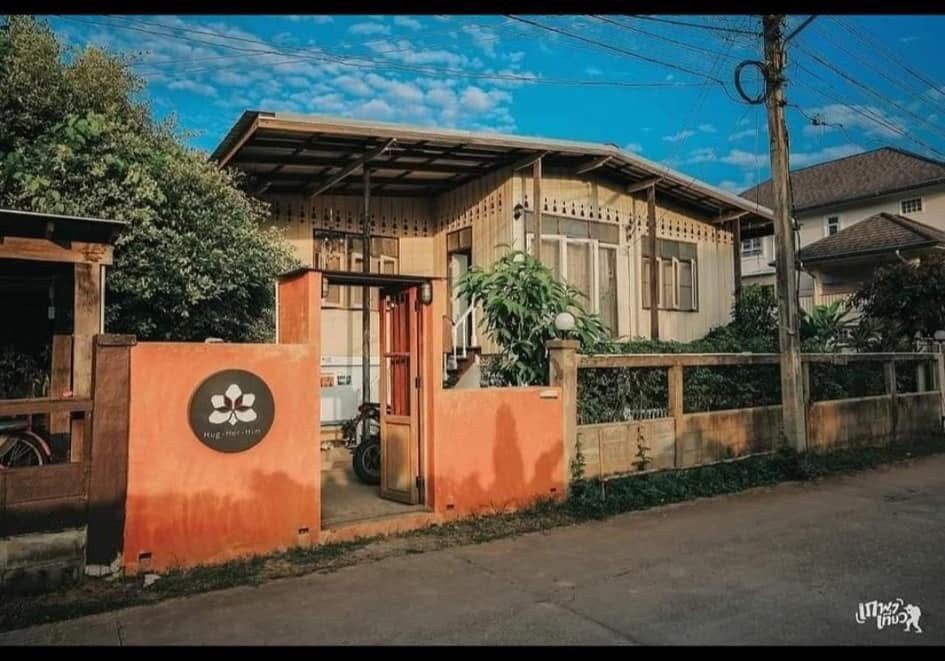
It went well because it was very new for Nan people. There were many foreigners in Nan. There was a bar, drinks, and music as usual. For accommodation, we had to wait for winter for guests. We did the kitchen too. At 9 PM, we closed the kitchen and went up to play music. The food started changing from purely international to incorporating local elements, making strange menus. We started finding strange ingredients from going to the morning market, getting deeper into selecting ingredients, and started growing our own vegetables in the backyard.
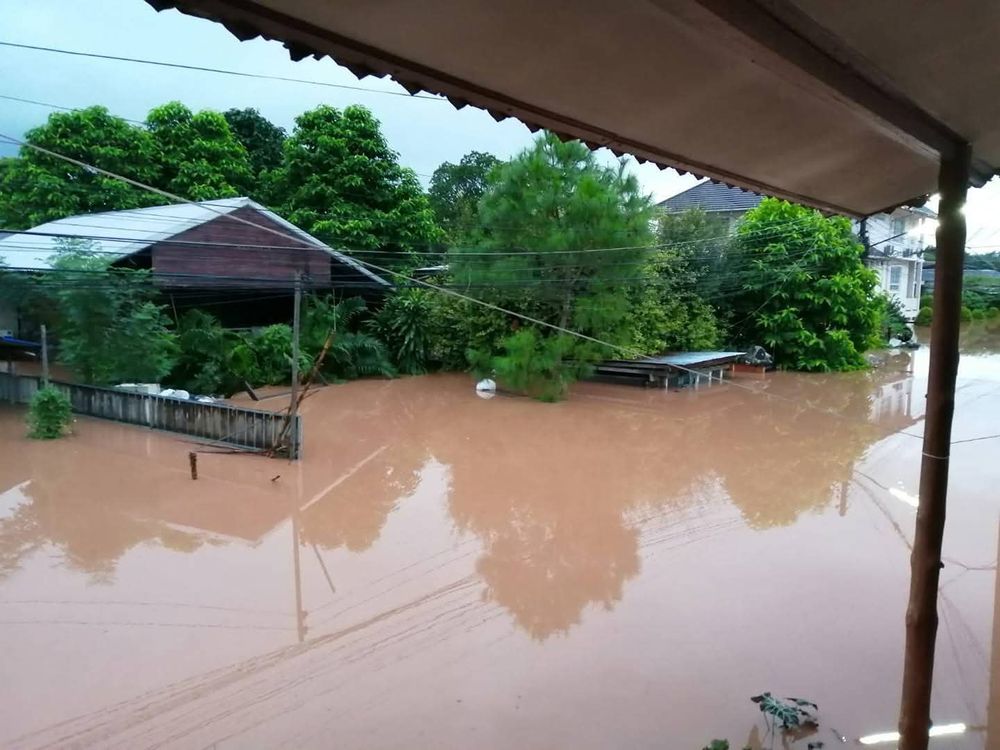
During that time, there was the Nan Art Festival, so I volunteered to help twice. Then I talked to my brother that I wouldn't stay in Nan anymore; I would go back to Phetchaburi to take care of Mom. I talked to friends about opening a restaurant near Khao Wang, using Phetchaburi's local ingredients. But after staying a few months, Mom didn't want me to stay because she said she didn't want to feel like a burden to her child while she could still help herself. She wanted her child to go live his own life. Around that same time, coincidently, there was an old wooden house and a vacant lot available. My brother and his friend went to help renovate it. The owner asked if anyone wanted to stay or do something there. We were interested, so we agreed to do it. We came in to renovate, changed doors, planted trees. I went to work in Phuket to save money to send back for the builders. The first year, before we could open, it flooded. That area is called Tha Li. There was a younger acquaintance in Nan whose home was nearby, so I told him to go check it out. He replied with one sentence: ‘I don't have a boat.’ Hearing this, my heart sank. When he sent the photo, the water had reached the second-floor window. That was around the year 2016. When I went back, I sat sadly in front of the house. An auntie next door who we knew well walked by and asked, ‘What are you doing sitting there, son?’ I complained, ‘How am I going to live, Mom?’ She said, ‘Oh, I've lived here for 50-60 years, I can still live here.’ ‘Then what do you do, Mom?’ ‘Buy a boat, son!’ That was it, I laughed out loud. It was an answer that sounded funny, but it opened up my perception greatly. It made me realize that sometimes we don't have to try to fix the problem, but ask how we will live with the problem. That was it—enlightenment. After that, the city managed water better. It still floods sometimes, but less.
When we started the homestay, we started cooking too because there had to be breakfast. This was the point where serious cooking began. We listed on various booking websites because we intended this to be a place with the most foreigners. Since it was a wooden house, we feared people might be scared because the color was gloomy, so we painted it like candy in some spots to make it feel brighter. Regarding food, we thought differently from others. We thought if we traveled to Europe, waking up in the morning, we'd want to eat local food. We wouldn't want to wake up to eat Pad Kaprao. So we thought of making Thai-style breakfast—rice, curry. People said doing business requires watching costs, and what we were doing exceeded the cost. But looking at it from the angle that we have to eat anyway, it’s a by-product. And if sometimes there was too much, we would announce in a small group that today we have this curry, who wants some? It generated income for us.
During that time, I had to go to the market often. I found local ingredients and transformed them into special menus that were easy to eat, that foreigners could eat. If it was vegetarian, I used mushrooms or tofu. After doing this for a while, friends started coming to hang out in the evening, so we cooked and ate together.”
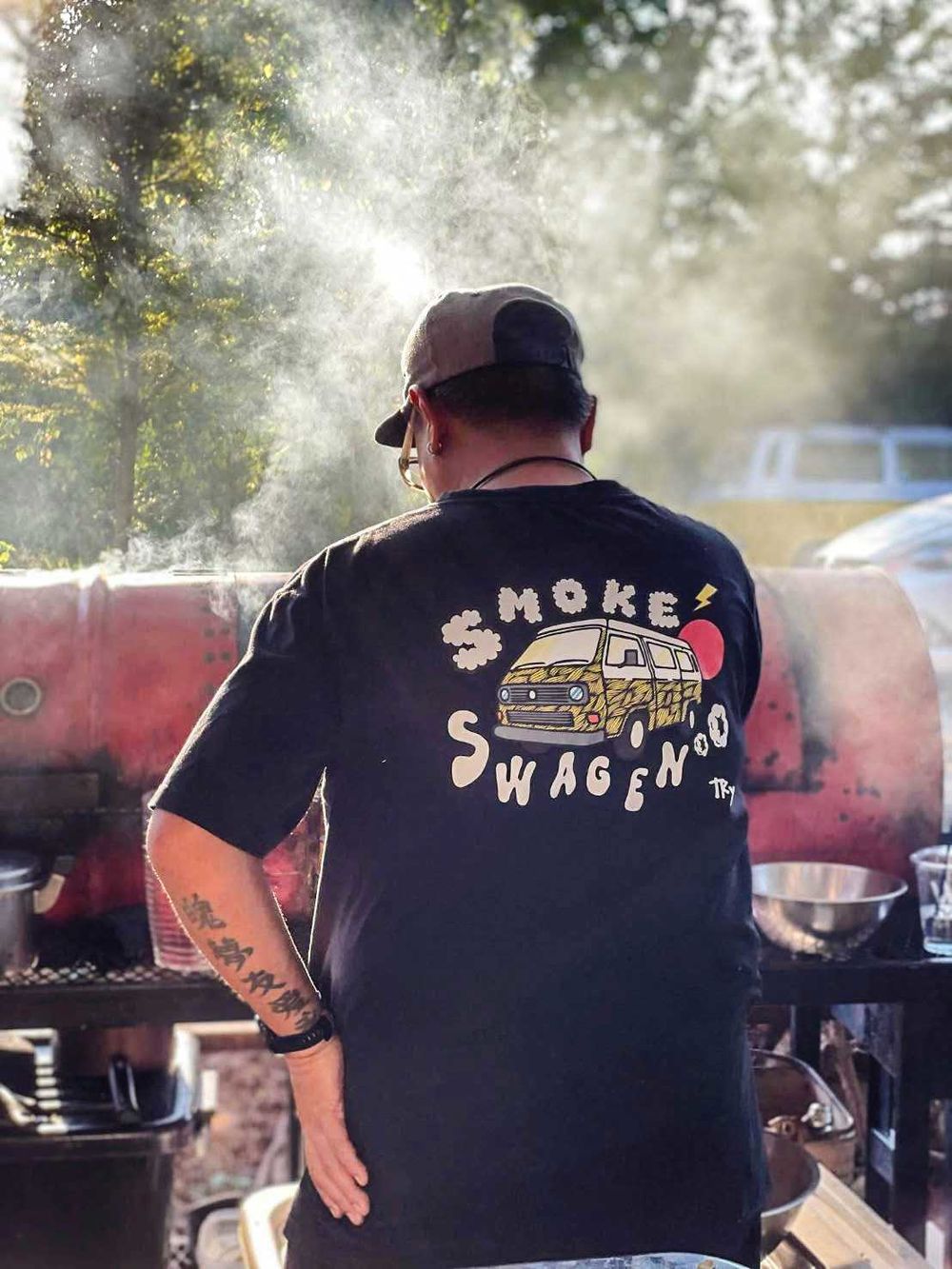
Floods, Fallen Trees, and the Accidental Discovery of the Secret of Smoke
One fine day, a storm wind blew, bringing a gift that was like a magic tool leading him to a new path. Although it was a storm that caused damage, every destruction is often followed by something new.
“One day the wind blew very hard. A tree next to the house fell onto our roof. Next door was a doctor's house. He called the municipality to handle the tree. There were wood scraps everywhere. The doctor asked if we wanted to keep the wood scraps. We said it’s okay, we’ll keep them. That year was very cold, so we planned to keep them for firewood. The fallen trees were wild Sapodilla trees, likely 100 years old. Both trees toppled down.
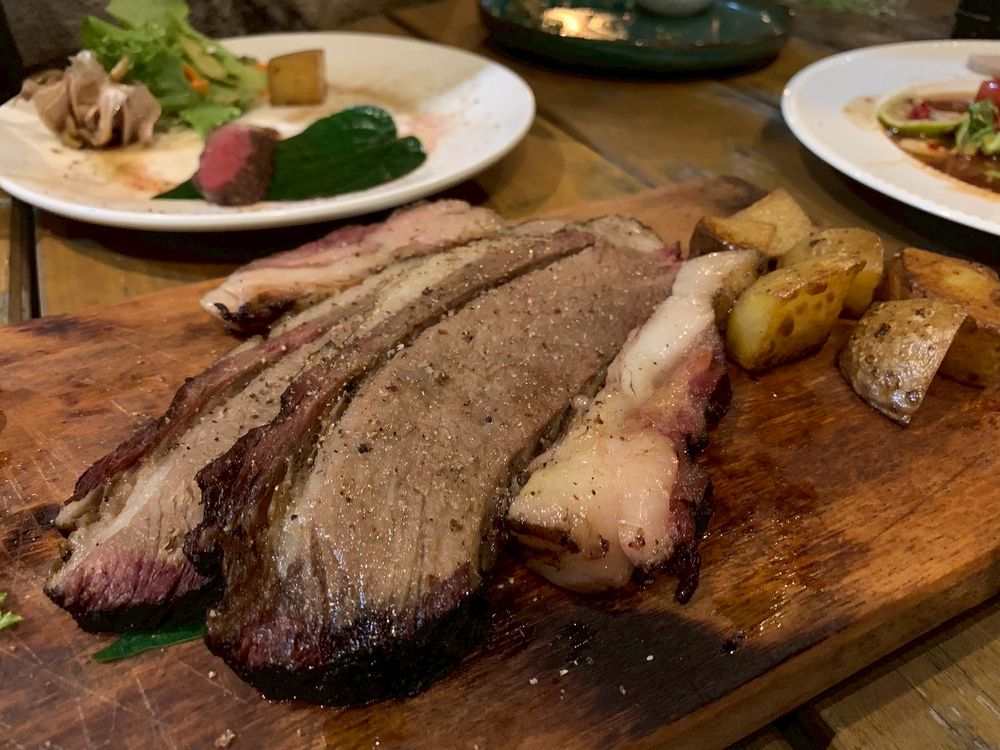
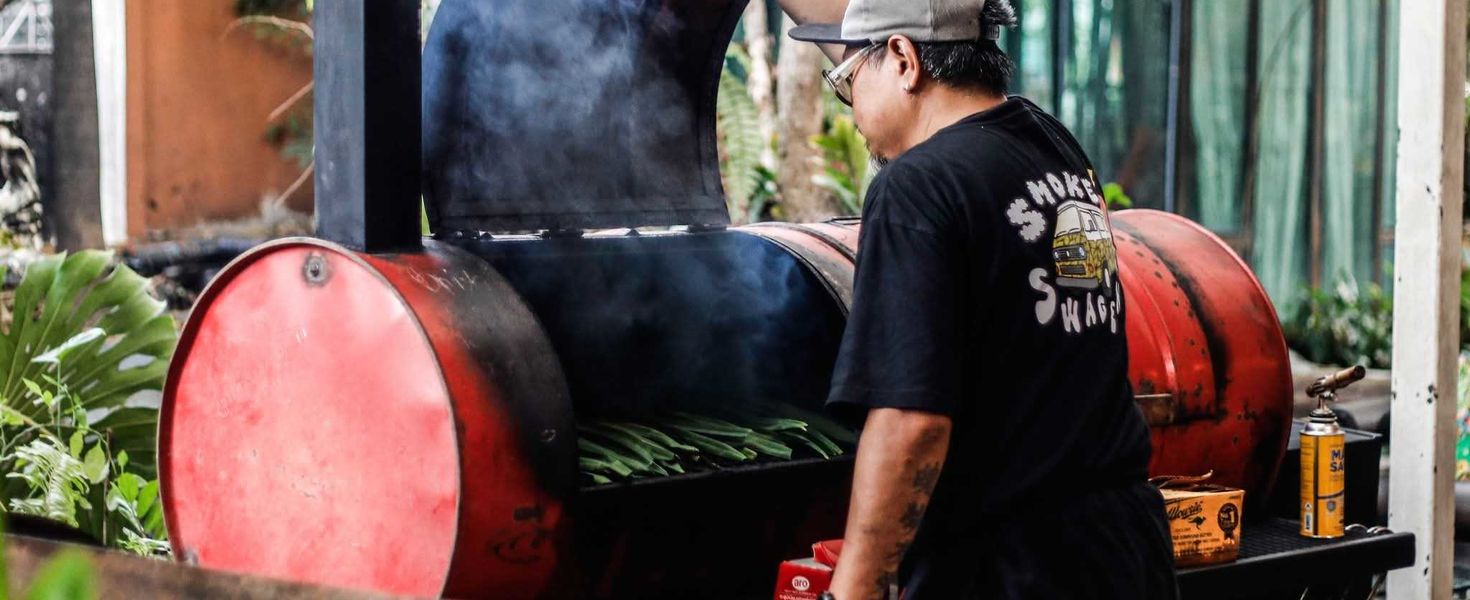
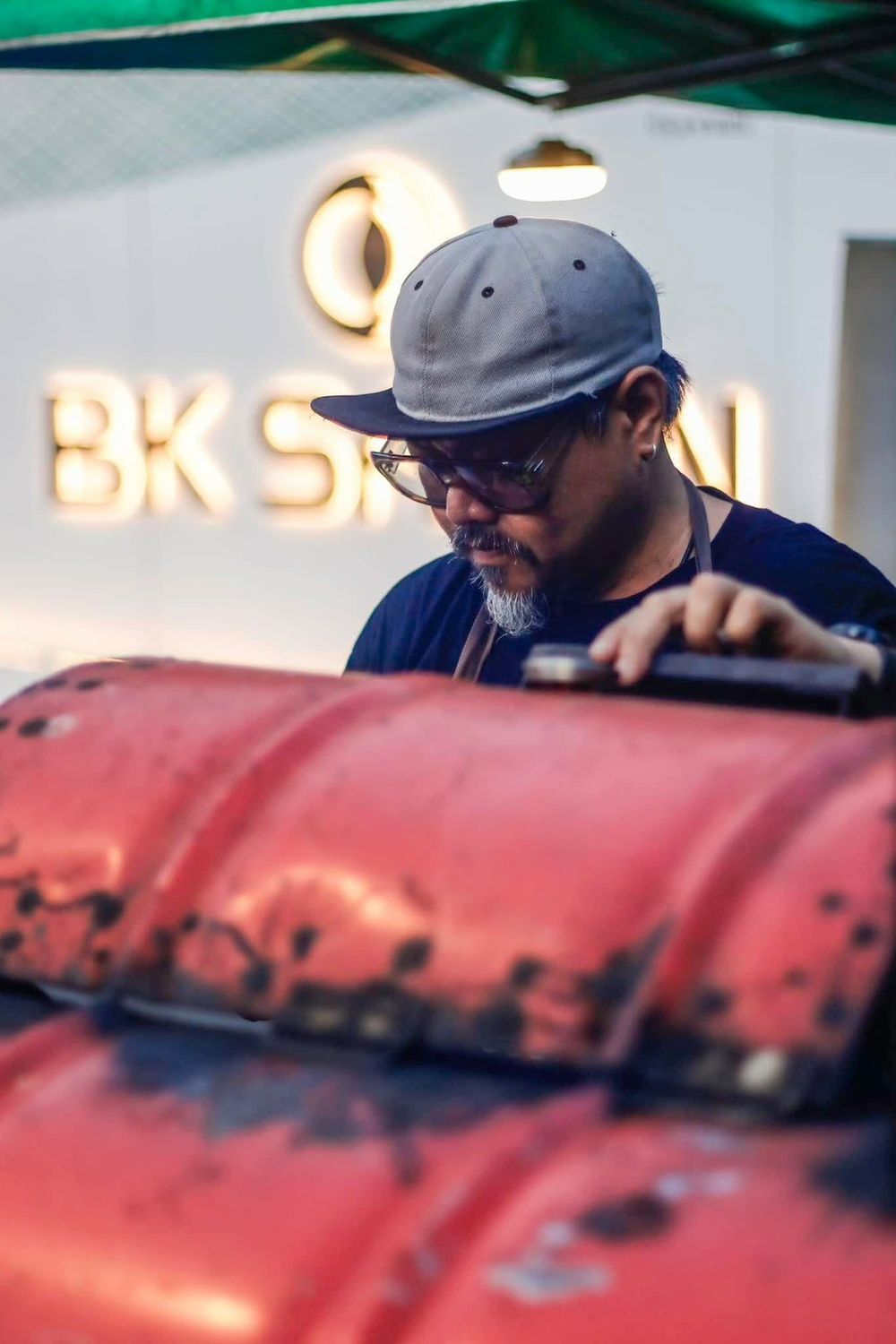
At that time, I was running my own homestay, but I still had to go cook for my brother's homestay too. In the evening, I went to help in the kitchen and played music as well. One day, I used this very wood to build a fire to grill pork for a snack. And I smelled it—hey, why is it so fragrant? Is it because of this Sapodilla wood? So I tried burning other woods. It turned out nothing was as fragrant. So I started wondering why it had more scent than other woods. It might be because of the age, being a wild wood, and being perfectly dry. When I had free time, I searched the internet to understand wood and how smoke is used in cooking. I found it was an ancient method. I started to become fascinated, feeling I wanted to go back to using local ingredients using ancient techniques, like smoked barbecue style. So I thought of making my own stove. I bought a 200-liter drum and called friends to help. We sat and welded the steel ourselves. YouTube was just arriving then; there were some people posting how-to videos, but very few, mostly foreigners. The person we watched was the owner of Franklin Barbecue. We messaged him to ask, and he gave good advice. We started going deeper, studying food culture and the origin of barbecue, that it came from the Aztecs or ancient Mayans. They would dig into the ground, put agave leaves at the bottom, then place a whole pig down, putting potatoes and corn in too. Then cover it with agave leaves again, burn it, and go to work. After work, they dug it up to eat with spices. Leftovers were kept for breakfast or packed for lunch. Later, with the Spanish intervention seizing power, local people scattered. Some went north to Mexico, reaching Texas, creating the barbecue grilling culture. The technique is just salt and fire; that's where it's measured. I tried doing it until friends said I should open for sale. That became the origin of 'Secret Yard' which opened in the garden of that homestay.”
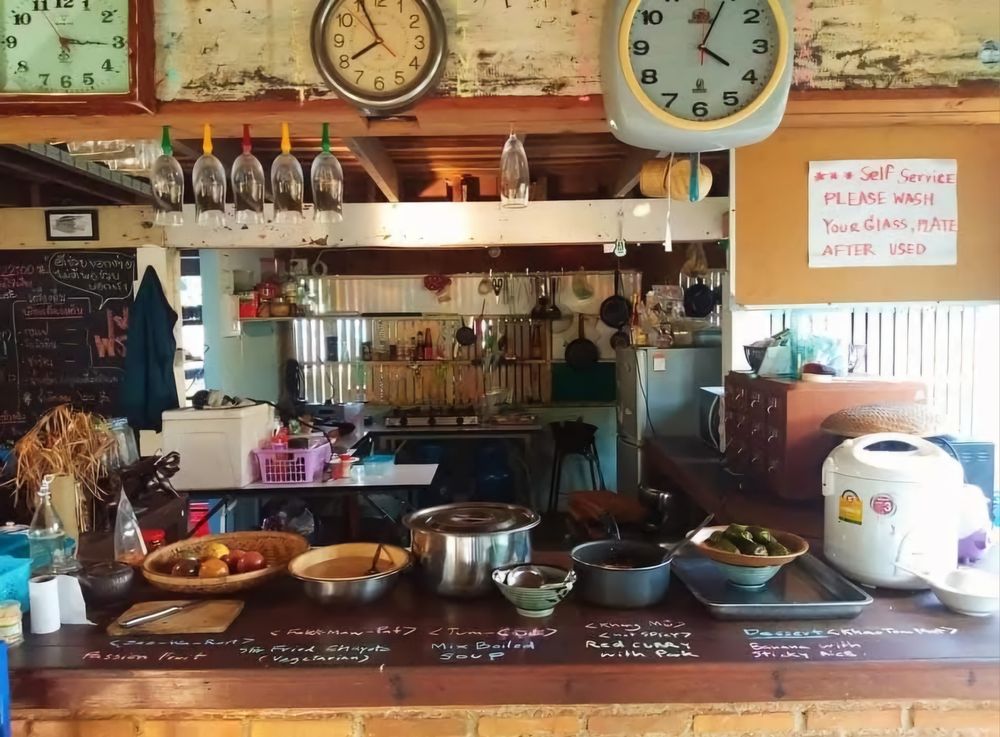
The discovery by chance created a direction in cooking, combined with meeting people of various nationalities staying at the homestay, leading to a cultural exchange of food.
“People who stayed were of many nationalities. The first thing we set as a flag was to ask them what they eat for breakfast at home.
We used an exchange method. I told them if they were willing to tell me, I would teach them to make Tom Kha Kai (Chicken Galangal Soup). I must have taught making Tom Kha Kai for probably a thousand pots already because people came from almost every country, mostly Europe.
Doing a homestay is like traveling, but in reverse—people travel to us instead. So, it wasn't very lonely. Even if I didn't travel, I was still playing music and cooking. So it was the point where travel and food came close together.”
But just as the wind brought a great gift, the water washed many things away from him. This was a turning point where there almost wasn't a Smoke Swagen today.
“From someone with extreme positive energy, life felt like it was smashed again. From struggling and thinking it was time to be comfortable, COVID arrived. Both accommodations and restaurants went silent. After COVID hit, we tried to struggle. We were still renting. We started selling online because the shop had both baristas and chefs. This COVID period was the heaviest.
Pandemic, Accident, and the Resurrection of the Phoenix
That was the lowest point in my life. Three restaurants closed. The camp I just invested in with friends closed because I planned to do everything to save money for having children in the future. On top of that, my girlfriend broke up with me. Mom was also sick during that time. I couldn't take her to the hospital because of the lockdown. At that time, it was incredibly painful. I didn't want to live anymore. Coincidentally, a junior friend came to visit. When he saw my face, he didn't go back; he stayed as my companion. The accommodation still had customers because they were stuck in lockdown. I holed up in my room. The junior friend received and took care of guests. In my heart, I just wanted them to go back because I didn't want anyone to see me in this state. But the lockdown was so long...
Until one morning, a question arose in my mind: Are we really going to die? Mom's face floated up. I told myself immediately, 'No, Mom is still here.' Thinking just this, I looked for an outlet. I wrote a song called 'How Can I Move On'. After that, I came out of the room. Not long after, the lockdown eased. Then I composed the song 'All Alone' and sent it to Cat Radio, and it reached the final 5 songs. I thought... oh, this path works too. Because when I was suicidal, I called a friend and told him. He said, 'Where are you rushing to go? You've written so many songs that no one has heard yet. Stay and make music first.' And at that time, my song was climbing the charts. So I thought I should do something inspiring to send positive energy to people instead.
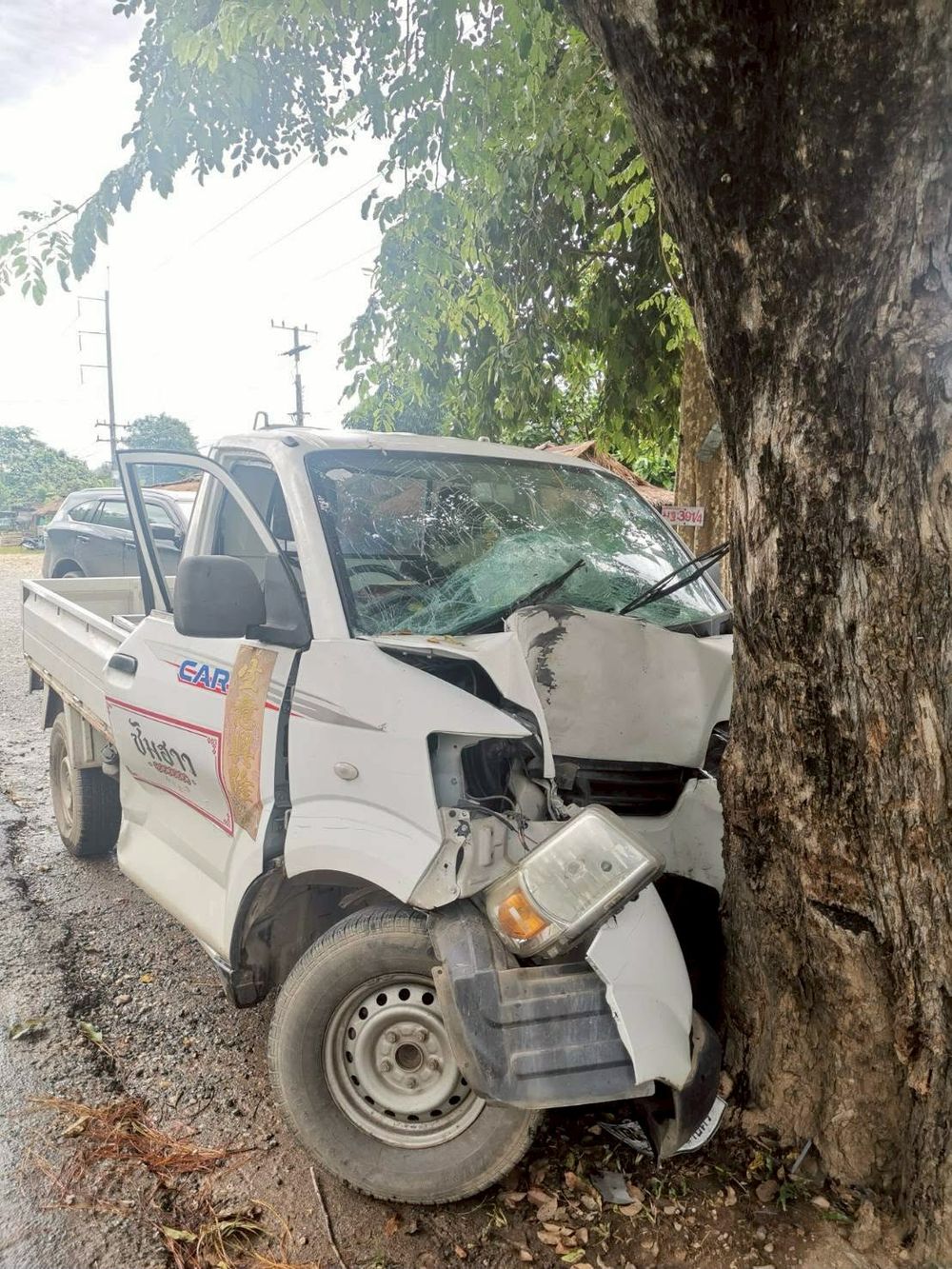
So I started renting another place to do a restaurant, doing events and festivals in Nan. I opened a ramen shop, selling about 10 bowls a day. I set the target there because I did it alone. I still had to take care of the accommodation; I didn't hire anyone. During that time, I practiced making ramen noodles myself out of passion. The feedback was good because no one there did fresh noodle ramen. The shop was called Secret Izakaya. I started hiring staff and someone to look after the accommodation because high season was approaching. The shop had been open for about 10 days. One day I had to go help with a junior friend's work, so I closed the shop at 8 PM. I drove a Carry truck to do sound engineering. After finishing, I planned to pitch a tent and sleep there. But it started raining, so I packed the tent and drove back to Nan. On the way, the rain was very heavy, plus I had little rest. Before I knew it, I hit a tree. I still had enough consciousness to look in the mirror and see blood all over my face and body. I couldn't move my body, only my arm a little, so I pressed the horn long until villagers came out to look. I tried to grab the phone to call Mom because I thought I wouldn't survive. But I couldn't grab it. I thought I was definitely gone. I started worrying about this and that. Then I realized if I go, I'd better go peacefully. So I started cutting off attachments one by one, stopped thinking, and closed my eyes to meditate. People who came to help said, 'Don't close your eyes, don't close your eyes!' I said, 'I'm meditating.' I waited for two and a half hours for the first rescue car to come. But they couldn't get me out because they didn't have the prying tools. I passed out for 2 days. I woke up in the ICU. The nurse said don't move. My hip was shattered, 7 ribs broken—luckily they didn't puncture the lung. My knee needed surgery. My eye needed surgery to insert titanium to replace the broken bone; luckily the eye still worked normally. Mom had to come take care of me even though she was sick. By the time I recovered, the shop had to close permanently because when I wasn't there, no one ran it. While sick, I used a lot of money for treatment. My savings were gone, and I even went into debt. So I looked for a job as a restaurant consultant for resorts.
That was after doing physical therapy for one month. The doctor said I needed four months of physical therapy, but I couldn't wait anymore. I had to endure the pain and work simultaneously.
Then someone who used to eat my ramen and liked it invited me to open a place in Chiang Mai. After doing that for a while, I came back to Nan. The accommodation was dilapidated. The caretaker was about to quit. During that time, I traveled back and forth between Chiang Mai and Nan for a while. Then I met someone doing a travel show. We talked and got along. He took me to exercise. From unable to walk, I got stronger. We talked for a while, then drifted apart. The name 'Smoke Swagen' came from him.
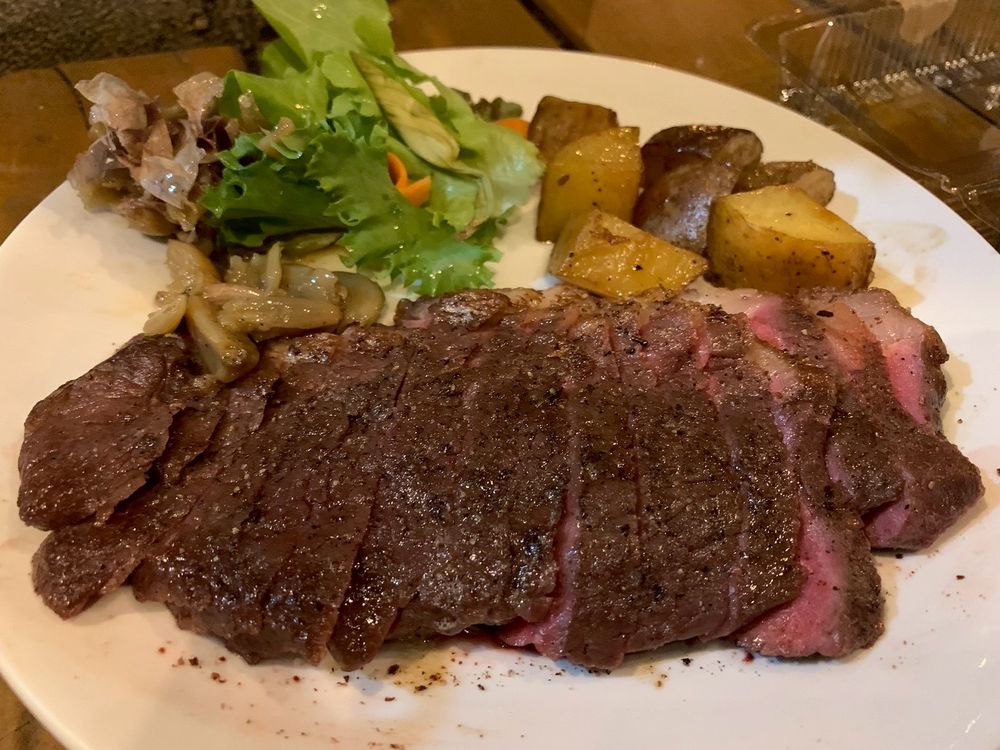
Once recovered, I looked for a place to sell things. I drove a tricycle (saleng) selling steak at Thapae Walking Street, Chiang Mai. At that time, I found a new manager to watch the accommodation in Nan. I needed to find money for his salary, waiting for the high season again. If we could reach the high season, we'd survive, because we survived the previous year. At the same moment, a junior named Oat, who used to compete in MasterChef, sent a message saying there was a cooking competition accepting applications; that day was the last day. So I recorded a clip and sent it. It was the same day my brother told me to go pay respect to the monks at the temple, just in case things would get better. So I went to pray and meditated. At that time, I heard a voice whispering in my ear, 'Why don't you ordain?' After that, there was a call inviting me for an interview, and I got in to compete. While competing in the final episodes, Nan flooded. On the day of recording, there were hundreds of incoming calls, but they couldn't reach me. When I called back, they said, 'It's all gone. Nothing is left.'
Positive Food: Passing on Good Energy to People
When life had to go on, he loaded the smoker stove onto his trusty Volkswagen van, ready to go anywhere, bringing stories, food, and music to meet people.
“After the competition, we brought the car to fix up. We intended to sell in Bangkok but got chased away. So we decided to travel, roaming to sell goods all over the country, with friends supporting us. Everyone was willing to help us fully. Whatever was missing, they managed for us—both the car and the supplies. I had to manage the planning—the travel, contacting venues, ingredients. It was very tiring, like going on a concert tour. Taking the journey and stories along with the food. I knew then that in this life, these three things are enough: 'Music, Food, Travel.' We weren't afraid of starving because we had passed the lowest point already. Planning became non-planning. Just living with reality, that's all.”
Then the bright sea breeze beckoned him to start a new path, where he could bring his intention to pass on positive food to people. This became the origin of the concept 'Smoke Swagen Positive Food', wanting people to eat safe, seasonal food.
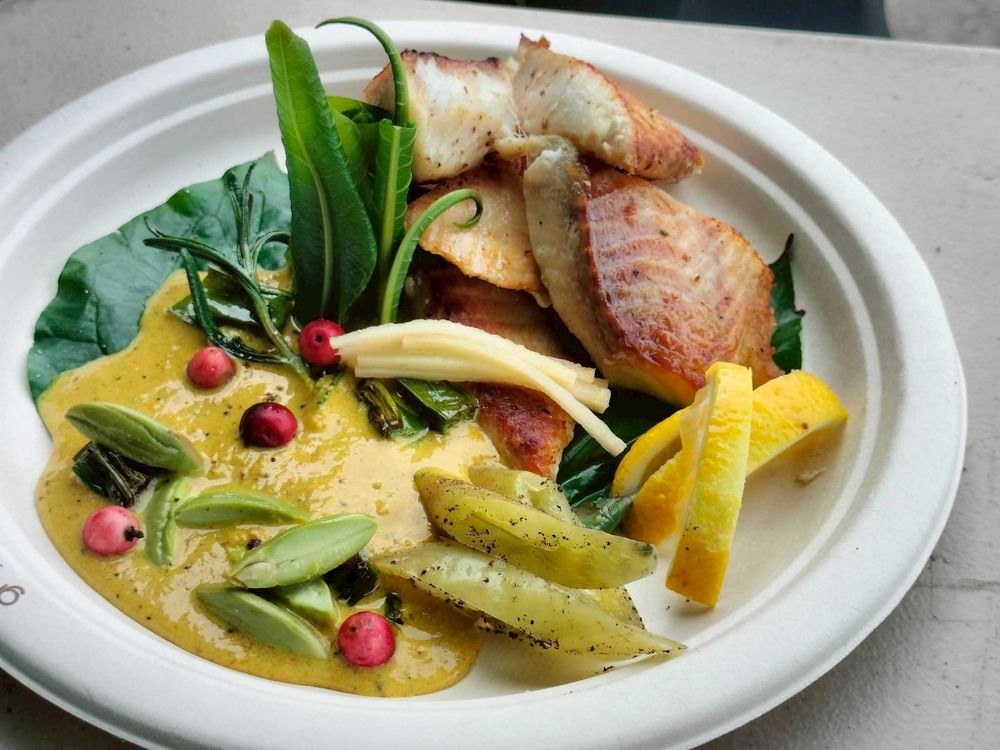
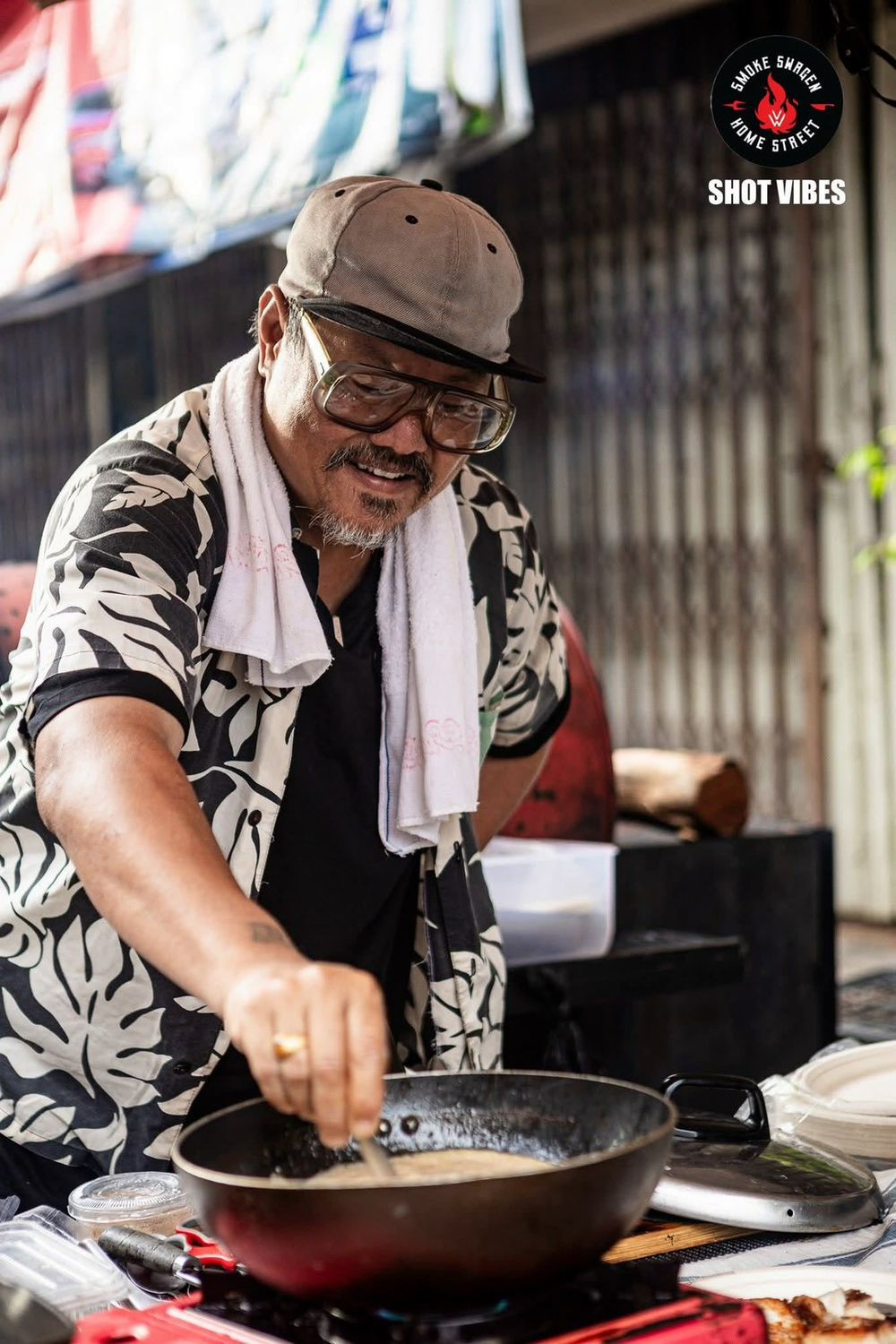
“The Smoke Swagen shop in Hua Hin uses mostly local ingredients where we know the source from agricultural networks like Truly Organic, Pran Por Piang, or organic vegetables from P'Luang's garden in Pala-U. The fish used is from Manit Farm, which has trusted quality. And other ingredients are carefully selected. The food is a fusion of Asian and Western styles, served in a comfortable, warm atmosphere where you can bring your family to eat at a reasonable price.
We want to pass on positive energy because during our travels, we met people who sent positive energy that allowed us to keep walking. So we want to pass this on so others can keep going too. This is the origin of Smoke Swagen Positive Food. We adhere to the Ikigai philosophy in living life: do whatever we love to the best of our ability. And to do it best, it must be beneficial to this world and allow us to sustain our lives too—that completes the Ikigai principles, so we have the strength to continue and develop further.”
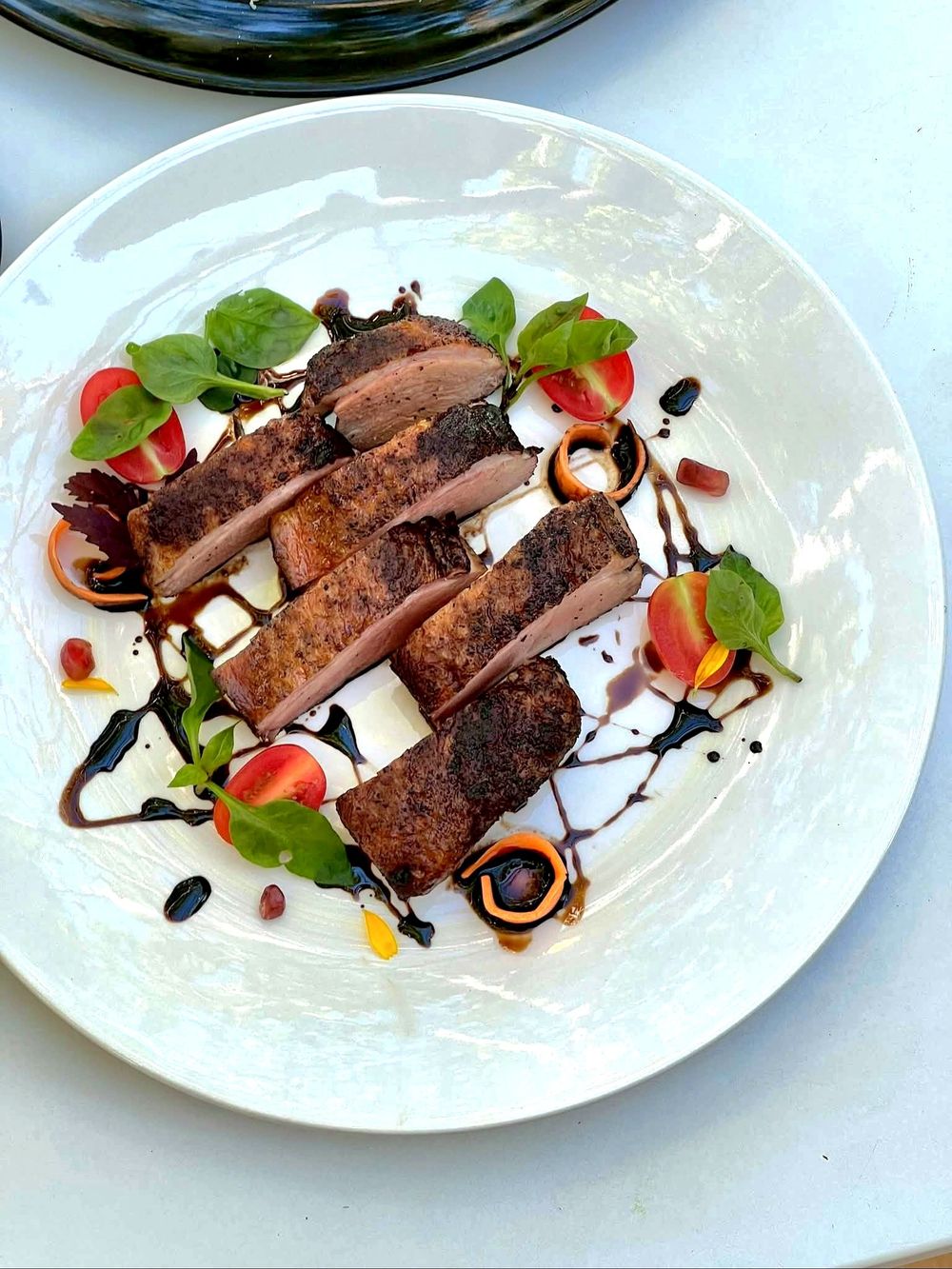
In Thailand, there are quite a few people making smoked barbecue style food. But the charm of Smoke Swagen lies in the stove he built himself, combining techniques from personal experience, along with the importance placed on selecting ingredients, intention, and attention to detail. Anyone who comes to taste it considers it worth far more than the price.
From passing through many experiments, he learned that each type of wood gives a different flavor profile. He chose to use Longan wood, which is a local wood that is easy to find and gives satisfactory results. The meat brought for smoking includes pork, beef, chicken, and duck. As for fish, he chooses to present it via other methods because he wants to highlight the natural flavor of the ingredients.
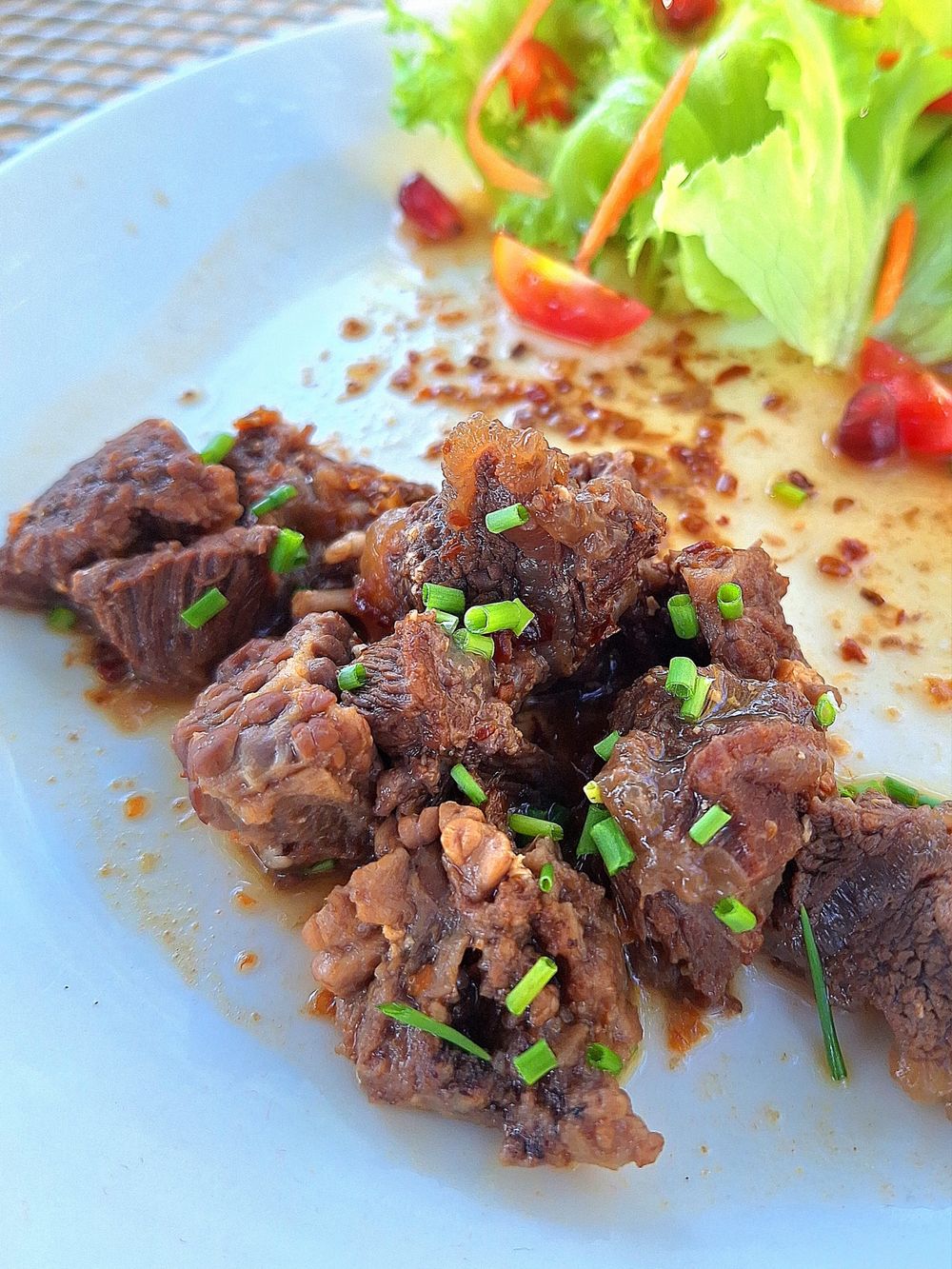
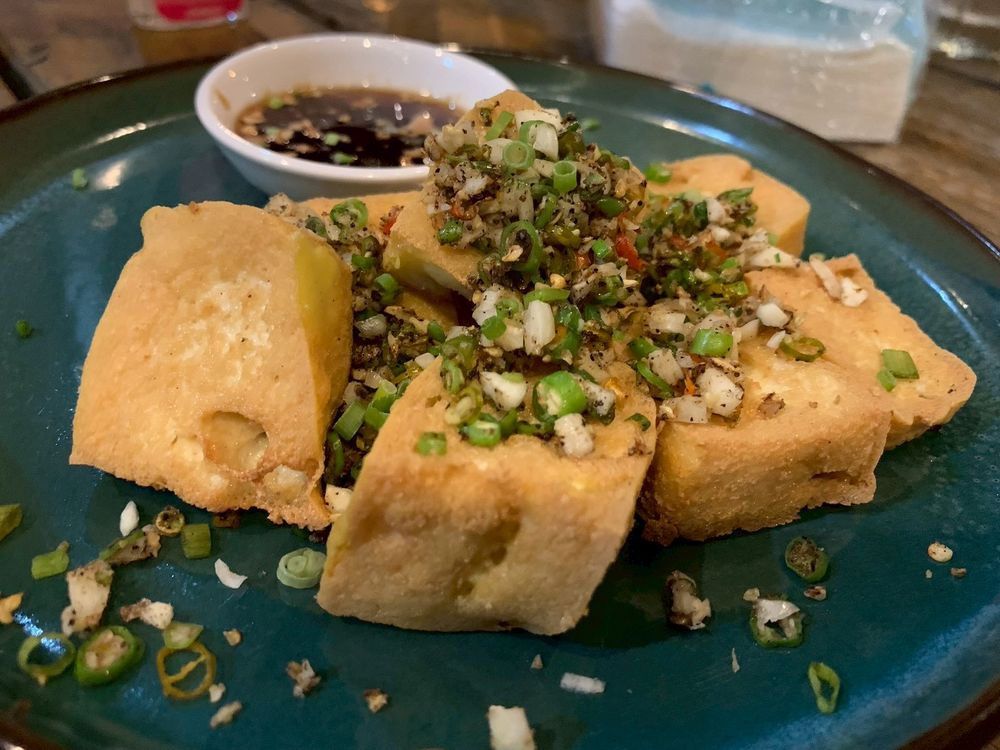
The highlight menu cannot be anything else but Longan wood smoked pork and beef, served with Ma Khwaen (Zanthoxylum limonella) Jaew sauce, or smoked duck breast with palm sugar reduction sauce. For vegetarians, there is tofu roasted with chili and salt to choose from. Or if you want to be full in one dish, Manit Tilapia Rice answers the need well.
For drinkers wanting a mellow, high-quality snack, you must try the Phetchaburi Beef Salad (Yum Nur Muang Phet), using stewed beef that melts in your mouth, served with spicy salad dressing in Phetchaburi style.
Life = Music, Food, and Travel
If asked where what he is doing now will take him—besides the intention to pass on good energy to others through food—music and art, which have been with him all his life, have blended into unity harmoniously on his plate. It almost tells the story of his life through a single dish.
“We feel that blending art into many things creates warmth, making people's minds not hardened, living harmoniously with people and the environment.
We probably won't abandon traveling. A new round of travel might be like a concert tour, but not long-term for months. Maybe just a week. This shop opens normally even if I'm not here because there is Chef Num (Sarayut Makmee) helping to take care of it. We view this place as an accessible shop where you can bring your family to eat because the food is delicious.
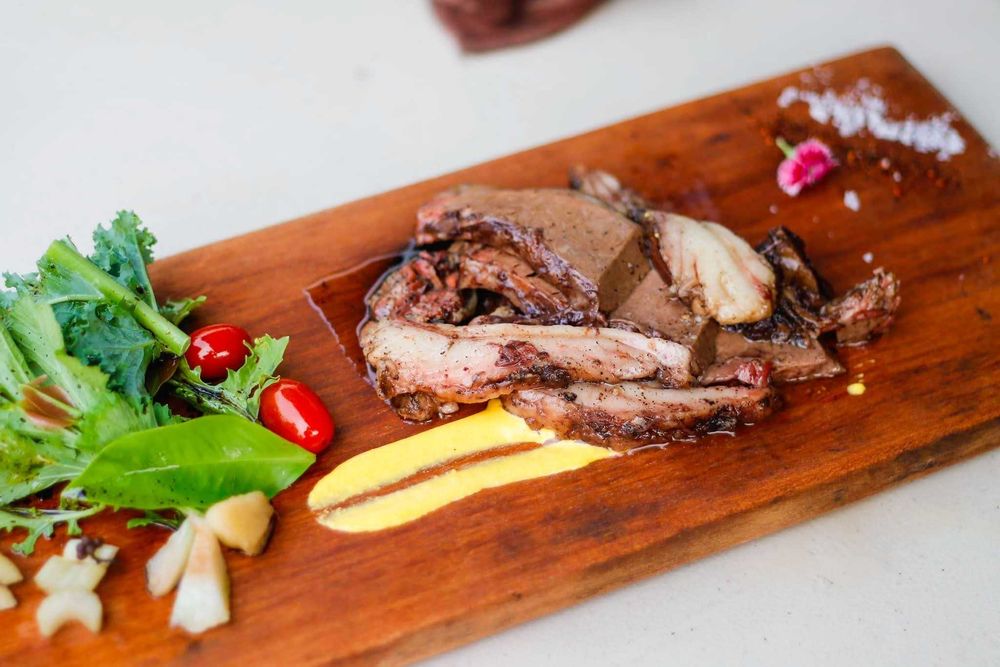
Hua Hin has many good ingredient sources. So we see that we could make the shop reach Michelin Star level. An older brother I know named P'Jo said to me, 'You already cook delicious food, but you don't have a name. Make a name for yourself first.' We don't view money as the main thing, but we look at reputation more. Being on a show is like one helper, but we look further than that—we want to reach the global level.
This shop will be the first pin to set the flag for experimentation and to sustain itself. Then we will open another shop at Soi Hua Hin 51. It will be a fine dining restaurant. The name is already thought of: 'PANETA'. It is Pali, meaning Praneet (Exquisite/Refined).
We got this word when we were about to leave the monkhood at Wat Hat Chao Samran. The abbot asked what I would do after disrobing. I said I would travel to cook and move to preserve local ingredients. He handed me a book, an ancient medicine text, and said, 'Do whatever is beneficial with refinement (Praneet).' That is the origin of the name of the next shop to open.”
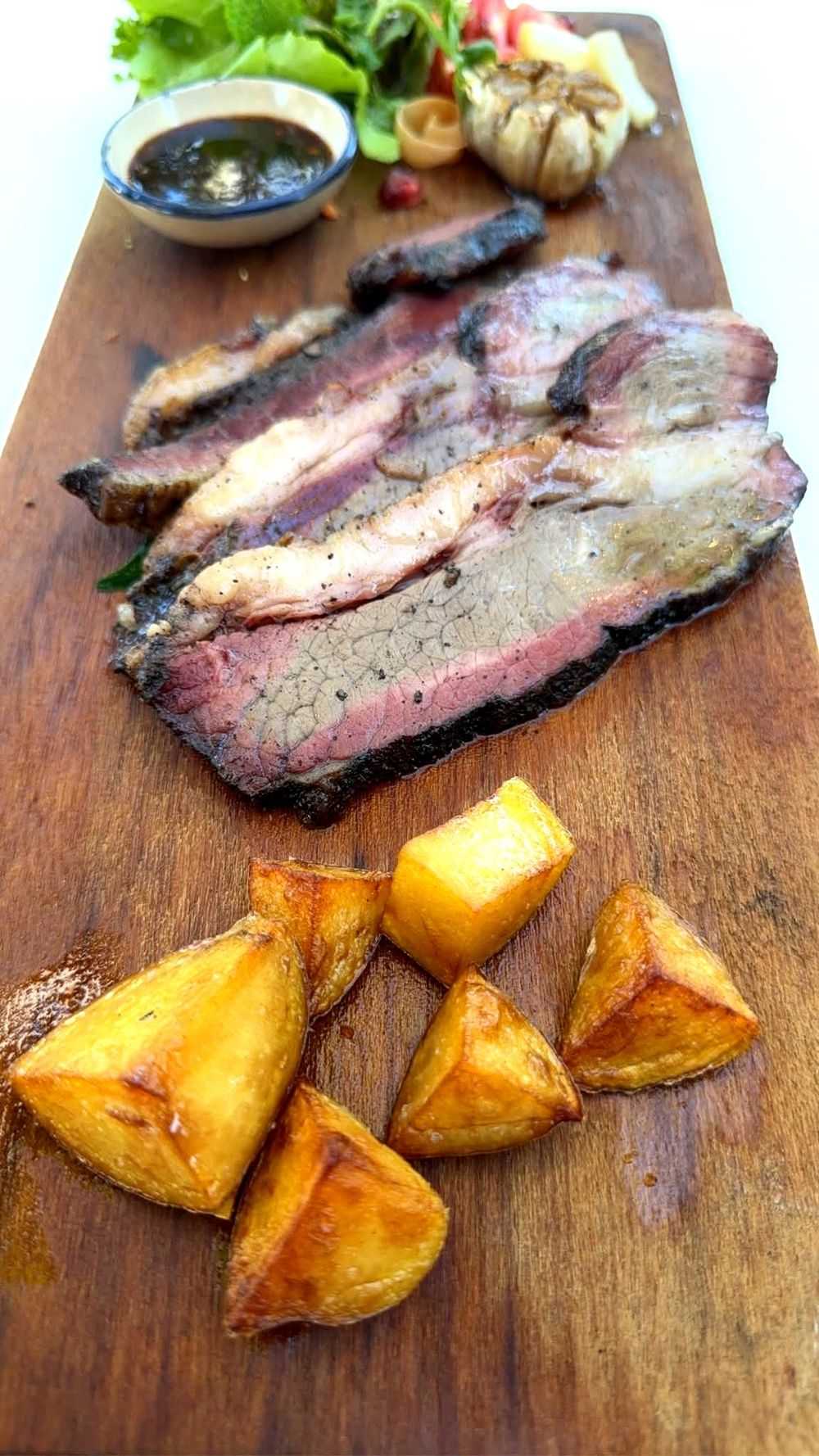
If comparing a person's life to a song, his story might be like a song of the wind—having dry winds, cool breezes, muggy heat, raging storms, or evening winds on ripples. And now, the wind of change has brought this song to be played again. But it is not just his melody alone anymore, because his delicious song brings positive energy to people, played upon food plates, harmonizing in specially selected seasonings that cannot be described in words, other than you must come to experience it yourself.
Smoke Swagen by Ko Im Bom Located in the same area as Pliewiwake Cafe Open daily 10:00-22:00 hrs.
© 2025 Khaoyai Connect. All rights reserved.
No part of this content may be copied, modified, or distributed in any form without prior written permission.
