


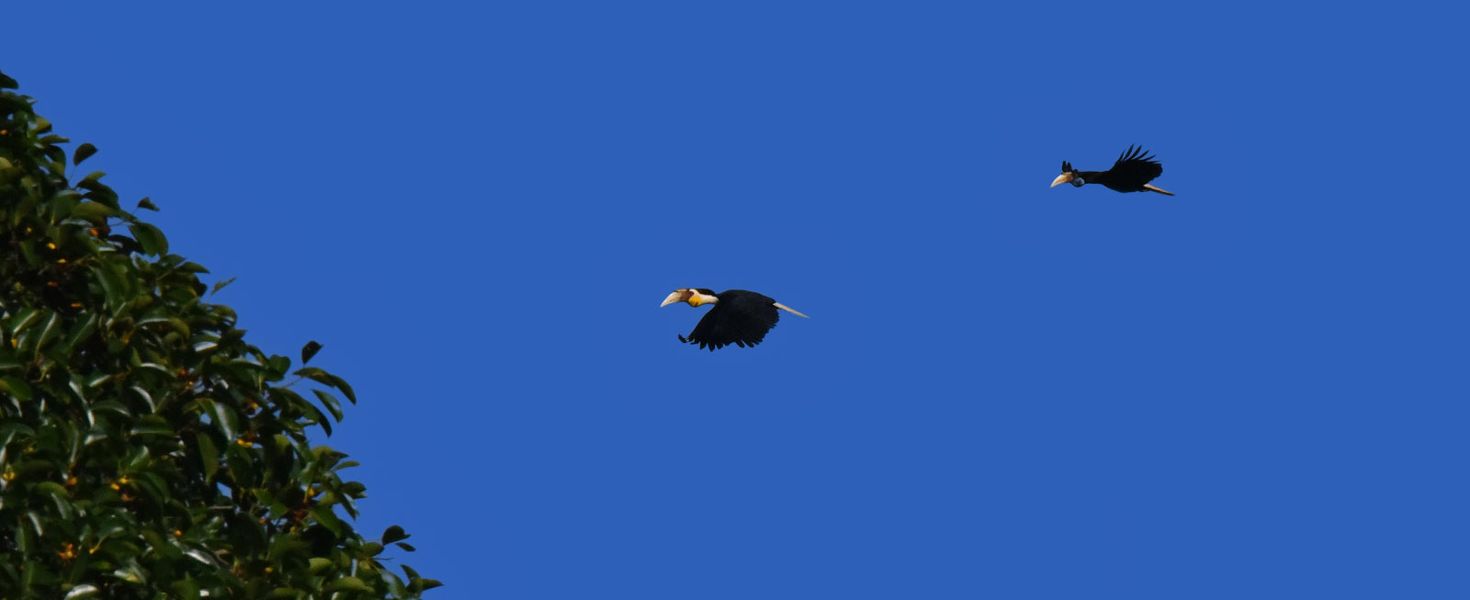
Talking about birds with “Suthee Supparatvikorn”
a naturalist the world needs
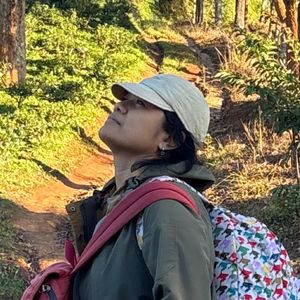
It is not only deep, specialized knowledge that is important for development; comprehensive, well-rounded knowledge across all dimensions is also crucial to drive various issues towards achieving their goals.
The conservation circle is no different. If there are people who fully understand the context, reaching the goal is not difficult.
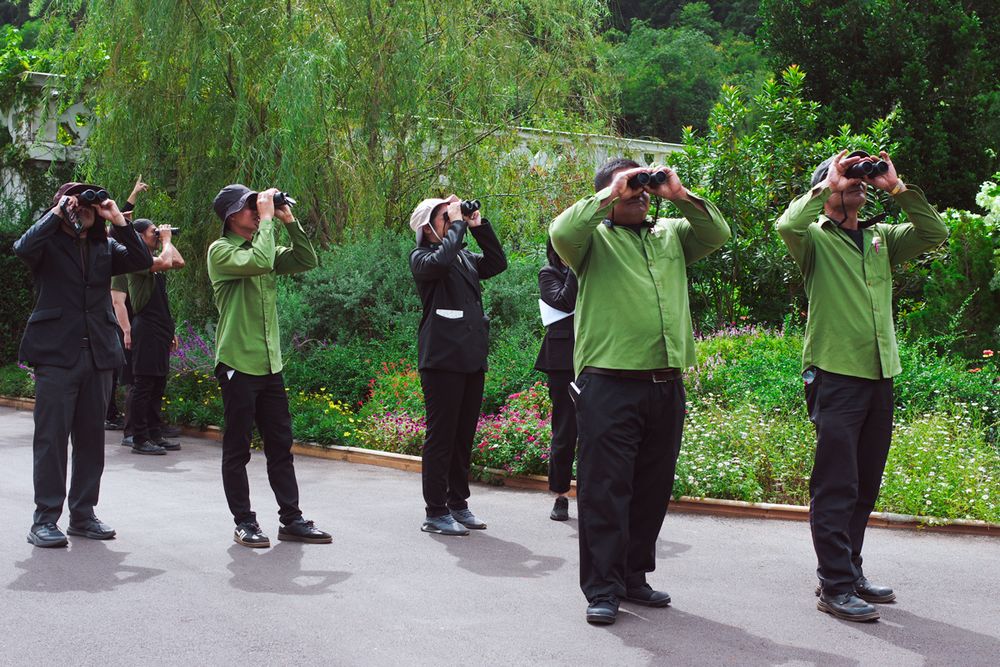
The Khaoyai Connect team had the opportunity to talk with “Suthee Supparatvikorn,” a birdwatcher, an arts graduate, a naturalist, and former president of the Bird Conservation Society of Thailand, on an afternoon during a birdwatching training session for the staff of Maison Mystique, a European-style hotel in the embrace of Khao Yai.
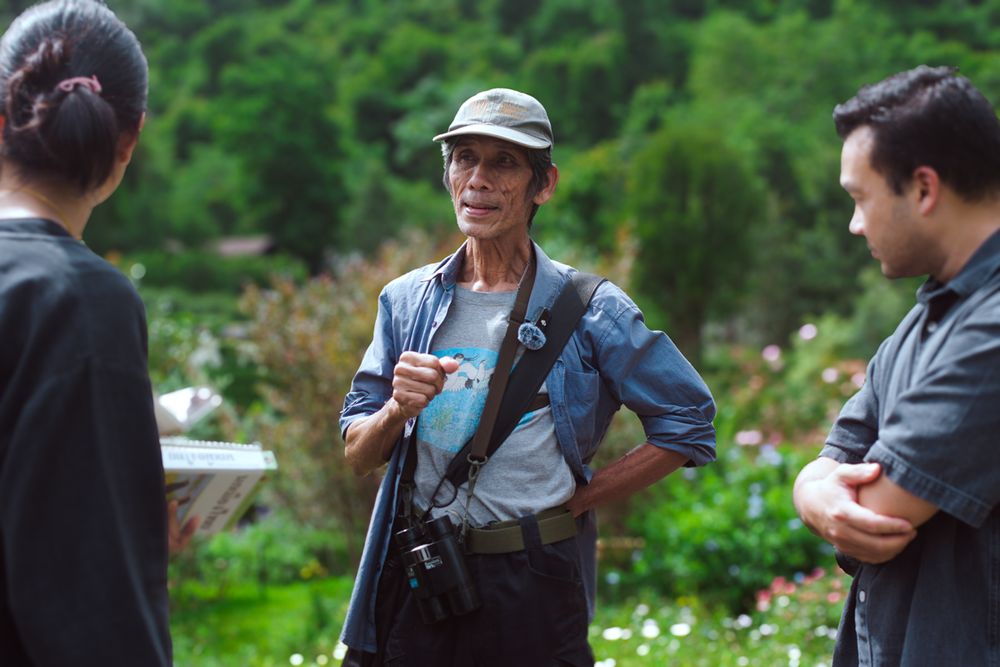
That day, Ajarn Suthee spent several hours laying a foundation on the topic of nature. He only got to the content about birds near noon, because this is the foundation that the lecturer believes every aspiring birdwatcher needs to know.
“What is nature?” A short question from Ajarn Suthee to the staff who sat listening intently, their eyes bright.
“Things that occur naturally, that humans did not create,” one staff member raised their hand to answer.
The questioner smiled with satisfaction before explaining further that nature consists of four spheres: 1. The Geosphere, which is soil, rock, gravel, sand, and various terrains. 2. The Hydrosphere, which is water. 3. The Atmosphere, which is the atmosphere surrounding the world. 4. The Biosphere, which is all living things.
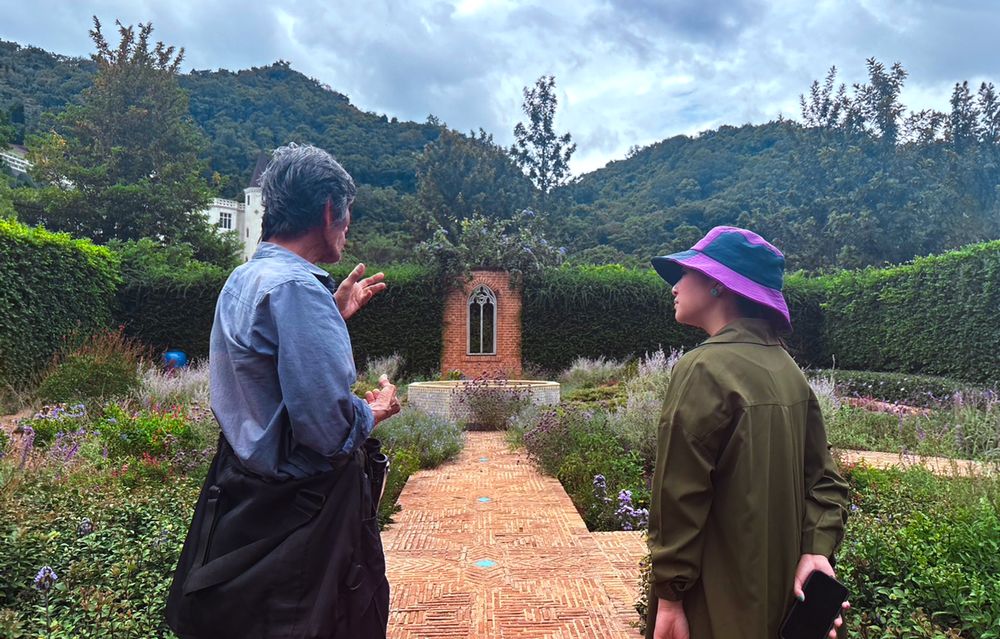
“When we say we want to study nature, we must study all four spheres. Most people only look at the roadside scenery, the sunrise, the sunset, but it is more than that. Therefore, when interested in studying nature, we must access all four spheres. It’s the same at Khao Yai.”
Without letting silence work its magic in the meeting room, Ajarn Suthee fired off another question. “Does anyone know what mountain range ‘Maison Mystique,’ located in Ban Khao Wong, Nong Nam Daeng Subdistrict, Pak Chong District, Nakhon Ratchasima Province, is adjacent to?”
There was a babble of answers for a while until the correct one was reached: “Sankamphaeng Range.”
Ajarn Suthee nodded before elaborating that Maison Mystique is located on the Khorat Plateau, a plateau with mountains on one side and the Mekong River on the other. The mountain ranges that border the Khorat Plateau are: on the west, the Phetchabun Mountains (the origin of the Pa Sak River), which extend down from the Luang Prabang Range. Next to the Phetchabun Mountains is the Phang Hoei Range. Next to the Phang Hoei Range is the Dong Phaya Yen Range (formerly named Dong Phaya Fai), which is to the southwest and extends south to become the Sankamphaeng Range. Next to the Sankamphaeng Range is the Phanom Dong Rak Range.

This Sankamphaeng Range includes Khao Yai National Park, a natural World Heritage Site, which covers 4 provinces in 3 regions: the Northeast (Nakhon Ratchasima), the Central region (Saraburi and Nakhon Nayok), and the East (Prachinburi).
“All of this is factual information that people around here must be able to answer,” the lecturer scanned the room with a small smile, while the listeners began to sweat over their newly assigned mission.
After the lecture, there was time for a casual chat amidst the chill atmosphere of Khao Yai with the master birdwatcher, an expert in nature, about the current popularity of birdwatching activities.
For birdwatchers, what makes Khao Yai stand out?
With the natural vegetation of Khao Yai’s forest being mostly dry evergreen forest, the plant species in dry evergreen forests are diverse. Consequently, the birds are also diverse. According to the checklist, there are probably over 100 species because the forest is abundant. There are many resident birds, and migratory birds also come during the winter when the northeast monsoon winds blow.
What are the prominent birds in Khao Yai?
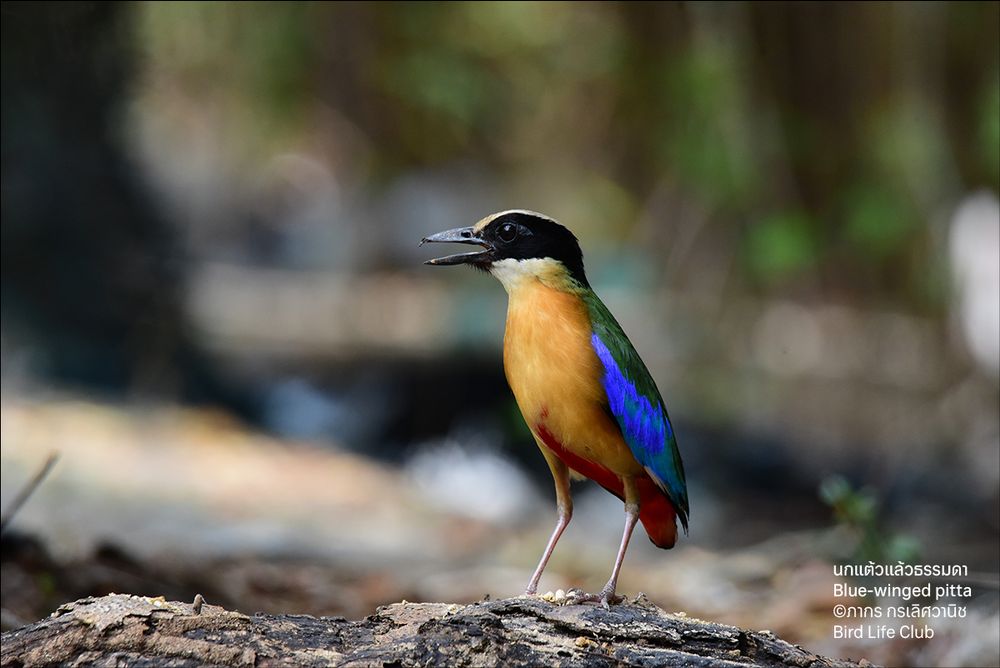
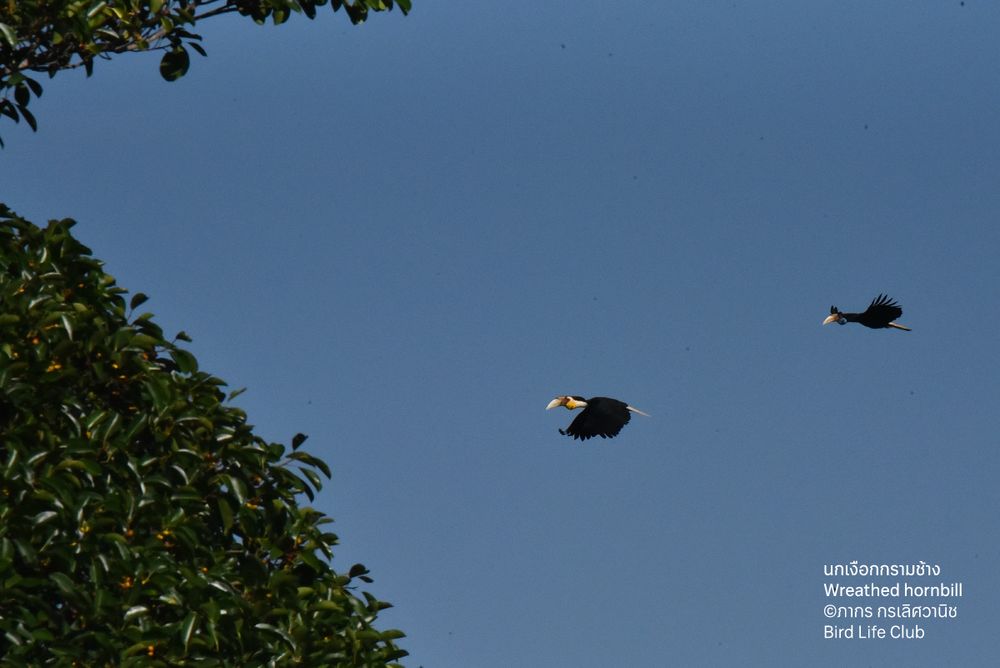
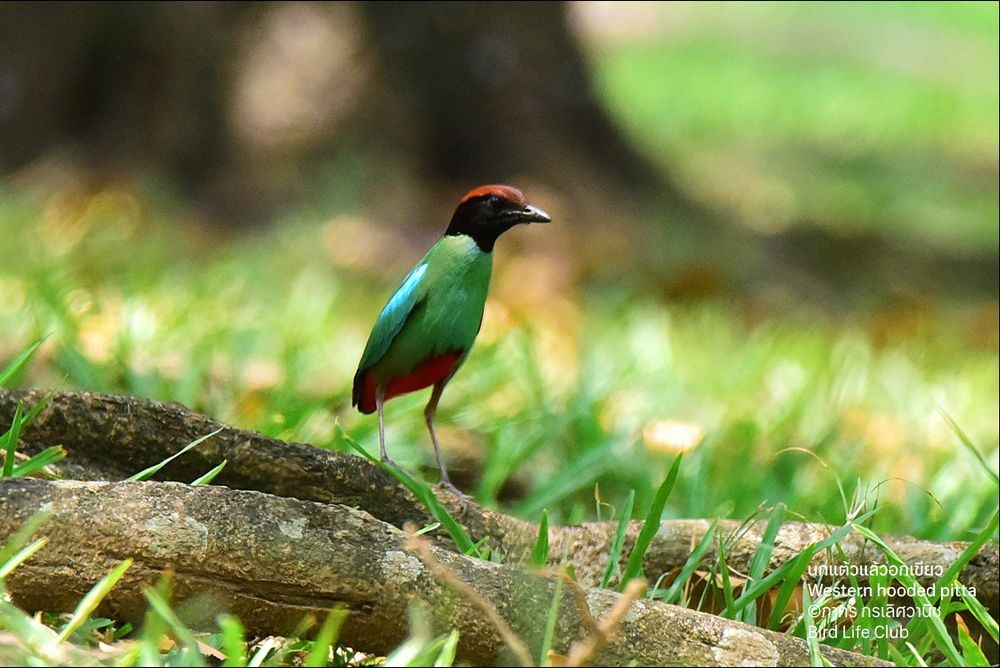
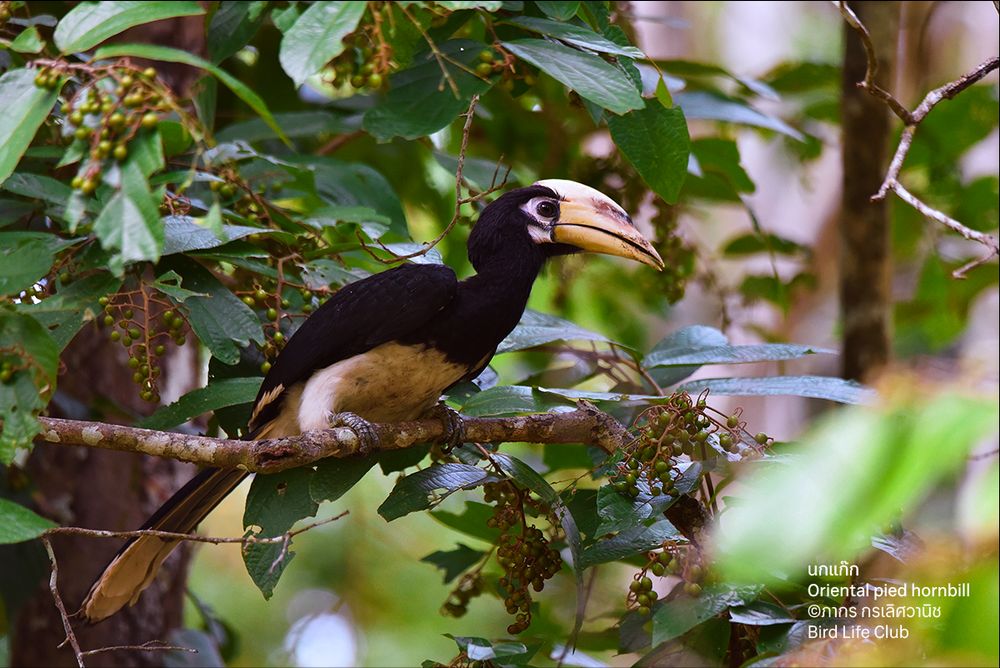
For sure, there are 4 species of hornbills: the Great Hornbill, the Oriental Pied Hornbill, the Wreathed Hornbill, and the White-throated Brown Hornbill. Other prominent birds include trogons, both the Orange-breasted Trogon and the Red-headed Trogon, which are birds that birdwatchers love to see. As for kingfishers, there is the Banded Kingfisher, a bird that likes to live in the forest. Then there are pittas. This period (October) is when the Blue-winged Pitta and the Hooded Pitta migrate to Thailand to build nests and lay eggs, so there is a chance to see them in Khao Yai as well. As for the resident pitta in Khao Yai, it is the Blue Pitta.
Khao Yai also has Thailand's national bird, the “Siamese Fireback.” It can be found on the route up to Khao Khiao. There is also the Coral-billed Ground Cuckoo, another species that tourists want to see. Since Khao Khiao has three peaks and includes stretches of hill evergreen forest, especially at an altitude of about 1,000 meters, the entire forest changes to hill evergreen forest. Therefore, there are resident hill evergreen forest birds on Khao Khiao, such as the Black Eagle, the Mountain Imperial Pigeon, and the Green Cochoa.
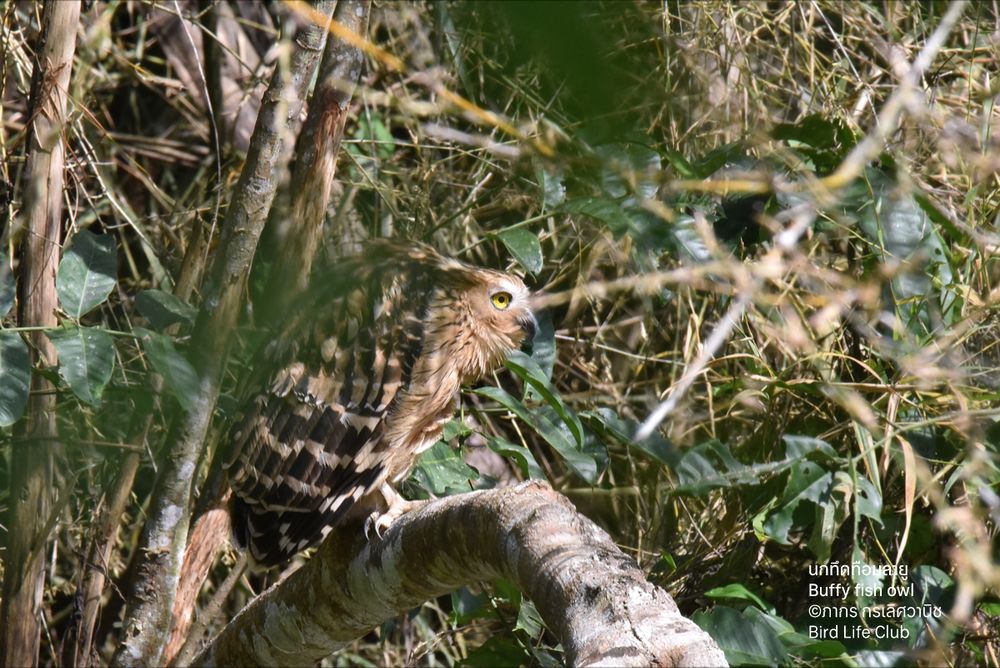
As for nocturnal birds, there are owls and the Great Eared-Nightjar. They can be seen in the evening, flying around Nong Khing in Khao Yai National Park. In the afternoon at Nong Khing, you can see White-headed Swifts diving down to play in the water.
And then there's the Chestnut-capped Babbler. Actually, this bird is mostly found in the eastern and southern regions, but its distribution has spread to Khao Yai. Another species from the eastern region is the Purple-throated Sunbird, which has also spread to Khao Yai.
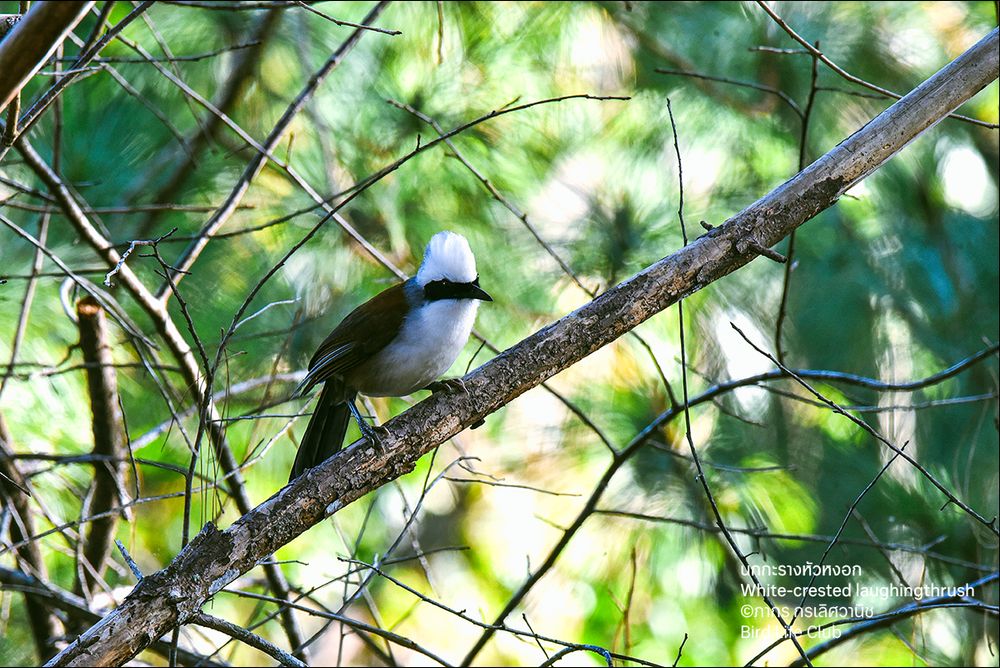
Khao Yai also has many species of laughingthrushes, such as the White-crested Laughingthrush and the Greater Necklaced Laughingthrush. But the one that is a bit harder to find is the Black-throated Laughingthrush, or Sor Hoo, because it's a bird that people used to keep as a pet. It was expensive and sang very beautifully. But not the Hoopoe, that's a different family of bird. Khao Yai only has these three species of laughingthrush.
As for prominent migratory birds that used to come but are now rare, there is the Black-naped Oriole [trans. note: the Thai text says "นกขมิ้นขาว" or White Oriole, which is likely a mistake for the Black-naped Oriole which migrates, whereas the Oriolus mellianus / Silver Oriole is very rare]. The Black-naped Oriole nests and lays eggs in China, and when winter comes, it flies south. But even in China, its nests aren't found. It's considered rare now, but it used to be regularly found in Khao Yai.
Can we say that Khao Yai is a birdwatcher's paradise?
I don't see it that way. I've never considered any single place special. I think that way, but other birdwatchers might think so because it's closer to Bangkok. But some people say Kaeng Krachan is better. You can't compare, because everyone likes different things. And the specialty of birdwatching in each area depends on whether you find a rare bird or one that's hard to find. Because even a common bird might not be seen. And everyone likes different birds. Some like pittas, some like kingfishers, some like hornbills.
In that case, can we say that Khao Yai is suitable for birdwatching activities for both beginners and professionals?
Yes, that's enough. No need to say it's a paradise (smiles). Because there are many birdwatching locations, but Khao Yai might be one of the first, being close to Bangkok. But my first birdwatching location was Kasetsart University, Bang Khen, because we watched grassland birds before moving on to forest birds.
What was your starting point for getting interested in birdwatching?
I've actually been interested in nature since I was a child. But I started to focus on specific fields probably in high school. At that time, I was interested in butterflies and birds, but also other things. When I was studying at the Faculty of Arts, I went to buy botany textbooks to identify trees, bought a basic entomology textbook from Kasetsart University to identify insects, and bought textbooks from the Faculty of Fisheries to identify fish. But my interests were in different periods. The important thing is, I believe everyone must have basic knowledge. But today, I see everyone wants to take a shortcut, not starting in sequential steps, even though you must have a foundation, which is very important.
For example, when I thought about writing a book on nature's communication tools, which isn't finished yet, I would start with the history of the Earth. We shouldn't care what subject it is, but see it as knowledge. We must start from before the Earth existed, before the origin of the Earth. Then start studying each period: when the Earth was formed, the first part of nature that emerged was the Geosphere. The part enveloping the outside is the Atmosphere. Then water came from the Atmosphere as rain, creating the Hydrosphere. When there was water, living things emerged, the Biosphere. See, we have to study in this sequence. Then we break down each part, from when life started as a single cell and how it progressed until humans emerged. Humans created society, then territories and so on, up to the present day.
Once you have the whole picture, you can then delve into any area you want. You will never miss a thing. Like history, when teachers teach, they teach in parts, not connecting them. This connection creates understanding. And you will be happy because you get to know this and that. When you understand, you can build upon it to a higher level. But for today's activity, we don't know how much they (the Maison Mystique staff) will absorb because they come from different places.
Why do we need to understand these things?
Actually, for everything in this world, you must know its origin, know its source, to truly understand it. Most people only see the image before them, but don't truly know. Like the word "nature" that I asked about—what does it mean? Roadside scenery, the sea, sunrise, sunset. It's not just that. Everything is interconnected.
You can look at nature like a scientist, or you can look at it like an artist. But for me, I see it as a mixture of both.
Birdwatching is the same. You should understand nature in all its dimensions. What are the relationships? In order to understand the ecosystem. This is called nature interpretation. It means when you travel into nature, you see something and you must be able to tell what it is. For example, what tree is it? What flower? What is it related to? What kind of forest is it in? What is Khao Yai's forest like? Because everything is related. This learning, understanding, and connecting will give birth to a heart of conservation.
Right now in Thailand, we don't have these nature interpretation tools because it requires one person to know everything. But today, when organizing a tour, wherever you go, you need separate experts for different fields—an insect expert, a plant expert, and so on. They are separate parts. But I think that today we need people who know everything and can integrate it and tell us. That is a naturalist.
How much has the birdwatching community grown recently?
In general, there are 2 groups: the group of people who actually watch birds, and the group of people who photograph birds. Some bird photographers aren't interested in the birds, you know. They don't even read the books. They are only interested in taking photos of birds to show off. So, they are divided into different groups. There are birdwatchers who also take photos, but some only watch birds, no photos.
What is your perspective on birdwatching activities and tourism?
We must look at how to bring money into our country using birds. Let birds be a resource for tourism. For example, if we promote birds to attract people to travel to Thailand, and we develop areas into ecotourism destinations. I see that the Khao Yai area has many places that are conducive to this type of tourism. It just depends on whether we can use our resources for tourism to their full potential. We need to know what we have, and not just know superficially. We must also know the stories. Because if we are to move towards sustainable tourism, we must have a deep understanding. If you just tell them the bird's name, the visiting guests might be indifferent. But if you tell the story, show the connections, it will be much more interesting. We should be able to tell stories, not to the depth of a scientist, but at least we must know the things that are around our area. Because the birds in each place are not the same. For example, hornbills—China and Japan don't have them. Even the Indian Roller, China and Japan don't have it. When they see it, they get excited.
Is this considered an era where people are returning to nature more, due to fatigue from work?
That could be. But I live my life according to what the Buddha said, that we must make every day of our lives happy, whether we are working or not. Therefore, each person must know themselves—how many days they want to work, and what they want to do with the rest. For instance, I only teach on Mondays. I used to teach on Tuesdays as well, but if you ask me to teach on Wednesday too, I'd say no. I want to use that day to write books, compose poems, go to the temple. And nowadays, I compose poems for temples too. I've done 800 temples already. We do things that bring us happiness, because each person's happiness is different.
Since you started birdwatching, how many species have you seen?
I've only seen just over 800 species, out of a total of about 1,100. Some are extinct. Some are hard to find. Sometimes they aren't rare, but it's just not our luck to see them. Because really, they say everything in this world is destined. But we don't know the future, how it is destined. So, if we don't want to be disappointed, don't have expectations.
In the birding world, there are many changes now, like in genus, classification. Sometimes the scientific names change. And previously, they were classified by physical characteristics, but now they use DNA, which is deeper. Sometimes they look similar, but their DNA shows they are not close relatives at all. They can be in different families or tribes.
For new birdwatchers, how should they prepare?
First, they must study and find information about the birdwatching location. We need to know the route, what bird species we might encounter. And we need to know what kind of forest the vegetation is, what the topography is like, what the weather is like during that time. Even whether we need to prepare our own food.
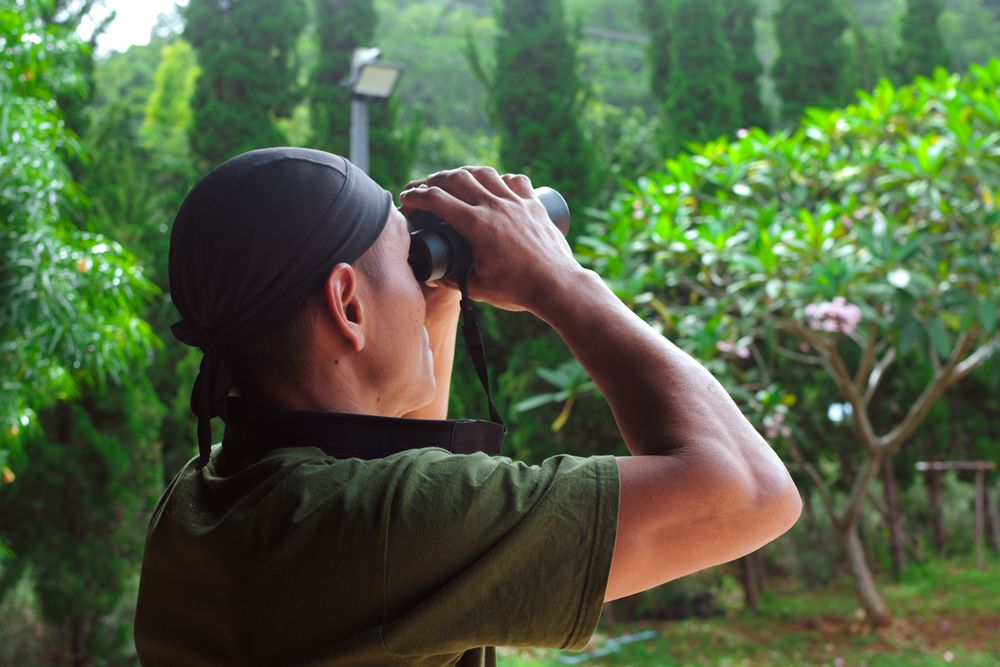
Another important thing is preparing equipment and attire. Equipment includes binoculars or a telescope. Prepare them, check their condition, make them ready for birdwatching.
As for attire for birdwatching, there are forbidden colors that should not be worn. They are called warning colors for birds. These include white, red, bright orange, orange, yellow, pink, or other bright colors. Because birds will see them from a distance and might fly away first.
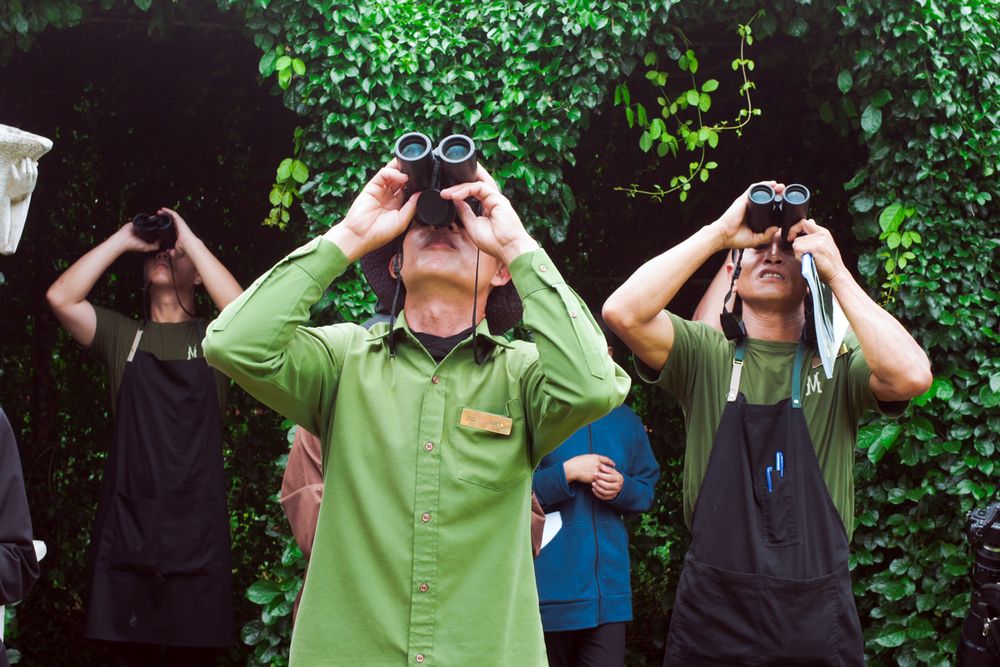
The price of equipment depends on our budget. Binoculars range in price from over two thousand baht to tens of thousands.
At this point, Khun Joom - Phakorn Kornlertwanich, a birdwatching leader from Bird Life Club, added more information about using binoculars:
The commonly popular binoculars have a magnification of 7x, with a maximum of 10x. Because if it's more than this, the image will shake, as the magnification is too high. Just by breathing, the image will waver. After using them for a long time, you will feel nauseous, dizzy, and get a headache. But we might see some binocular models with 30x magnification. Those are suitable for use on a boat, or at a tourist spot, like on a tower, where they are mounted on a tripod. When people come to look, it's convenient. They just put their eyes up to it, like on a warship, they also use binoculars with tripods.
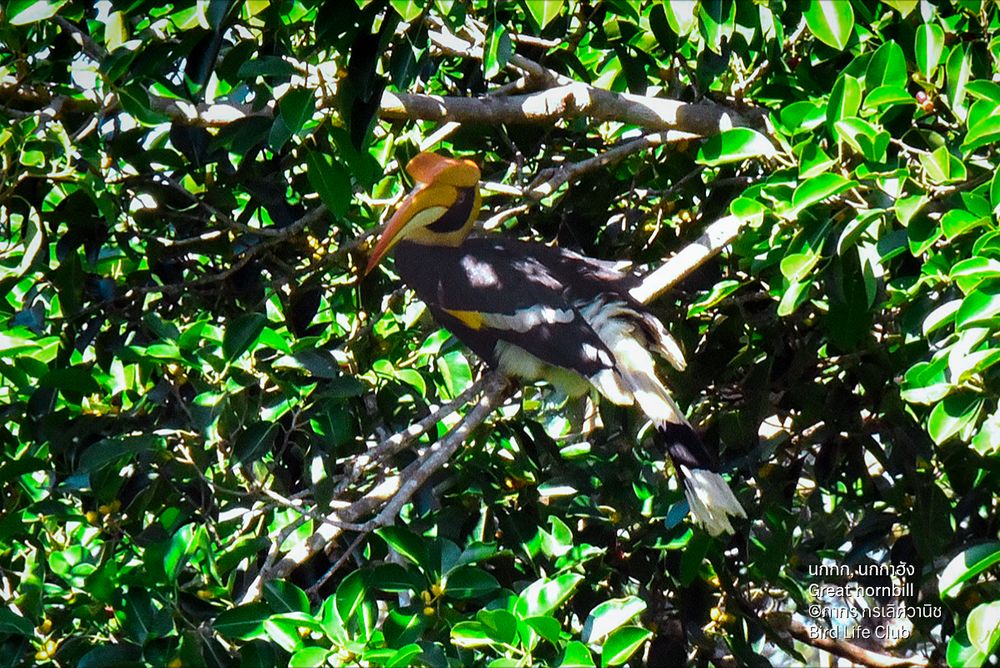
How difficult is it to use binoculars?
To use binoculars, we must bend the binoculars to match the width of our eyes. The way to check if it's aligned with our eyes is to see if there is a black shadow in the middle of the image. Then, we must adjust the sharpness for each eye. First, close your right eye, open your left eye, look at a target, and adjust the central focus until it's sharp. Once it's sharp, switch sides. Close your left eye, open your right eye. Stand in the same spot, look at the same target, and adjust the focus to be sharp using the ring near the right eyepiece. Adjust it until the image is sharp. Once it's sharp, it means we have adjusted the binoculars—both the width and the focus for both sides—to match our eyes. The next time we use them, whether looking near or far, we only need to adjust the central focus.
There's another trick. Usually, when people use new binoculars, the first problem that often occurs is, when they see a bird, they lift the binoculars to look, but can't find the bird. This is normal. It's because the binocular magnification is up to 10x, so our eyes are not used to it. When we take our eyes off the bird, look down to find the binoculars, and then lift the binoculars up, we can't find where the bird we just saw was. So, the trick is, once you see the target, your eyes should not leave the target. Keep staring at it. Your hands, meanwhile, have the job of lifting the binoculars to your eyes. Try to keep the binoculars in the same line of sight as where you are looking. This trick is something that requires practice. Once you are familiar with it, you will be able to use the equipment faster.
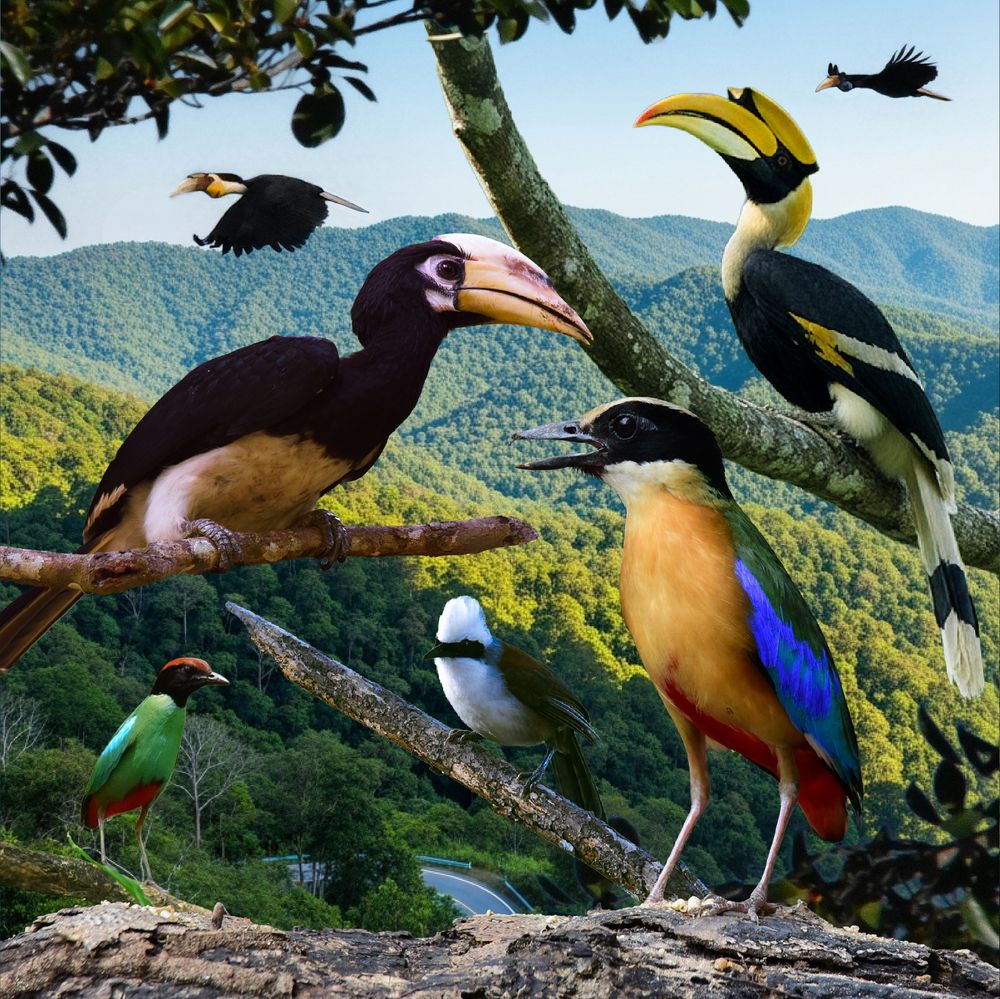
For those who are still deciding whether to buy binoculars, if you have a friend who uses them, go and try holding theirs first. Because each model and size is different. See if it's too heavy, if it's comfortable, if it's too big, or if adjusting the focus is difficult. Because sometimes our fingers are different lengths.
But if you are still unsure whether you will like it or not, try buying an inexpensive one first. Once you are sure you like it and think you will use it long-term, then invest in one within a budget you can afford. The important thing is to choose a waterproof model for easy maintenance.
On days when we humans live fast-paced lives like hamsters on a wheel, birdwatching is considered a form of relaxation. It is another nature activity that is trending and quite accessible. Just by being interested and studying some basic information first, birdwatching might just become a favorite activity for many, adding new colors to life and curing boredom in an unbelievable way.
© 2025 Khaoyai Connect. All rights reserved.
No part of this content may be copied, modified, or distributed in any form without prior written permission.
