


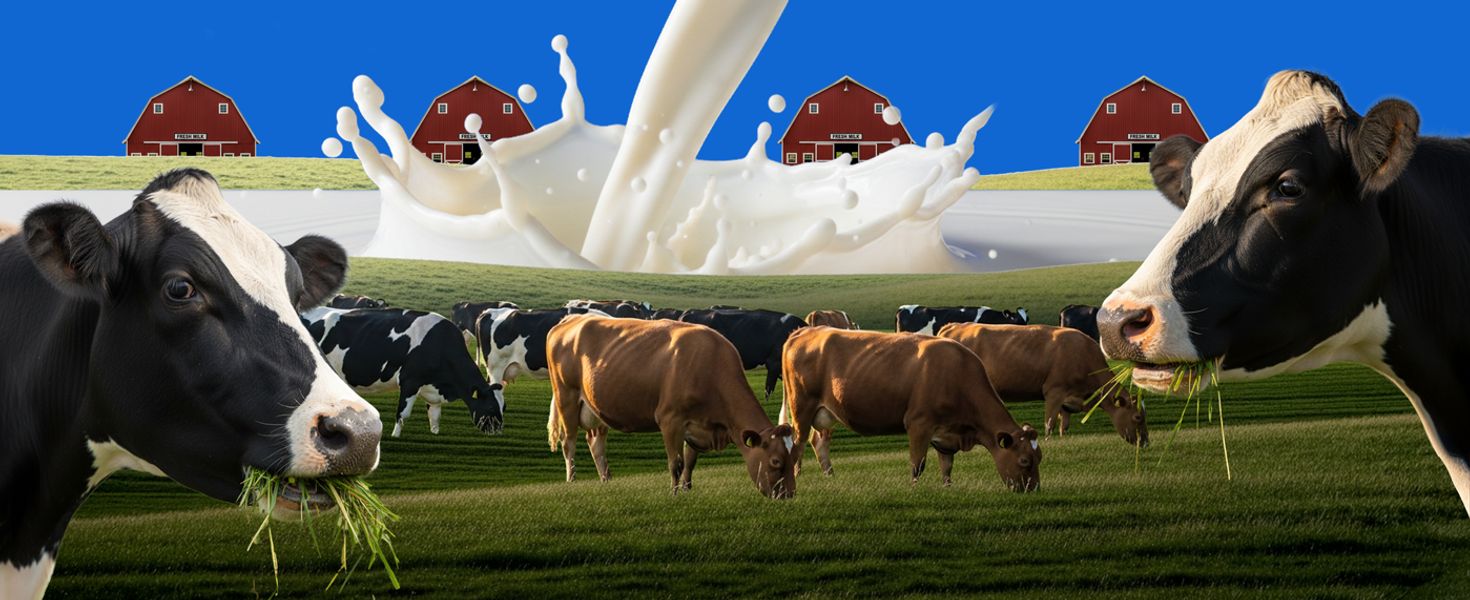
Is Thai Milk Not Real Milk?
Pruitti Kerdchoochuen, the small giant of Dairy Home, encourages farmers to switch to Grass-Fed milk.

It became a hot topic that everyone was talking about when a new show by Vuthithorn "Woody" Milintachinda, focusing on food and health, presented the topic of "Thai Cow's Milk." A short clip was cut and released as a preview, in which one of the participants said, "Thai cow's milk is not real cow's milk," and that they developed a rash due to lactose in the milk, or that anyone who wants to drink real milk must drink grass-fed. This created a wave of panic across the country.
Many of the points have already been thoroughly refuted by scientists and academics on social media.
But for someone who has been immersed in the dairy industry for over 20 years, like Pruitti Kerdchoochuen, the founder of Dairy Home, the small giant of Thailand's organic milk scene, seeing this clip made him just shake his head and give a faint smile.
"This trend has both positives and negatives. On the negative side, it shows us that many people misunderstand milk. Misunderstandings have gone viral. But on the positive side, it's a trend that gets people interested. People are speaking out on many issues, allowing everyone to read the pros and cons. After that, they can decide for themselves what to believe."
The dramatic phrase: "Thai cow's milk is not real cow's milk"
Regarding the claim that Thai milk isn't real milk, Pruitti says it depends on what kind of milk it is. If it's plain (unflavored) milk, it must be real cow's milk. It's impossible to mix it with goat's milk, which is more expensive. As for mixing it with powdered milk, powdered milk is also cow's milk. The important thing is that the label must clearly state the contents, such as how much fresh milk, how much powdered milk, or how much skim milk.
"If you want to drink real cow's milk without any other ingredients mixed in, please drink plain milk. Every brand of plain milk in the Thai market is definitely real cow's milk from Thai farmers. The production processes used by the factories can cause differences in taste. Pasteurized milk will have a certain refreshing taste. UHT milk uses more heat and will have another taste. Sterilized milk, which is packaged in metal cans, uses even higher heat, which will change both the color and smell of the milk into something else."
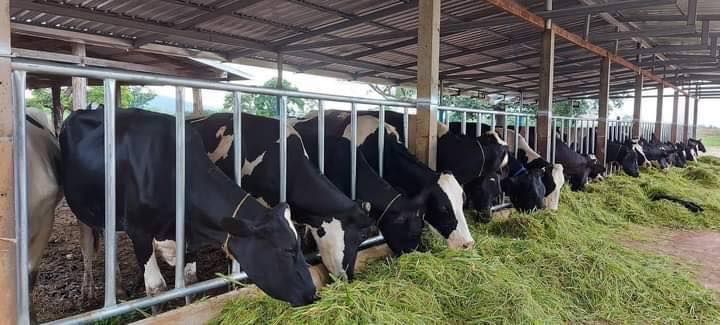
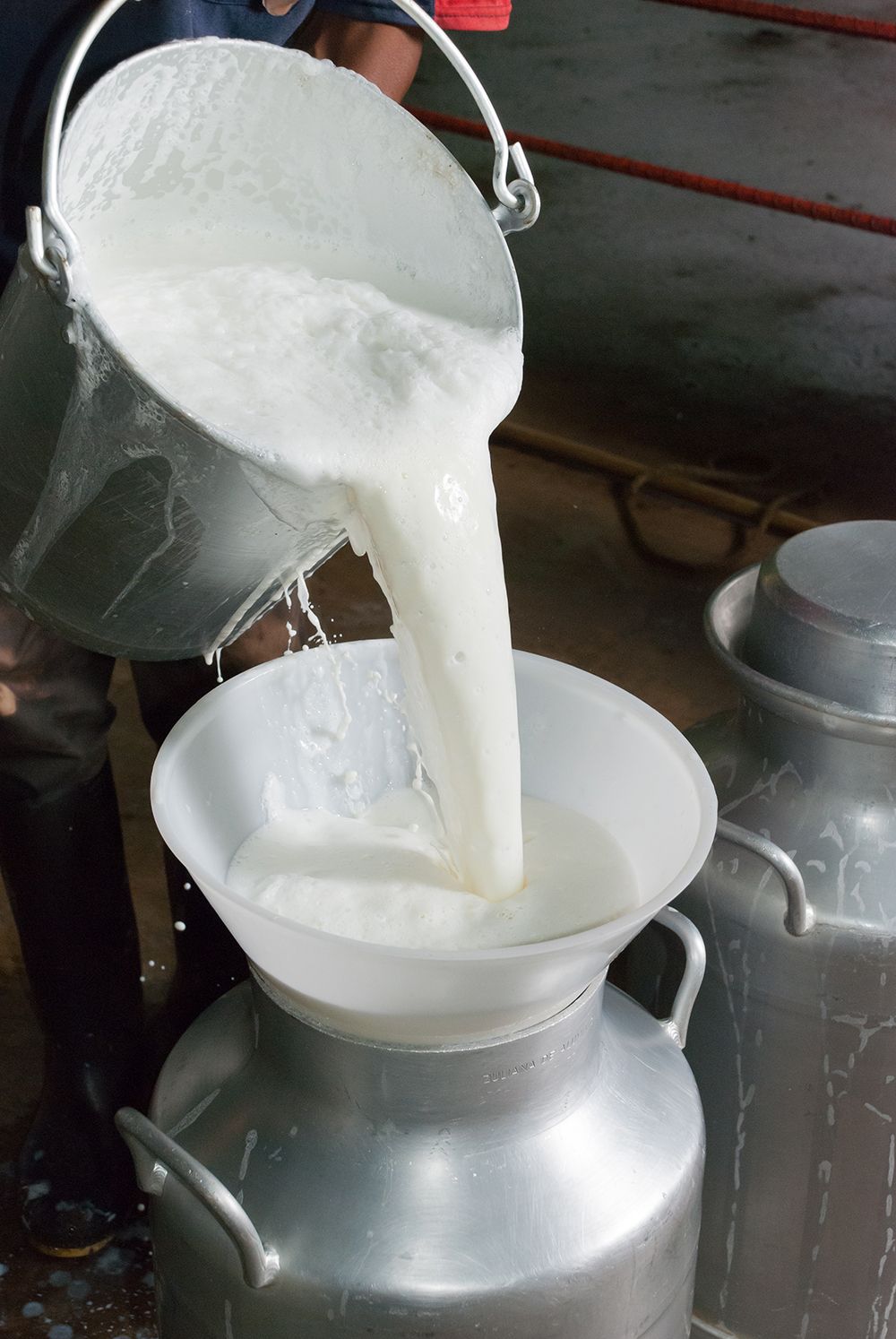
As for the milk production process in Thailand, Pruitti gives a brief summary. It starts with farmers milking the cows in the morning and evening. Generally, once milking is done, the milk is put into tanks, loaded onto a truck, and delivered to the cooperative within 2 hours. The claim that milk spoils immediately after milking is a great exaggeration. Although there are microorganisms in the air, they take time to grow. If it's within 2 hours, the microorganisms haven't multiplied much. Upon reaching the cooperative, the co-op chills the milk to stop the bacteria from growing. The milk is then sent to the factory to be pasteurized. Any minor germs that exist are killed. It is then sealed and ready for sale.
"If powdered milk were to be mixed into plain milk, consumers would definitely know because the taste would be different. Furthermore, the FDA (Food and Drug Administration) is very strict. Anyone using powdered milk must state it clearly. And it's not really anything to be ashamed of; powdered milk is just cow's milk. It's sold worldwide. General processing plants use it. For example, when we make formulated milk, sometimes we want to increase the milk solid concentration, so we have to add powdered milk. Or some formulas that require higher protein also need to add powdered milk. Powdered milk is just milk without water. When added, it increases the milk solids. It's not something that needs to be avoided.
But if we want to help farmers, we should drink fresh milk. Currently, the rate of milk consumption among Thais has decreased. School milk sales have also dropped. And now, with this drama, it's causing misunderstandings, which will only make the Thai dairy industry, which is already struggling, even worse off."
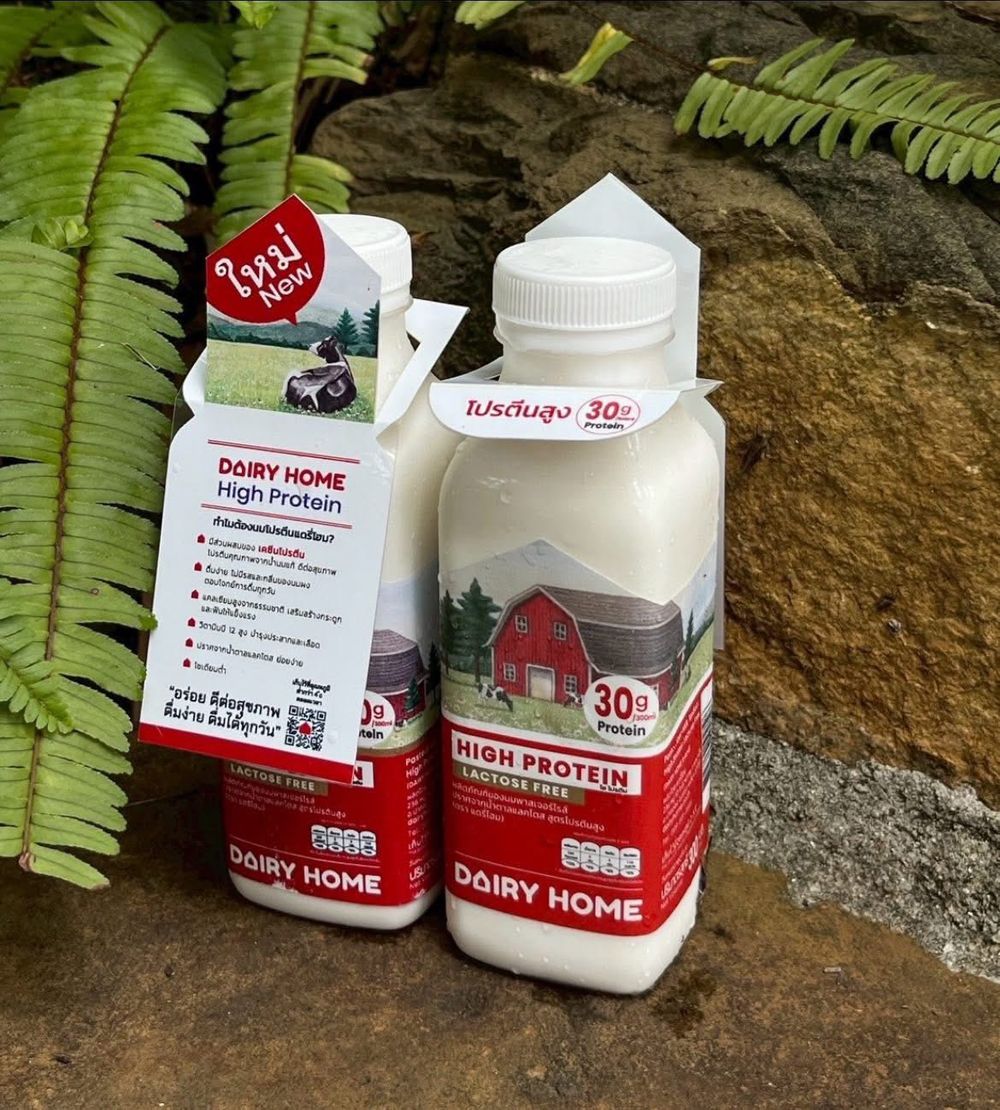
Pruitti gives an example of Dairy Home's 30-gram high-protein organic milk. Even though it's already high-protein organic milk, fresh milk from a cow cannot naturally have that much protein. To get 30 grams, you would have to drink a liter of milk, which would leave anyone feeling bloated. Therefore, when we want high protein, we must add more milk solids. We choose to add pure casein, which is a protein extracted from milk that is already lactose-free, to reach 30 grams of protein. But the base is real milk, which is why Dairy Home milk still tastes delicious like the milk we normally drink, and people who can't digest lactose can drink it too.
Real milk is only Grass-Fed milk! (Maybe not yet)
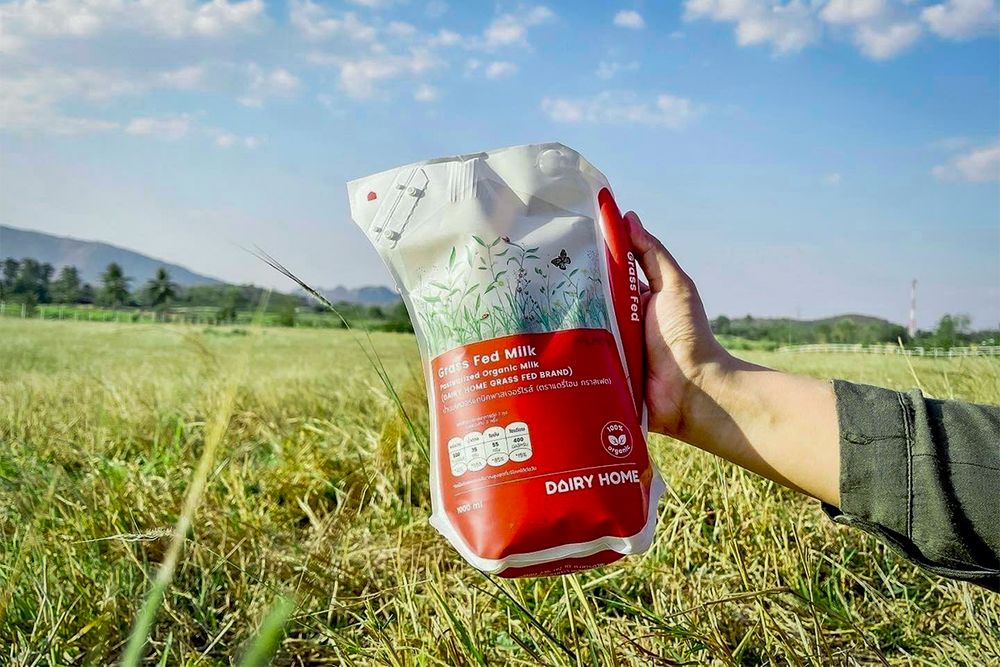
The statement that real milk is only grass-fed milk may not be entirely true, because milk from cows not fed exclusively on grass is also real milk. However, on this point, Pruitti sees the production of grass-fed milk as an opportunity and a path to survival for Thai farmers.
"The matter of making grass-fed milk is something I have always campaigned for. I want Thai farmers to do it. First, consumers get full nutrients. When cows receive good, high-quality grass, the nutritional value is high, with good fats and Omega-3. The consumer definitely benefits. And if farmers raise cows on grass, especially if they can grow it themselves, the animal feed cost will be lower. The milk will be of higher quality and fetch a better price. The profit will be no different than before, even with lower milk production."
Pruitti says that any farmer interested in producing grass-fed milk can come and visit the Dairy Farm. If farmers have enough land, he encourages them to try. The principle is simple: however much land you have to produce grass, you raise only that many cows. For example, with 5 rai (approx. 2 acres) of land for growing grass, dig a 1-rai (approx. 0.4 acres) pond, and raise 15 cows (10 of which can be milked). He guarantees that the costs will drop significantly compared to expensive animal feed, which has profits added at multiple steps in the supply chain—prices that have nothing to do with nutritional value.
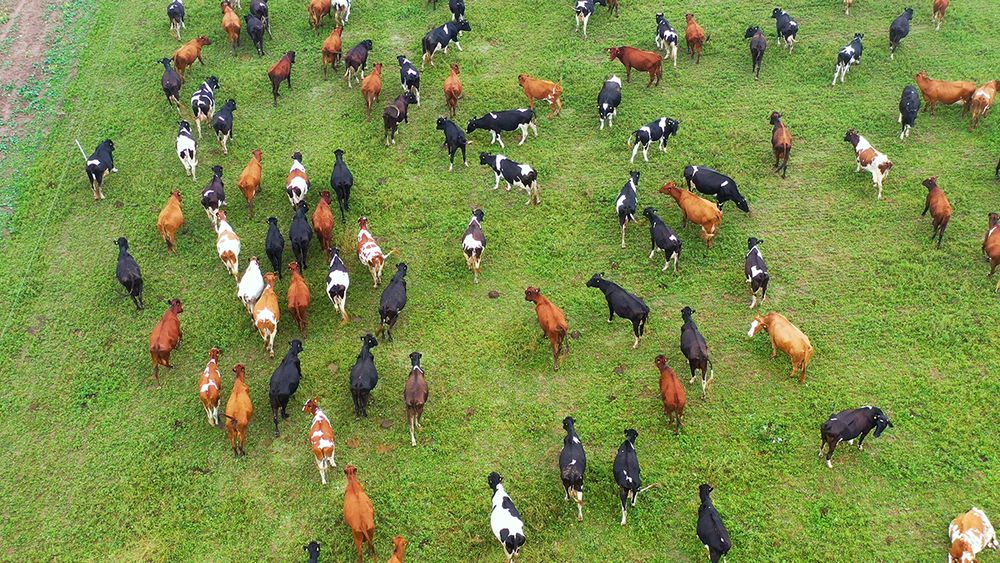
"When we reduce the number of cows we raise, we will have time to learn new skills. People outside the dairy industry often ask why we dairy farmers don't do our own processing. Some farmers respond, 'Where would we find the time? Raising cows takes up the whole day.' But if we reduce milk production, reduce the number of cows, we will have time to think about processing. For example, try looking up clips that the Department of Livestock Development has published about making simple cheese. Just imagine, what if we had 'Baan Tha Chang Cheese,' 'Chanthuek Cheese,' 'Nong Yang Suea Cheese'? What do you think? And there are small, inexpensive machines available. We can do it. I see this as another way out for Thai farmers. Most importantly, the cows will be happy, because they are animals that love eating grass the most.
Take Dairy Home, for instance. It's been 26 years now. We didn't grow from an industrial factory. We grew from being homemade. Our first day of pasteurization was 10 liters, sold in front of the house. We couldn't even sell it all back then. Then people started to get to know us. From 10 liters, it increased steadily. From two pots and a thermometer, packing in glass bottles to sell, to having rows of pots, and now today, a factory system. With this comes higher responsibility, with standardized machinery that has passed inspections from all agencies."
Humans have been drinking cow's milk for at least 7,000 years
Pruitti adds that humans didn't just start consuming milk yesterday. We have been drinking milk for at least 7,000 years of recorded history, ever since we began domesticating animals, since we stopped being nomadic and became agricultural communities. Many countries in Asia have been drinking milk for thousands of years. For example, people in India have been consuming milk for 5,000-6,000 years by turning it into yogurt, which is equivalent to pre-digesting the lactose. What's left is sour milk that we can fully digest. This is how humans consume food.
Many people say milk is not food for humans. If that's the case, then nothing is human food. Everything in this world can be eaten, if you know how to eat it. The important thing is to choose food that has gone through a good, safe production process.
3 Cases of Cow's Milk Allergy
From being in the dairy industry for over 20 years, Pruitti says there are three cases of "milk allergy."
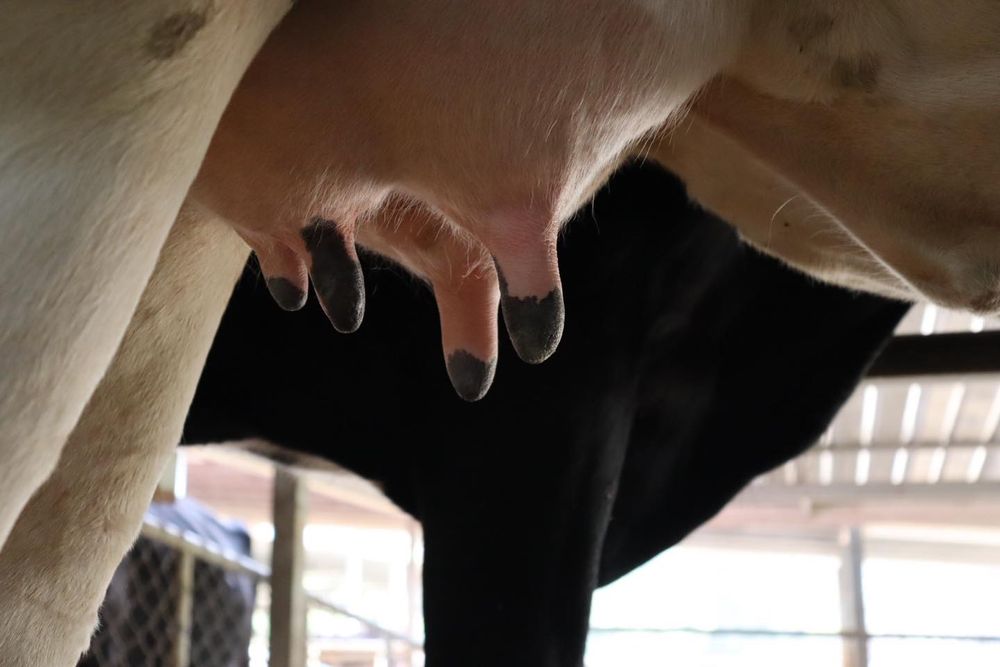
- Lactose Intolerance: Commonly found. Causes diarrhea after drinking. This is because most Asians, especially adults, do not drink milk continuously, causing the lactase enzyme to disappear. However, we can gradually start drinking milk again to stimulate the enzyme's return.
- Milk Protein Allergy: This is mostly discovered in childhood. Drinking milk causes a rash around the mouth. Doctors will then recommend buying goat's milk or plant-based milk for the child, because they are allergic to the cow's milk protein. For this case, Dairy Home has developed a Jersey milk product. Jersey cows are a breed with academic evidence showing that the protein from their milk does not cause allergies. They are a breed that was recently developed for groups who might otherwise miss the opportunity to drink milk.
- Allergy to Chemical Residues in Milk: This doesn't mean chemicals added to the milk, but rather chemicals that come from the crops and grains used to feed the cows. This happens all over the world. It stems from raw materials for animal feed being contaminated with agricultural chemicals. Although the amount may not be very high, it is not insignificant. So, when the cow eats the feed, it is released into the milk. It accumulates over time. Symptoms that occur include wheezing, sudden allergic reactions, rashes, and minor swelling and redness. It is these symptoms that make people confused about whether they can drink milk. We can't blame anyone, as this is relatively new knowledge.
"For me, the only scary thing about Thai milk is that the Thai milk industry will collapse," Pruitti concludes. "It's because people are coming out and becoming afraid of Thai milk. I want to clarify that there isn't a problem. The problem is that the people drinking it don't understand. They get diarrhea and say they are allergic to milk. They say they get a rash when it's not the case."
In a world where today we talk about "Longevity" and "Wellness," food and drink are important topics that certainly won't be settled in a single day. With new data and new knowledge emerging, it is normal for us to have debates. At the very least, the good thing about this drama is that the more we debate, the more beneficial it is for the decision-making of us, the consumers.