


The Outsider Who Arrived
The Outsider Who Stayed
Chapter one
"Art is not something imposed upon a place. It is something that grows from within it."
— Giles Ryder
Thailand has changed with astonishing speed. So quickly, in fact, that many of its transformations have slipped quietly into everyday life before anyone had time to notice. Wooden houses disappeared together with the generation that built them. Stand-alone cinemas gave way to parking lots. Family-owned grocery stores were replaced by convenience chains. Morning markets gradually yielded to shopping malls. The country's contemporary art scene has undergone an equally profound transformation.
Today, international biennales, independent galleries, regional art festivals, Thai artists exhibiting abroad, and collectors flying across borders for exhibition openings all seem perfectly ordinary, as though this ecosystem had always existed.
At the beginning of the 2000s, Thailand's contemporary art world was still remarkably small. Artists knew one another mostly through personal introductions. Curators drove across provinces to visit studios. Many exhibitions were held inside universities rather than commercial galleries. The phrase artist residency was unfamiliar to most people. Chiang Mai had not yet become an international art destination. Khon Kaen was not yet recognised as a creative city. Thailand had no international art biennale.
It was during this formative moment that a young Australian artist arrived in Thailand. He did not come as a curator. He did not come as a collector. He did not come intending to influence Thai contemporary art.
He was simply passing through.
His name is Giles Ryder.
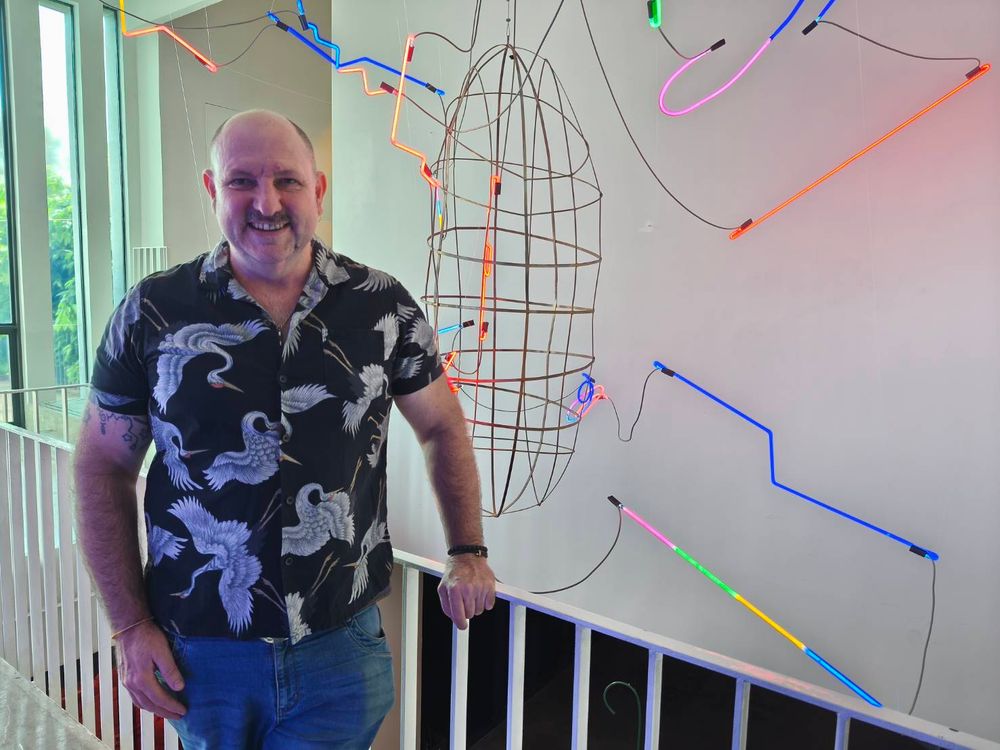
Born in Brisbane in 1972, Ryder grew up during a period when contemporary art in Australia was rapidly expanding. Later, he moved to Berlin on the prestigious Samstag International Visual Arts Scholarship, immersing himself in one of the world's most experimental art capitals. Artist residencies in South Korea followed before another opportunity emerged through the Asialink Arts Residency Program. That opportunity would eventually change the course of his life.
From the outside, his career seemed to follow the familiar trajectory of many contemporary artists: travelling from one residency to another, creating new work, exhibiting internationally, teaching, relocating, and moving on again. But after spending hours talking with him, I realised that the most interesting part of his story was not where he had travelled.
"I never actually planned to move to Thailand," he told me with a quiet smile.
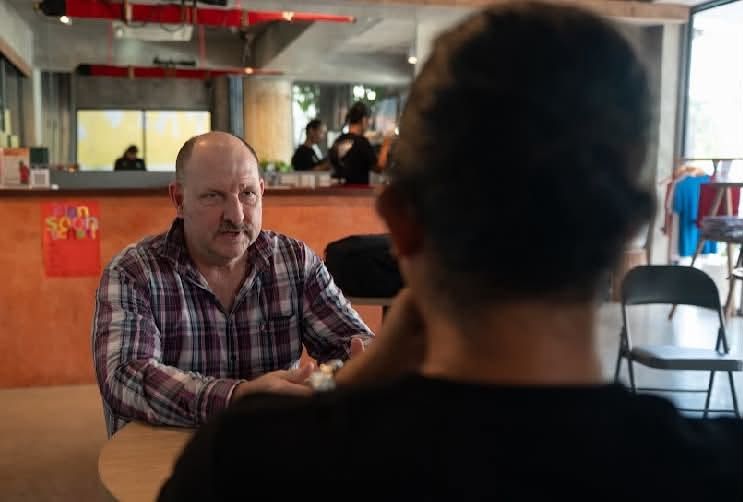
At first, Thailand was simply a convenient stop between Australia and Europe. He wanted to spend a little time exploring northern Thailand, before continuing to Berlin. There was no plan to stay. No intention of finding work. No thought of teaching at a university. Certainly no expectation that he would spend more than a decade building a life here. Life, however, rarely follows the maps we draw for ourselves. Sometimes the moments that alter everything are not grand decisions but small invitations.
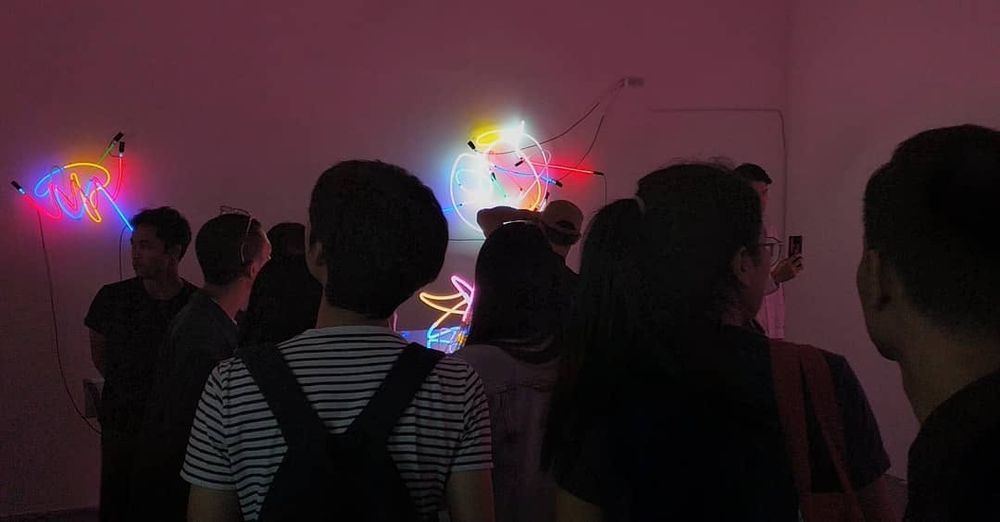
By an enquiry from the Asialink program to Narasuan University, Phitsanulok started the introduction the lecturers at this time put me in contact with Sudsiri Pui-Ock (Nim) and Noraset Vaisayakul –newly appointed staff who had just recently returned to a new department after also spending time internationally. after the guest lecture was later followed by chance a trip to Chiang Mai at the timing of Loy Krathong – as Nim was returning home at this break period and said I should see it as someone who works in light. This opened up my thinking over what could happen within Thailand opposed to my home country and Europe. The positioning and viewing of this event and how light was used situated within daily life was a key thing as well as the general public use of light at the period was like seeing thousands of Dan Falvins within the environment outside and removed from the white gallery space, while these were not artworks per se the link and use of these tubes as an iconic local use of the material. This lead to the development of Light Space Projects https://www.bangkokpost.com/life/arts-and-entertainment/354275/complex-forms-revisited
A fellow artist in Chiang Mai mentioned "Why don't you stay a little longer, maybe there is work at the universities here?" the friend suggested.
It was an ordinary conversation, one of those exchanges that seem insignificant at the time. Yet, like so many turning points in life, its importance only became visible in retrospect. Long before we realise it, a passing conversation can quietly become a life.
Chapter Two
The Thailand That So Few Saw
The first time Giles Ryder came to Thailand, he was not arriving for an exhibition. No museum was waiting for him. No curator had extended an invitation. No university had offered him a teaching position.
He arrived exactly as many travellers do with an open itinerary and a few weeks between commitments.
"I had an exhibition in Berlin," he recalled. "Thailand happened to be halfway between Australia and Germany, so I thought I'd stop over and see what was here. I was particularly interested in travelling in the north."
He tells the story with characteristic understatement. There is no dramatic pause, no attempt to turn the moment into mythology. At the time, it wasn't one. Thailand was simply another point on the map. He wasn't searching for a new country to live in. He wasn't looking for a career. He certainly wasn't imagining that this brief detour would become the place where he would spend over the next decade of his life. History rarely announces itself while it is happening. Sometimes it begins with nothing more than an inexpensive plane ticket and a little extra time.
Many visitors come to Thailand looking for beaches, temples, food, or landscapes. They leave with photographs. Giles arrived looking for something far less tangible.
He found people.
When he speaks about those early months, he seldom describes mountains or cities. Instead, he remembers conversations. Artists, Students, Lecturers, Sign painters, Drivers, People he met almost by accident. One by one, they became landmarks on a different kind of map, a map defined not by geography but by relationships.
Looking back, he realised that Thailand possessed something he had encountered in very few other places. Its contemporary art scene was growing not primarily inside museums or commercial galleries, but within artist studios, universities and public spaces. For many Thais, this may seem entirely ordinary. Art schools have long been central to the country's creative life. For an Australian artist, however, it was remarkable how many art schools were in Thailand.
Universities are more than educational institutions. They are laboratories. Places where ideas could be tested before they became careers. Places where artists from different generations shared studios, conversations and failures. Places where experimentation mattered more than market value.
"It felt incredibly open, almost like anything was possible" Giles said. "People were willing to exchange ideas. There wasn't the same pressure to produce work simply because it could be sold."
That spirit of generosity left a lasting impression.
Soon afterwards, Giles started Light Space Projects on reflection of the experience of Loy Krathong (Festival of light) supported by Australia's Department of Foreign Affairs and Trade (DFAT). While the foundation funded projects ranging from public health to community development, it also recognised the importance of artistic/cultural exchange.
For Giles, however, funding was never the destination. It was simply a way of creating opportunities for people to meet.
"I wanted to develop a project connected to local art festivals," he explained, "using art as a way to bring people together."
The exhibition itself was only one part of the project. The real work happened before the opening and long after the closing. Over the course of two years, the initiative expanded through multiple phases, gradually connecting universities, artists, lecturers and students across northern Thailand.
One exhibition took place at the University of Phayao, with the newly opened visual arts program (collaborating with Pawin Ramingwong who now runs ARTCADE and PYE Artspace) where national & international artists and lecturers (collaborating with Nithiphat Hoisangthong) from King Mongkut's Institute of Technology Ladkrabang travelled north to work alongside local students. For many participants, it was the first time they had collaborated with artists from outside their own institutions.
"The atmosphere was wonderful," Giles remembered. "Everyone genuinely learned from one another."
What began as a single exhibition slowly evolved into something much larger. Students organised their own projects. Workshops emerged independently. New collaborations formed with Chiang Mai University and other institutions, leading to parallel exhibitions and continuing exchanges.
The network continued to grow—not because anyone had planned it, but because people wanted the conversations to continue.
Listening to Giles describe those years, I realised that he rarely measures success in exhibitions, visitor numbers, or critical reviews.
He speaks instead about friendships. About trust. About the invisible connections that survive after the artworks have been packed away.
For him, an exhibition is never the end of a project. It is merely the beginning of a relationship.
"The exhibition isn't the most important thing," he said. "For me, it's the exchange. It's learning from each other and sharing experiences."
That philosophy would eventually define much of his life in Thailand.
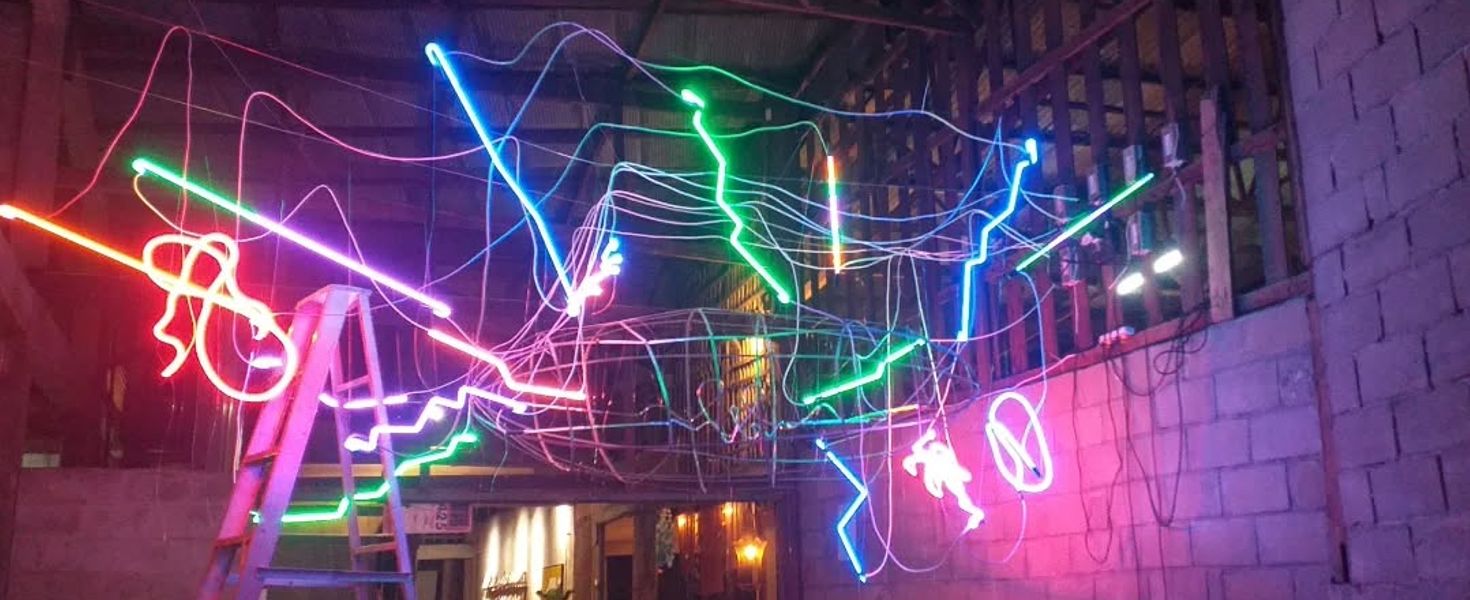
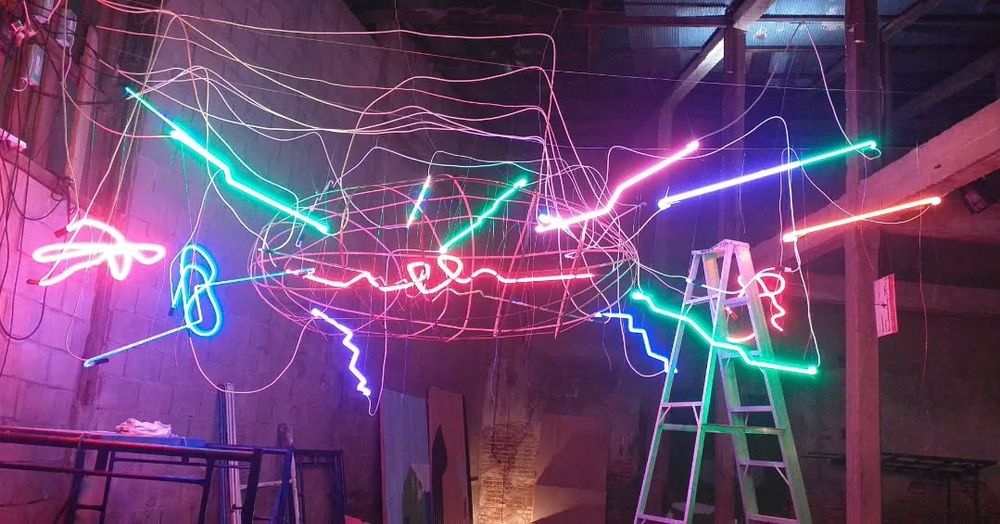
Long before he became known for his luminous installations of neon light, Giles Ryder had quietly begun creating something less visible, yet perhaps more enduring.
He was helping build the human infrastructure of Thailand's contemporary art community, not through grand declarations or institutional ambition, but through countless conversations, shared meals, collaborative workshops, and the simple act of bringing people together.
Like the strongest foundations, it was work that few people noticed while it was being built.
Only years later would its significance become clear.
Chapter Three
The Language of Light
I have known Giles Ryder for many years.
When we first met, he was teaching at Bangkok University, but our friendship began far from the classroom—at Jim Thompson Farm in Thailand's northeastern province of Nakhon Ratchasima.
We spent the evening talking over cocktails he mixed himself. Conversation flowed easily, drifting from art to travel, from architecture to memory, from Australian humour to the peculiar beauty of rural Thailand.
Trust, I have learned, is rarely built through interviews.
It is built through conversations.
By the time I sat down to interview him formally for this story, we had already shared enough years and enough glasses to speak honestly.
Giles is a gentle man.
He is physically imposing, yet remarkably soft-spoken. He never rushes his words. Before answering a question, he often pauses, allowing silence to settle between us. Sometimes the silence lasts longer than the answer itself.
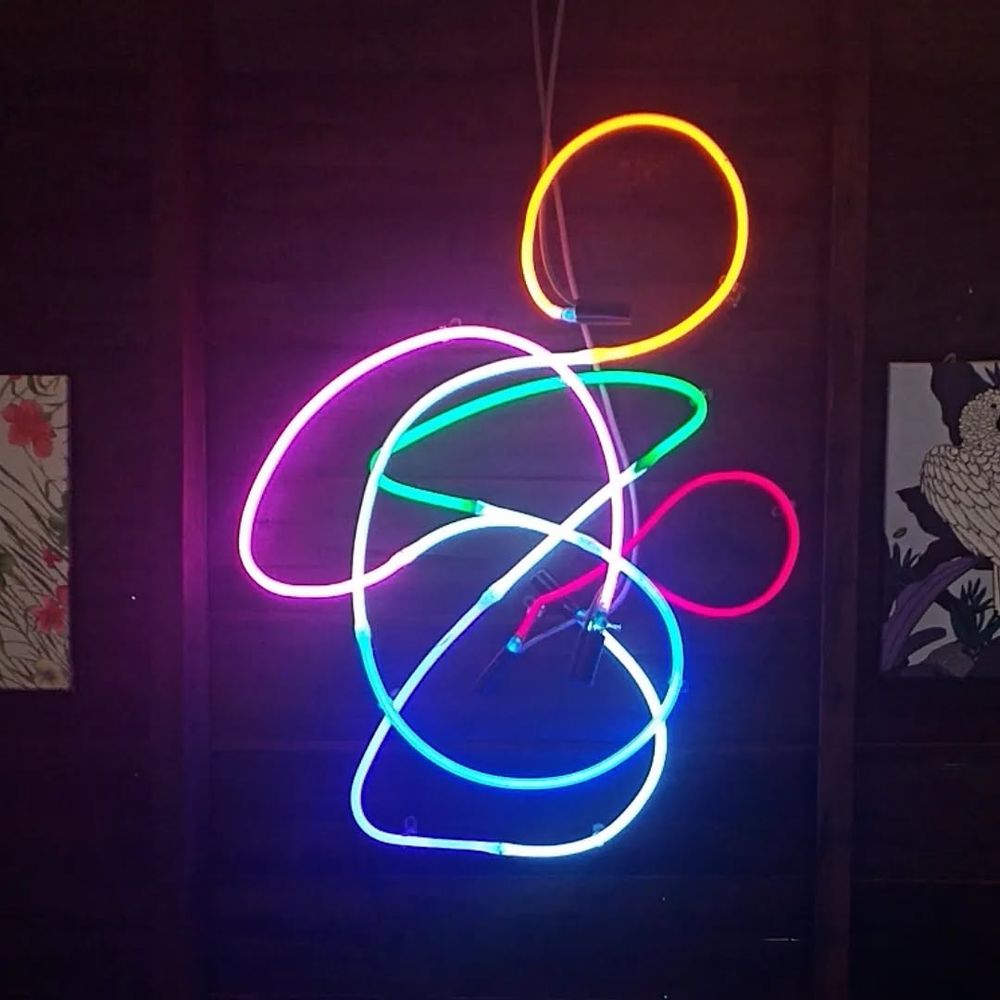
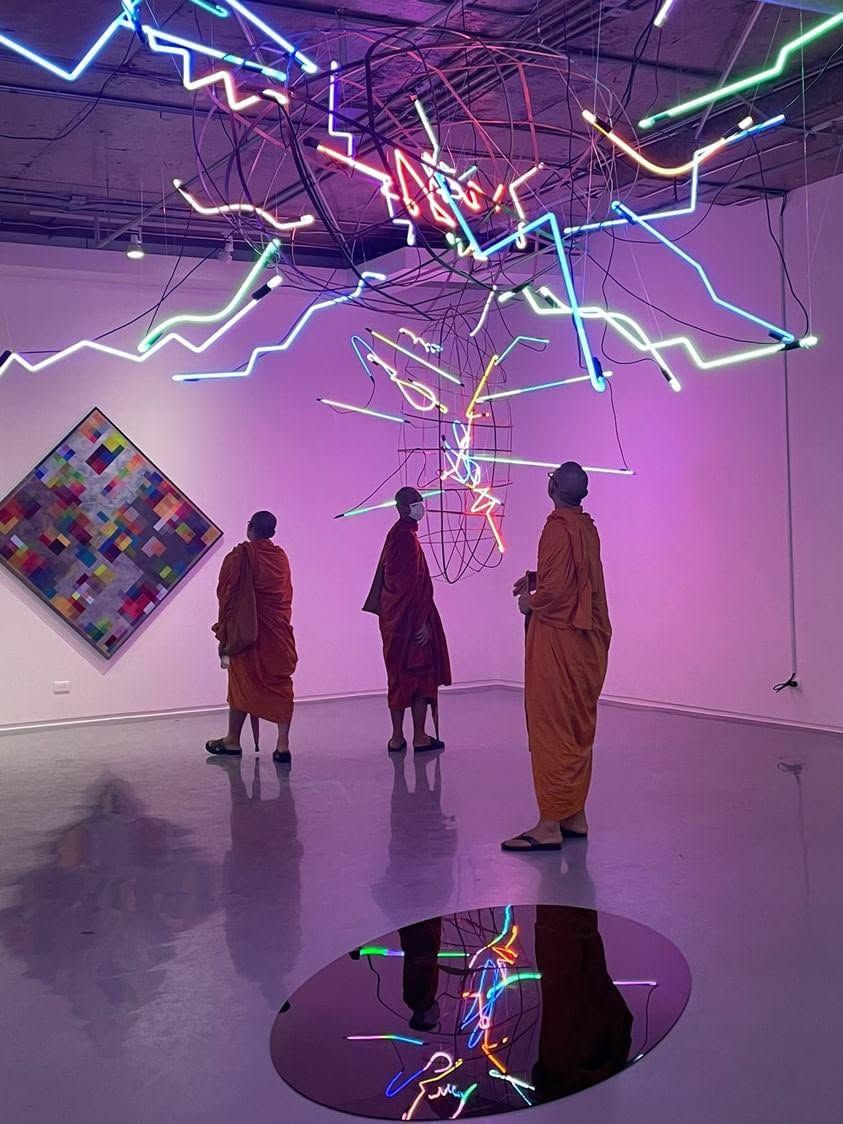
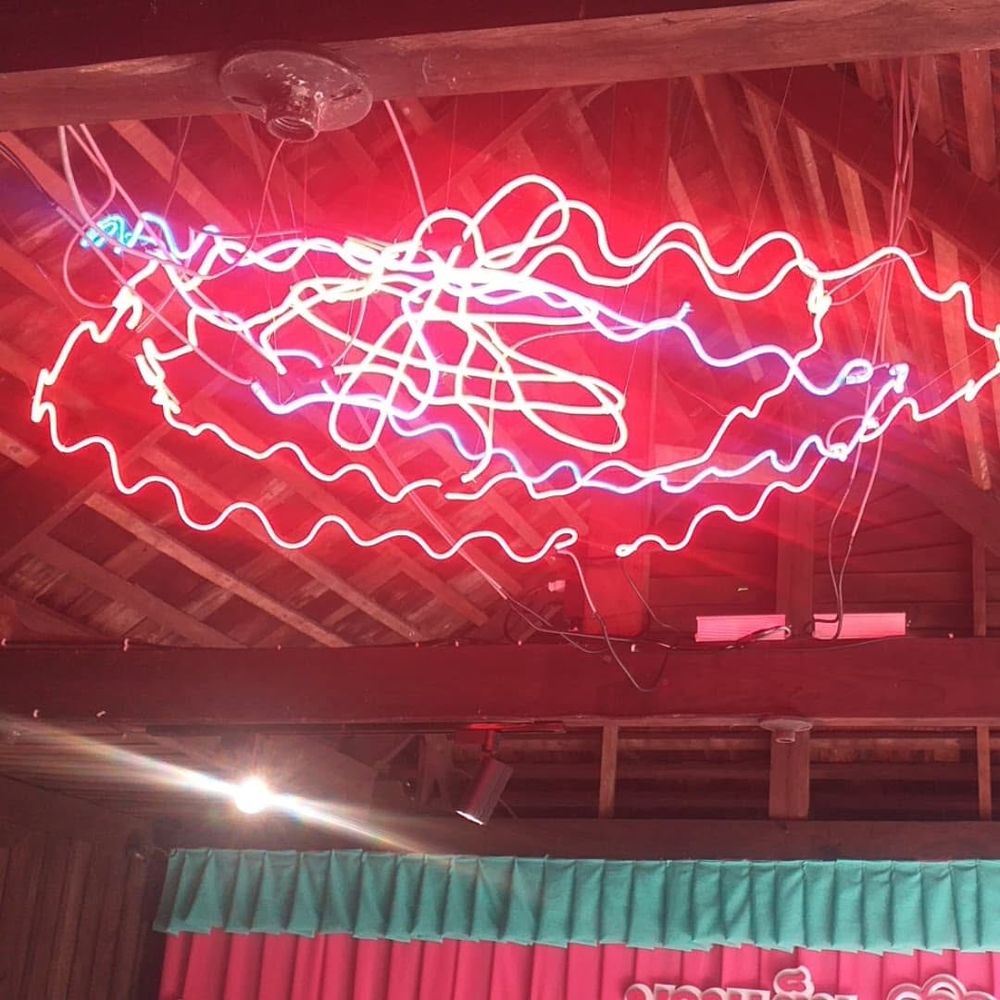
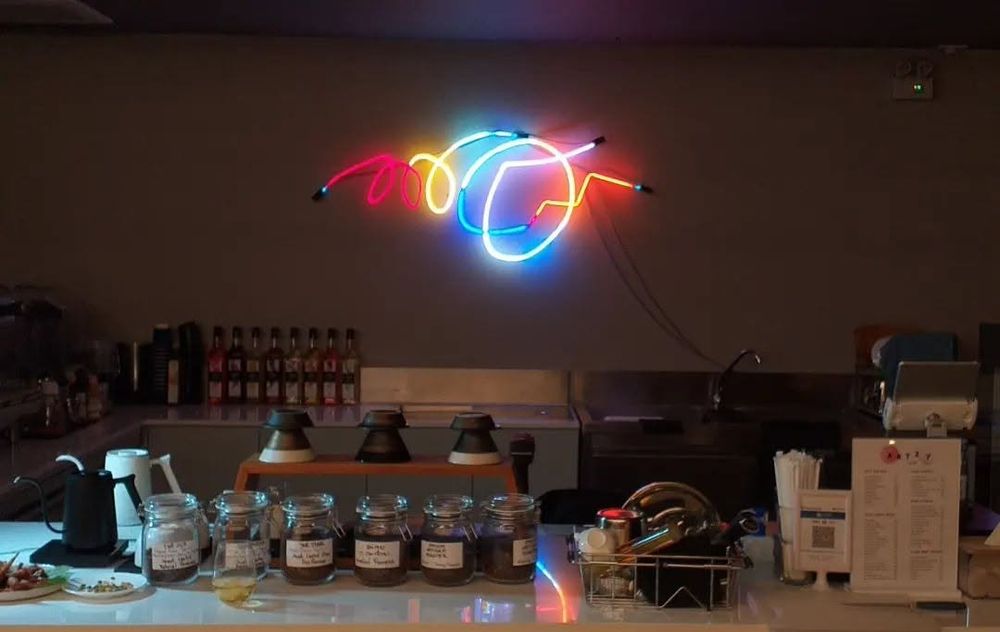
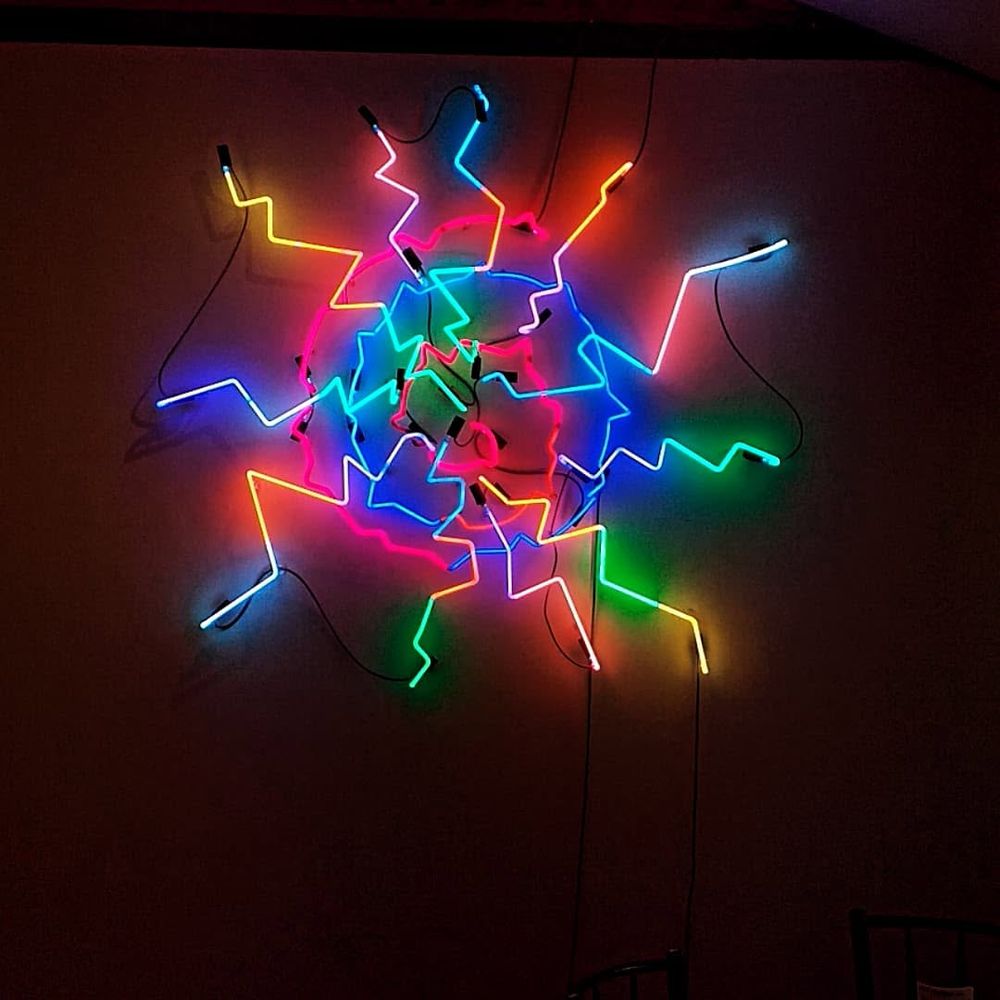
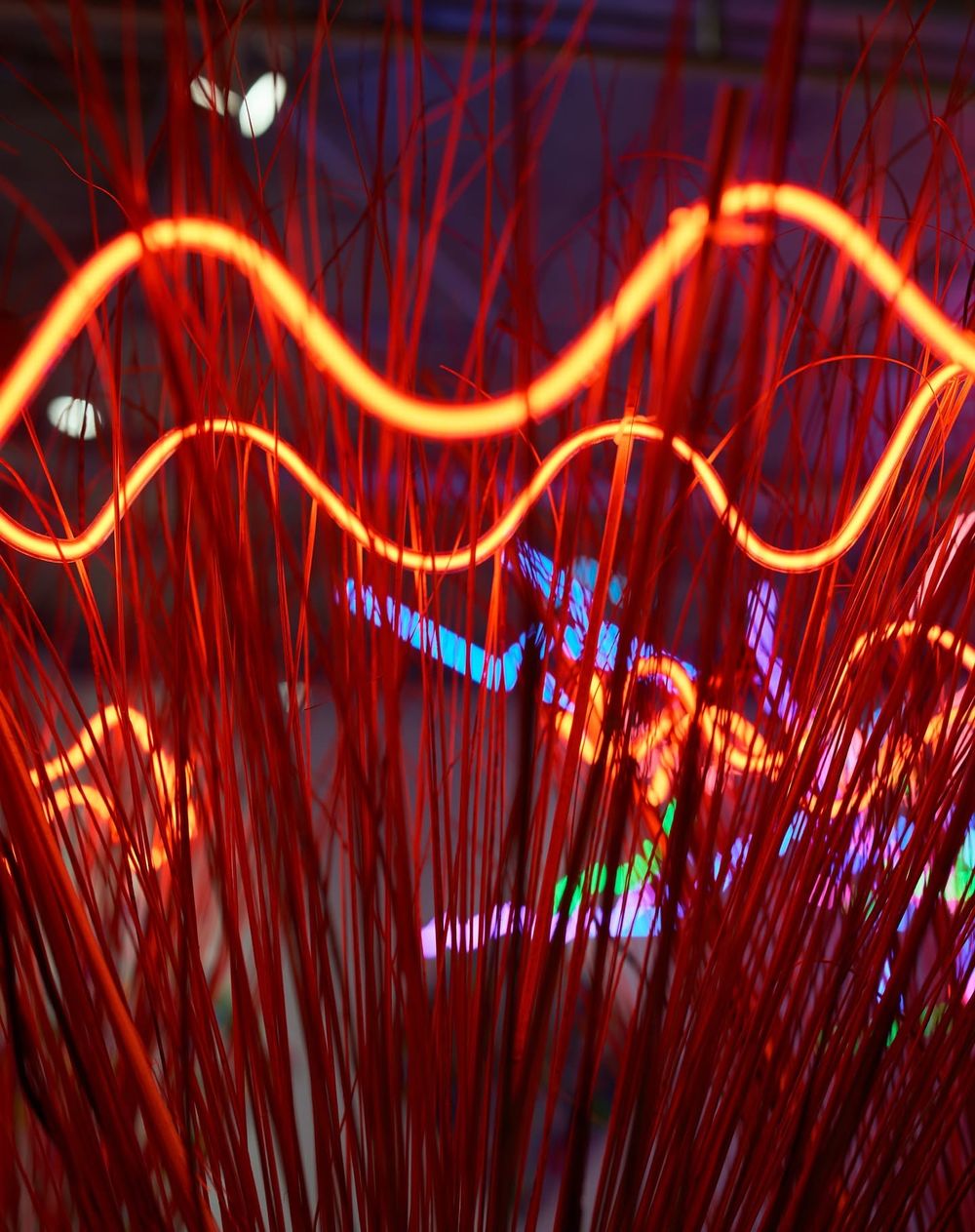
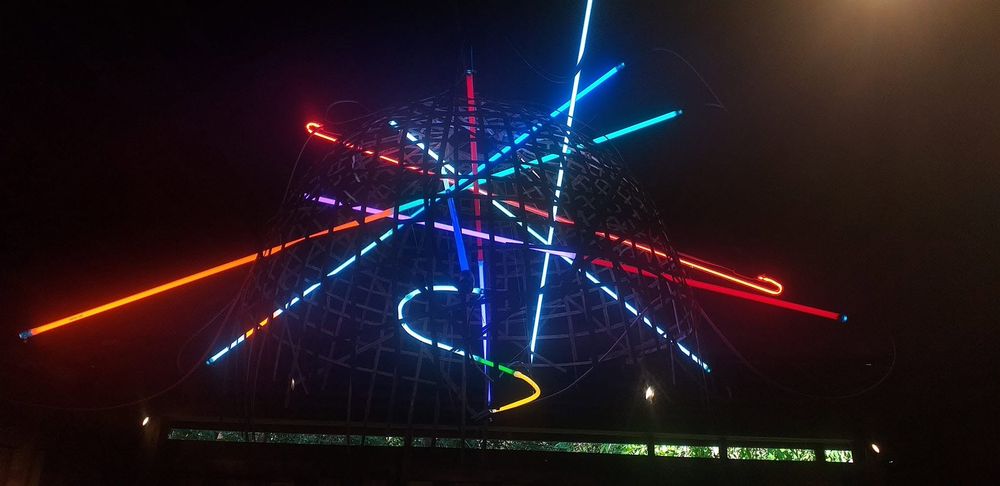
That rhythm, the willingness to wait also exists in his work. Nothing shouts for attention. Nothing is hurried. This is perhaps the greatest irony of his artistic practice. His signature medium is neon. By its very nature, neon is designed to attract the eye. It belongs to shopfronts, advertisements, nightlife, and spectacle. Yet Giles uses it to do almost the opposite.
People often describe him simply as "the neon artist." It is an understandable label. It is also profoundly incomplete.
After listening to him speak about his work, I realised that neon itself has never been his true subject. Light is merely the language. What truly interests him is perception. He is not asking us to look at light. He is asking what light allows us to see.
The difference may seem subtle. In fact, it changes everything. Where many artists use light as the centrepiece of an installation, Giles uses it almost as punctuation.
It quietly directs our attention toward something that has always been there but somehow escaped our notice.
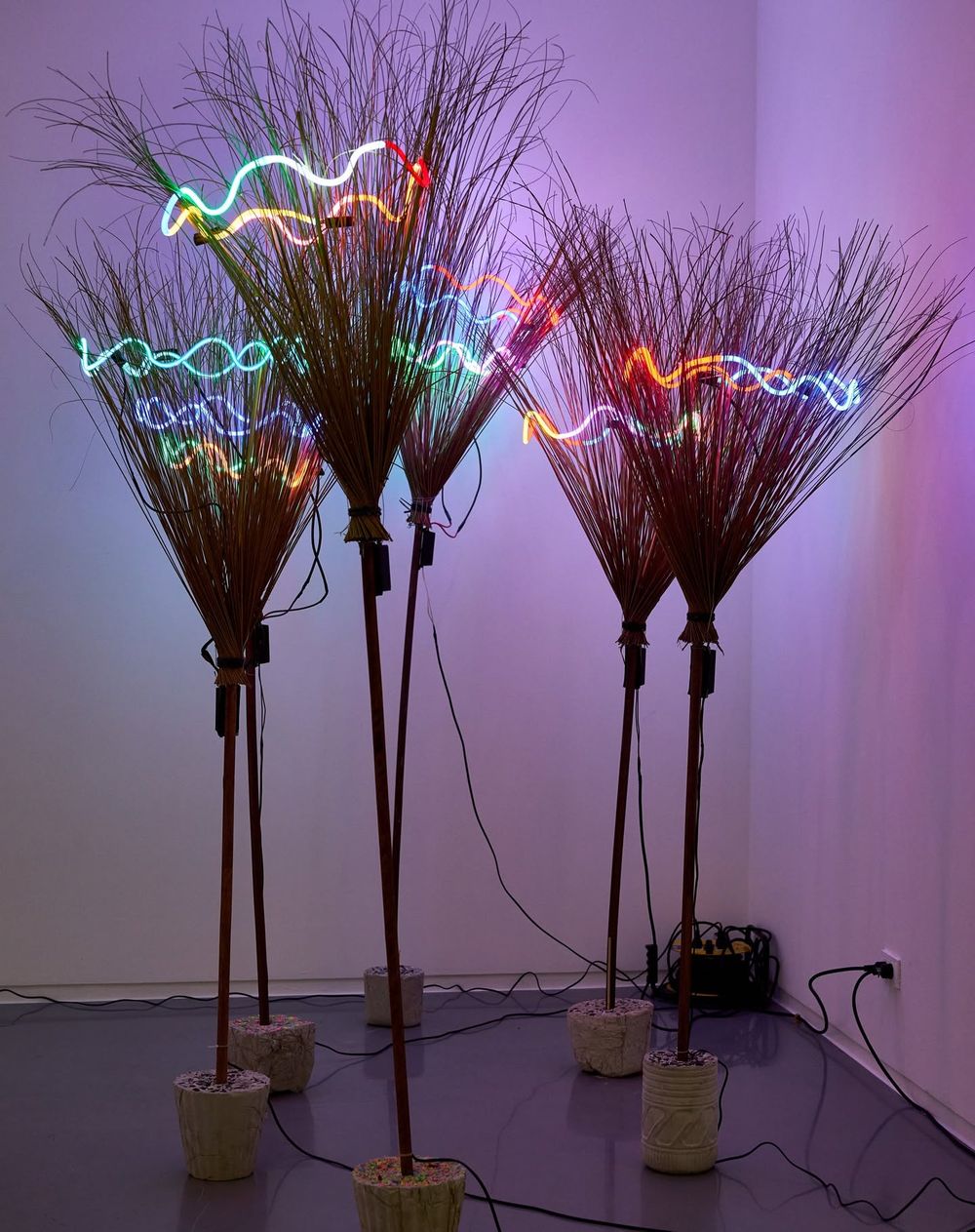
Old wooden houses. Chicken coops woven from bamboo. Fish traps left beside village streams. Coconut-leaf brooms. Weathered timber salvaged from abandoned buildings. These are not materials that usually find their way into contemporary art galleries. Nor are they the kinds of objects collectors typically seek. Yet they appear again and again throughout Giles's work. Not because they are picturesque. Not because they evoke nostalgia. But because, to him, every object carries a life already lived.
A plank of wood remembers the house it once supported. A fish trap remembers the river. A broom remembers the countless paths it swept clean. These objects are not inert materials. They are repositories of memory. Each bears traces of labour, hope, resilience and loss.
Neon enters only afterwards. Its role is not to transform these objects. It is to let them speak.
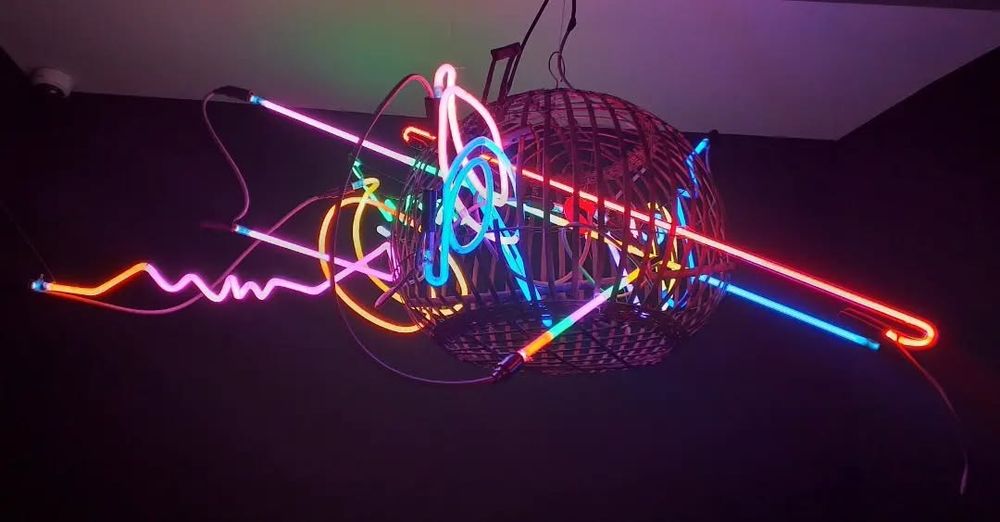
Reading Giles's artist statements over the years, I noticed a recurring idea. He speaks less about objects than about experience. Less about form than about place. His installations are never attempts to fill a space. Instead, they invite the space to reveal itself. Light. Colour. Sound. Found materials. Together, they alter the way we experience environments we thought we already understood. His work does not impose meaning upon a location. It uncovers meanings that were already waiting there.
That the practice or use of physical light comes out the act and history of ‘painting with light’ – it is the painterly qualities of this as a pure material – rather than coming out of this idea of the technology first.
What has always struck me is the simplicity with which he explains his own practice.
Many contemporary artists lean comfortably on theoretical vocabulary— conceptually driven, relational aesthetics, post-internet art and other buzzwords.
Giles rarely does.
Instead, he talks about people. He talks about places. He tells stories. Listening to him, one almost forgets that he is discussing contemporary art at all. Perhaps that is precisely the point. Art does not always need to explain itself. Sometimes it simply needs to help us see.
I found myself thinking back to the first artwork of his that had truly stayed with me. An old Isaan wooden house. Across its weathered façade stretched a single looping line of brilliant pink neon. At first glance, I interpreted the work through contrast.
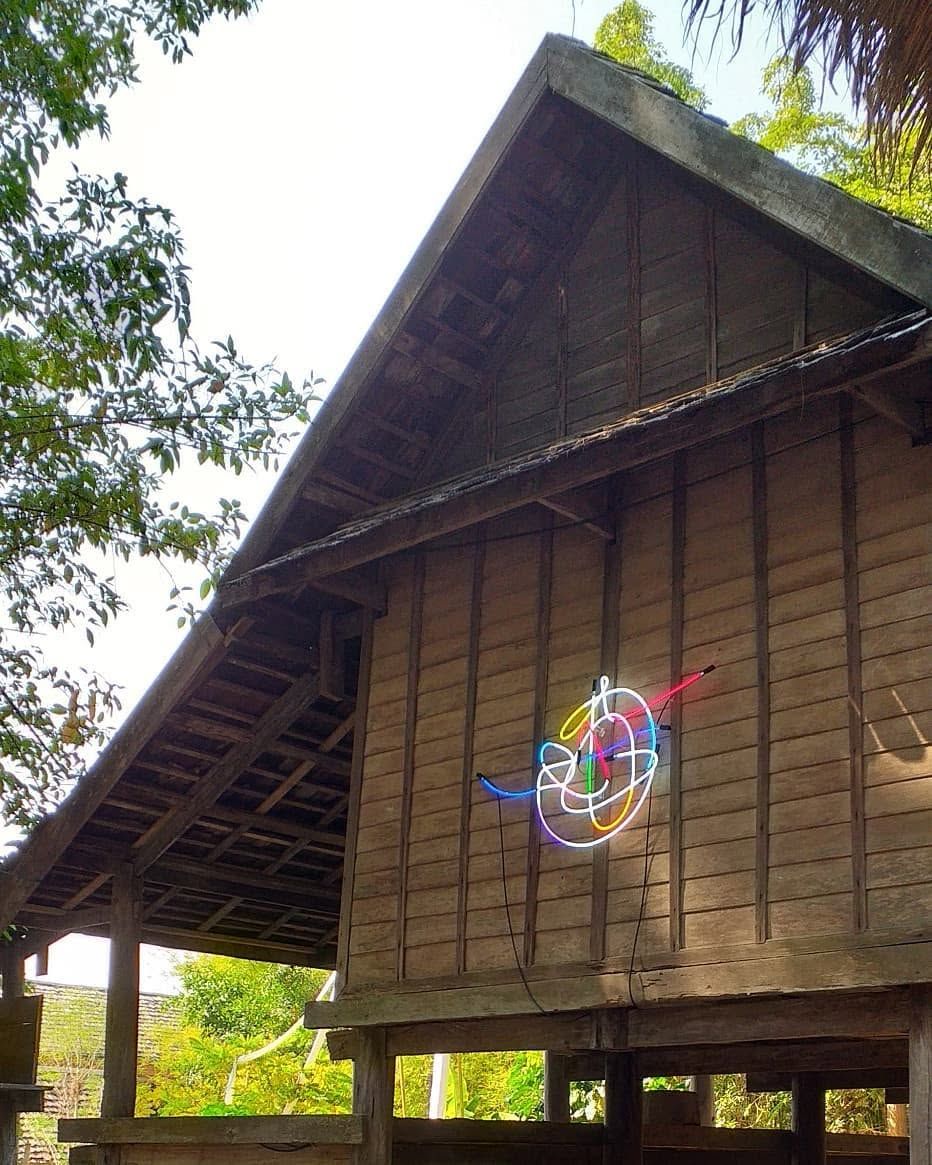
Old and new. Rural and urban. Handmade and industrial. Tradition confronting modernity.
It seemed obvious. Years later, sitting across from Giles, I realised how superficial that reading had been. The beauty of the work did not lie in contradiction. The house had not changed. The neon had not tried to modernise it. The artwork had altered only one thing. It had changed the viewer.
Perhaps this is what great art has always done. Not invent a new world. Simply teach us how to look again at the one we already inhabit.
I asked him why, after all these years, he still worked with neon. He smiled before answering. "It's like my right hand."
The sentence was so simple that I stopped taking notes. For a moment, I simply looked at him. The answer explained far more than any theoretical essay ever could. No one asks a pianist why they continue to play the piano. No one asks a chef why they still use a knife. No writer is questioned about their continued reliance on words. Once a tool becomes inseparable from thought, it ceases to be merely a tool. It becomes part of the way a person understands the world.
That is what neon has become for Giles Ryder. Whether the light comes from traditional glass tubes, LED, or flexible lighting makes little difference. The technology is secondary. The language remains the same.
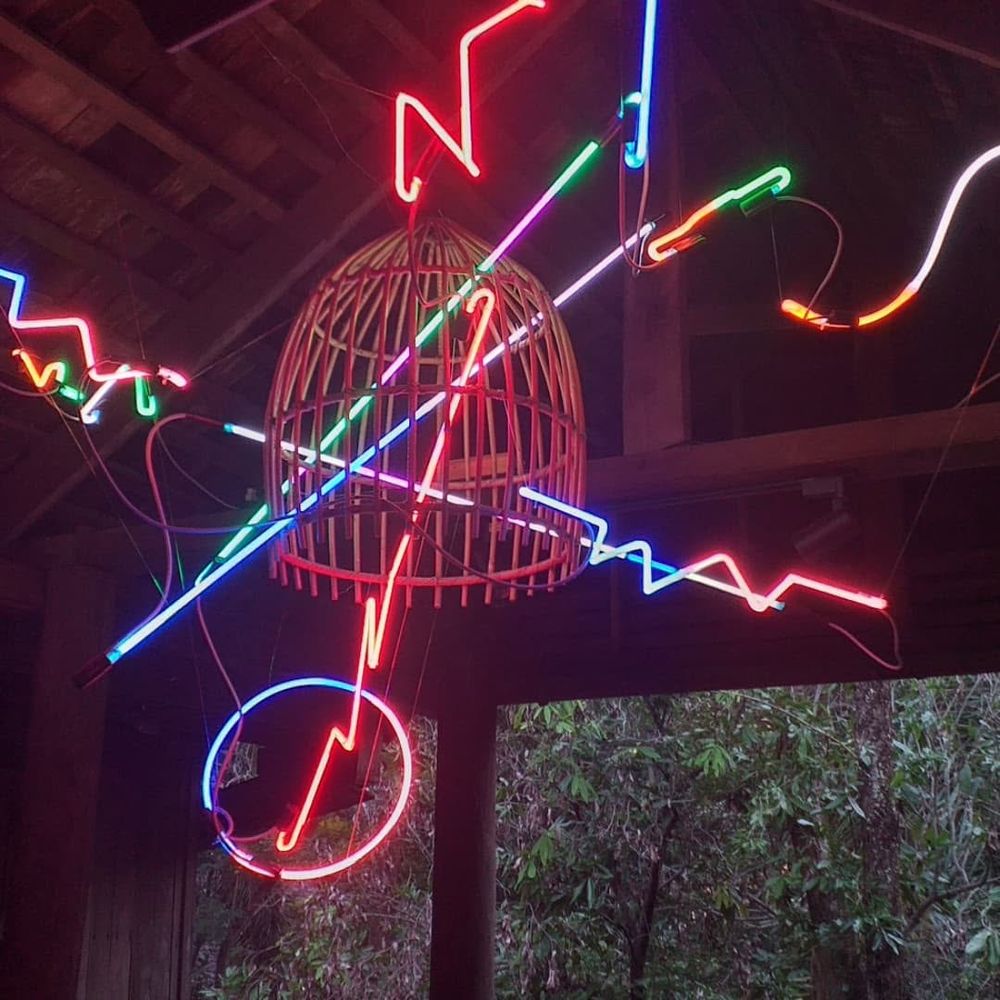
A language through which he speaks to places. And, somehow, places answer back.
When there is language, there is conversation. Perhaps that is why Giles has never separated an artwork from its surroundings. A site is never merely a backdrop. The people who inhabit it are never passive viewers.
Both become participants from the very beginning.
The artwork reaches completion not when the artist finishes installing it, but when someone encounters it—and begins to see differently. In that moment, the conversation starts. And for Giles Ryder, conversation has always been the true medium. Light simply makes it visible.
Chapter Four
The Man Who Chose to Stay
Several times during our conversation, I caught myself forgetting that Giles Ryder was Australian. It wasn't because of his familiarity with Thai culture. It wasn't because he has lived here for over a decade. And it certainly wasn't because he has become "Thai." It was something less obvious than that. It was the way he spoke about places, Chiang Mai, Phayao, Bangkok, Khon Kaen or small villages scattered across the Northeast.
He never described them as destinations. He spoke of them the way people talk about places that have become woven into the fabric of their lives. Places remembered through friendships rather than maps.
People often ask him a simple question. Why are you still in Thailand? Curiously, I don't think Giles has ever answered it directly. Or perhaps he never needed to. The answer is already embedded in the stories he tells. In the lecturers who remain collaborators and friends. In galleries where strangers became lifelong companions. In weathered wooden houses that found new life through art. In landscapes that slowly revealed themselves—not through sightseeing, but through years of patient attention. If home is measured by relationships rather than nationality, then Giles has been home for a very long time.
By the time our conversation ended, we had each finished two flat whites. Strong coffee has always suited him. We were sitting inside MAIELIE Artspace café in Khon Kaen. He insisted on paying. It was a small gesture. Entirely characteristic.
Generosity, I realised, appears in Giles's life much the same way it appears in his art. Quietly. Without performance. Without expectation.
One thing struck me throughout the interview. Never once did Giles speak about "impact”. He never claimed to have changed Thailand's contemporary art scene. He never described himself as influential. He never measured his career by achievements or recognition. In an era when artists are often encouraged to build personal brands, Giles seemed almost indifferent to the idea.
Perhaps that is precisely why his contribution matters. The people who quietly reshape a community rarely announce that they are doing so. They simply continue showing up. Year after year. Project after project. Conversation after conversation. At one point our discussion turned to the contemporary art world itself. For the first time, his voice carried a note of concern.
"Sometimes," he said, "contemporary art feels like it's reached a dead end. Everyone keeps repeating the same conversations without knowing where to go next." He paused before adding a phrase that has stayed with me ever since. "It's an echo chamber."
The observation was not cynical.
It was reflective.
Like much of what Giles says, it emerged from careful observation rather than criticism.
He has spent enough years moving between countries, institutions, and artistic communities to recognise the danger of becoming trapped inside one's own assumptions.
Perhaps that is why curiosity has remained central to his practice. Curiosity keeps the conversation alive.
For Giles, making art has never been about satisfying collectors or responding to market trends.
"You want to make work you can live with," he told me. "Work you're genuinely proud of. That's the important thing."
It is a remarkably simple philosophy. And perhaps a surprisingly difficult one.
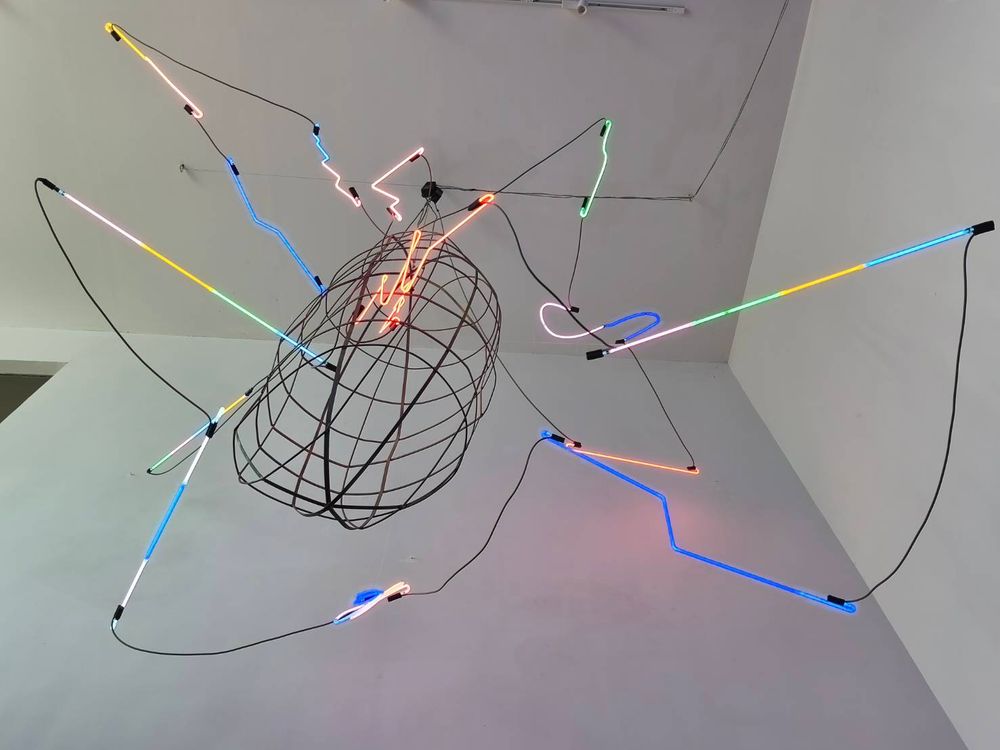
In 2023, Giles was invited to become an artist-in-residence at Jim Thompson Farm. There he created a large-scale installation using materials gathered from the surrounding landscape. The project felt less like a departure than a continuation. Years earlier, he had worked with reclaimed rattan form from an abandoned resort in Phuket. Elsewhere he had incorporated bamboo chicken coops, woven fish traps, and everyday tools from villages across Isaan.
The materials changed. The questions did not.
How do ordinary objects carry extraordinary histories? How does a place remember? How can light reveal what familiarity has hidden? His practice has always returned to these same quiet inquiries. Again and again. Looking over his practice of more than twenty years, I realised something I had somehow missed.
Giles Ryder has never really been making work about light. He has been making work about seeing.
Light is simply the means through which seeing becomes possible.
Before we finished, I asked him one final question. After all these years in Thailand, how does he feel about this country? He didn't answer with sentiment. He didn't say that Thailand was his home. He didn't declare his love for the country. Instead, he told another story. About people. It was the most honest answer he could have given.
Because perhaps home is not the place where we are born. Perhaps it is the place where there are people waiting for us when we return.
When I began writing this article, I thought I was trying to understand how Thailand's contemporary art scene had grown over the past two decades.
By the time I reached these final pages, I realised that the question itself had been incomplete. History is never created by one individual. It emerges through countless people working quietly, consistently, often invisibly, over many years. Their names may never become widely known. Their contributions are easy to overlook while they are happening. Only later do we recognise the shape they have given to the world around us.
Giles Ryder is one of those people.
He did not come to Thailand intending to become part of its contemporary art history. Yet, over time, history quietly gathered around him. That, perhaps, is the true meaning of The Outsider Who Stayed.
It is not simply the story of a foreign artist who decided to remain in Thailand. It is the story of a man who chose to stay within; its people, places, and conversations. Long enough that one day, almost without anyone noticing, he was no longer an outsider.
As we stood to leave, Giles laughed and shrugged. "I still need a visa," he joked.
Even after all these years. Even with a family here. We laughed, shook hands, and walked in different directions.
It was an ordinary ending—the kind that rarely finds its way into history books. Yet somehow, it felt exactly right. Lives like Giles Ryder’s are not defined by grand finales; they are built from ordinary days, repeated with extraordinary care. And perhaps that is how communities are made—not through dramatic moments that demand attention, but through quiet acts of staying.
Epilogue
When people speak about contemporary art, they often talk about innovation: new media, new technologies, new aesthetics, and new ideas. But after spending time with Giles Ryder, I have come to believe that the future of art may depend on something far older—attention, patience, generosity, and the willingness to remain in one place long enough to understand it. It means listening before speaking, building relationships before building reputations, and allowing a place to change you before trying to change it.
That may be the quiet lesson at the heart of Giles Ryder’s story. Art is not simply something we bring to a place; it is something that grows from living within it. And perhaps that is why, after all these years, Giles Ryder is no longer remembered merely as the Australian artist who came to Thailand. He is simply one of the people who helped Thailand’s contemporary art community become what it is today.
© 2025 Khaoyai Connect. All rights reserved.
No part of this content may be copied, modified, or distributed in any form without prior written permission.
