


How Rai Wong Kaset
Became Pak Chong's First GI Durian Orchard
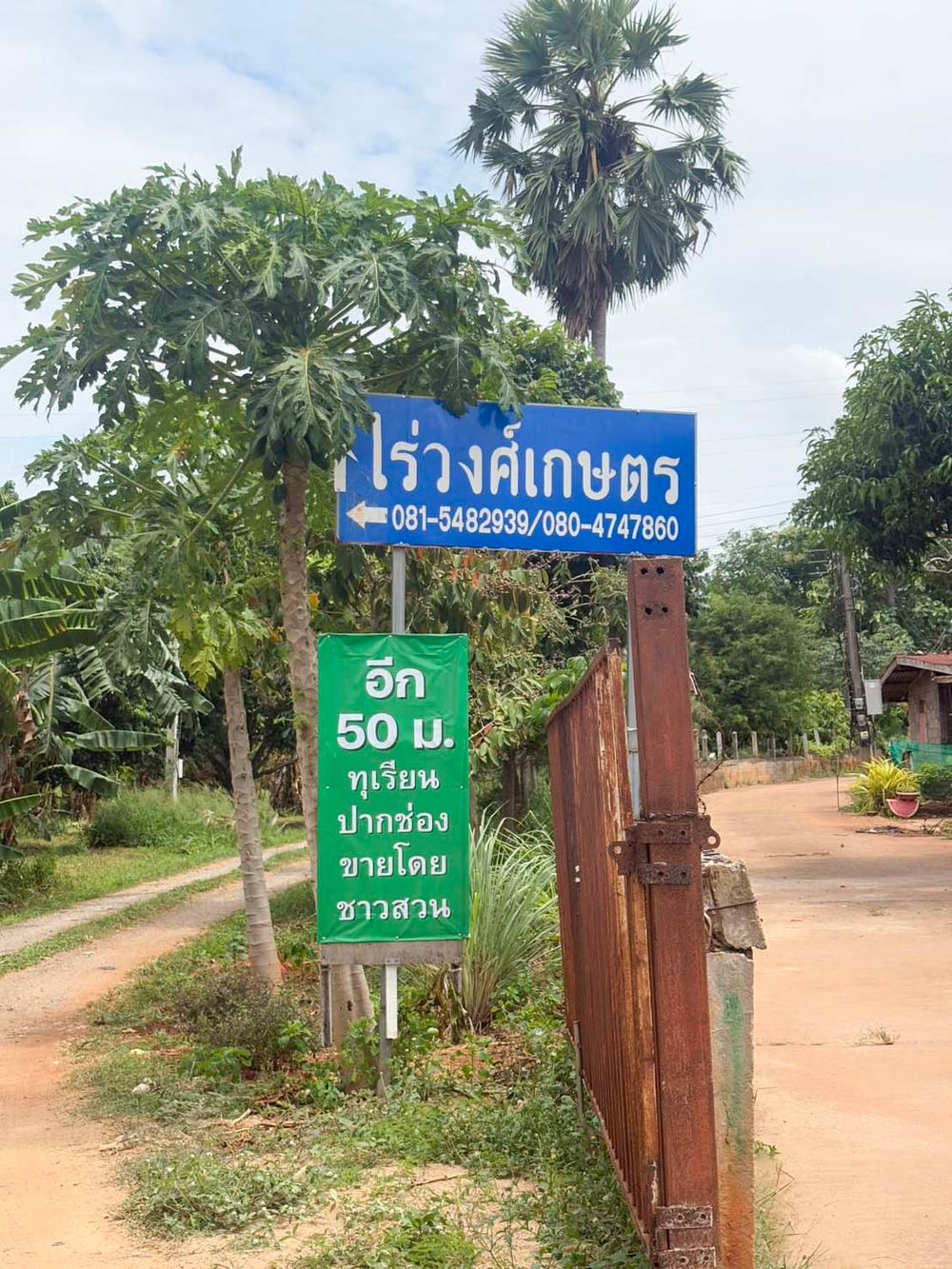
Set aside the fruits of perseverance visible today, close your eyes, and travel back some 60 years. Rai Wong Kaset, in Nong Nam Daeng Subdistrict, Pak Chong District, was then still dense woodland in Dong Phaya Fai - a place so forbidding that every traveler dreaded it. Yet perhaps fate had a hand in bringing a young Thai-Chinese man from Suphan Buri to settle and make a living on this land.
The late Wichai Wongwichai, a Thai-Chinese man from Suphan Buri, had originally been a merchant aboard a towed cargo boat, carrying all kinds of goods from Suphan Buri to Bangkok. As roads began to develop, river trade declined and he had to change occupations. He turned to Pak Chong District, where he worked plowing fields for hire. In 1959, some friends encouraged him to buy land. Although he wanted to return to Suphan Buri, he decided to purchase a plot. Later, a relative who owned the adjoining land wanted to move back to Suphan Buri and offered to sell it to him. Wichai bought it for 500 baht per rai. Altogether, he came to own about 200 rai (approximately 79 acres), prompting him to take up farming full-time.
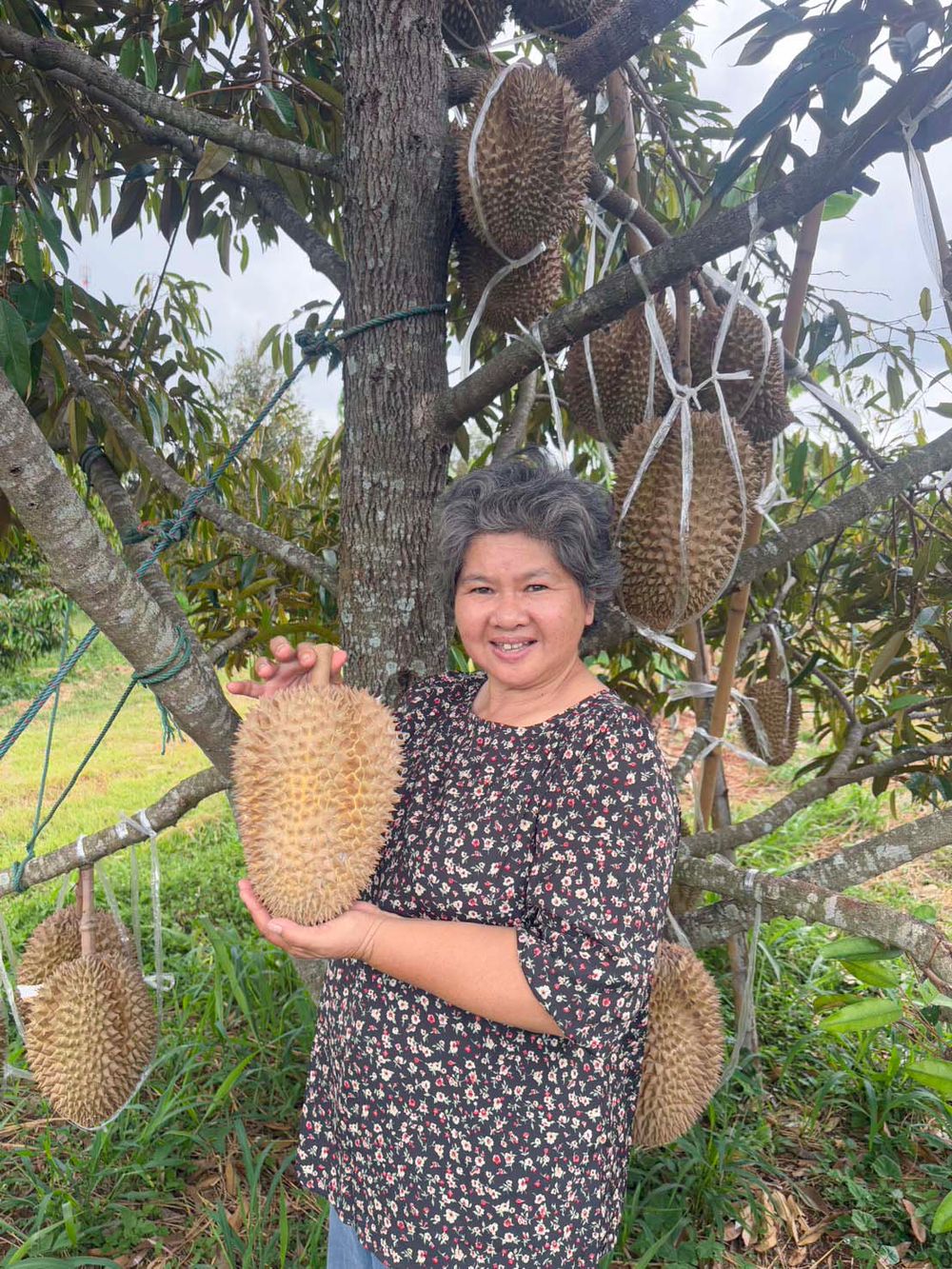
This is the story told by his daughter, 62-year-old Rattana Sittivanakul. Today, she owns Rai Wong Kaset, Pak Chong's first GI durian orchard - both a reward for perseverance and a source of lifelong pride.
"Dad was from Suphan, from Suphan Buri. At first, he worked on the river, buying rice and all kinds of goods from a towed cargo boat. During rice season, he bought rice; during charcoal season, he bought charcoal. He carried everything from Suphan to Bangkok along the Tha Chin and Chao Phraya rivers. Dad once told me he was very close to the owner of the Mekhong liquor distillery. Whenever he arrived, he would moor his boat in front of the distillery and visit Wat Pak Nam. Later, everyone shifted their business onto land as roads were built, so a friend invited him to Pak Chong to plow fields for hire," Rattana recalled.
As roads emerged, river trade declined. The merchant who had once made his living through commerce had to adapt and become a hired laborer.
"Dad bought a tractor and had to learn everything from scratch. He knew nothing about farming, but he came because plowing fields for hire paid well, and by then he had many children. This area was still called Dong Phaya Fai. Dad caught an infection, developed a fever, and nearly died, but he survived. After working here for a while, people encouraged him to buy land. It cost 500 baht per rai at a time when a kwian of rice sold for 400 baht. He initially bought 60-70 rai. Later, relatives who had also bought land decided to return to Suphan, so Dad bought theirs too, bringing the total to nearly 200 rai."
Once he owned more than 200 rai, the young contract plowman ultimately had to become a farmer. His first working capital came from a kind neighbor who lent him money without charging interest.
"Even today, we remain grateful to that family. Although the person who helped us has passed away, we still bring things to the family and always remember the kindness shown to us. Dad taught us to be grateful. He told us that without that household, we would have had no money to invest. Perhaps it was also because Dad was honest. When others invited him to become a corn trader, cheating the scales a little was almost inevitable, but Dad refused. That is why he was the only one who became a farmer. Dad said we did not have to be rich, but we should never go hungry - we only needed enough to live on. Did he want to be rich? Of course, being rich would have been nice, but not if the money came from cheating others."
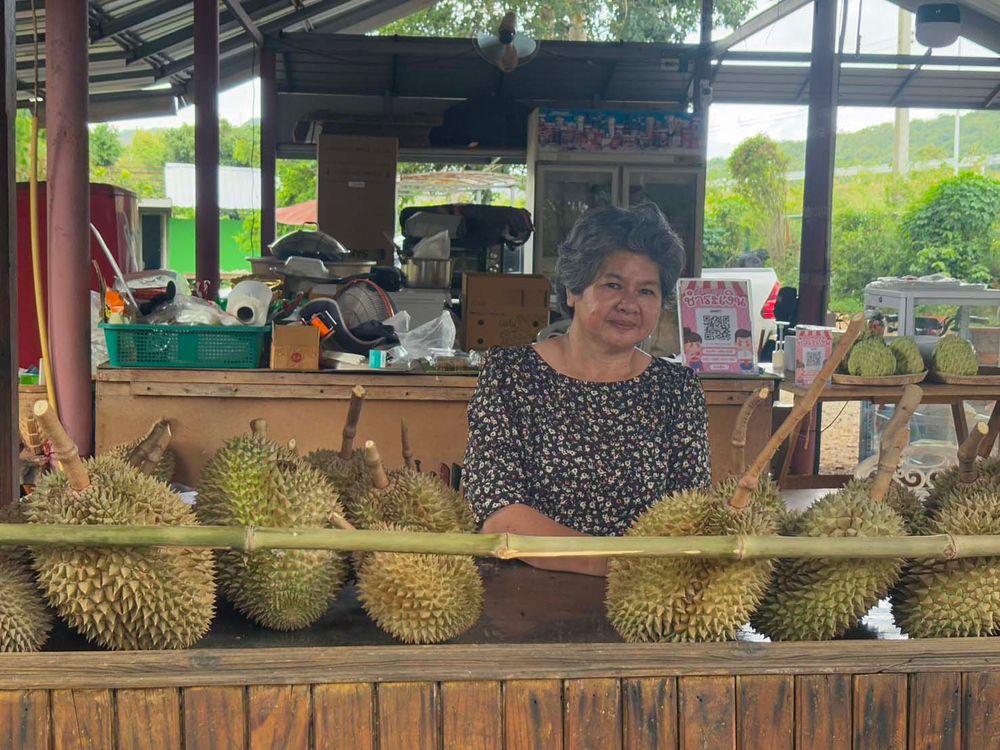
Rai Wong Kaset's story thus began in 1959.
"We started with field crops. Dad eventually saw how exhausting they were, so he switched to custard apples. But those were exhausting too. Harvesting them required hiring dozens of workers, and then we had to sit and sort the fruit into countless sizes. When the custard apples reached what people called the 'dying' stage, it was awful. Suppose we had to harvest 100 baskets that day, but the trader brought only 10 baskets. Where could the rest go? There was nowhere for them to go, so they were discarded all over the ground.
We then switched to Phetchabun sweet tamarind. At the time, it fetched 100 baht per kilogram, but after we had grown it for a while, the price fell to five baht, so we had to cut the trees down. Next, we turned to coffee. We planted a great deal of it, bringing the plants in from Chumphon, and ours was the only farm growing coffee in Pak Chong. We had to ask the commerce authorities to help us take it to market because people did not believe coffee could be grown in Isan. Believe it or not, when the beans were tested for dryness, ours had the lowest moisture content. But one day the price became so low that we removed the coffee trees. Dad then wondered what to grow next. We had relatives in Chanthaburi who told him durian was a good choice - easy to harvest and not difficult to care for, or so they said at the time. Dad bought rambutan and durian plants in Chanthaburi. He also asked the drivers who bought our custard apples to sell in the South to bring back rambutan and durian plants from there."
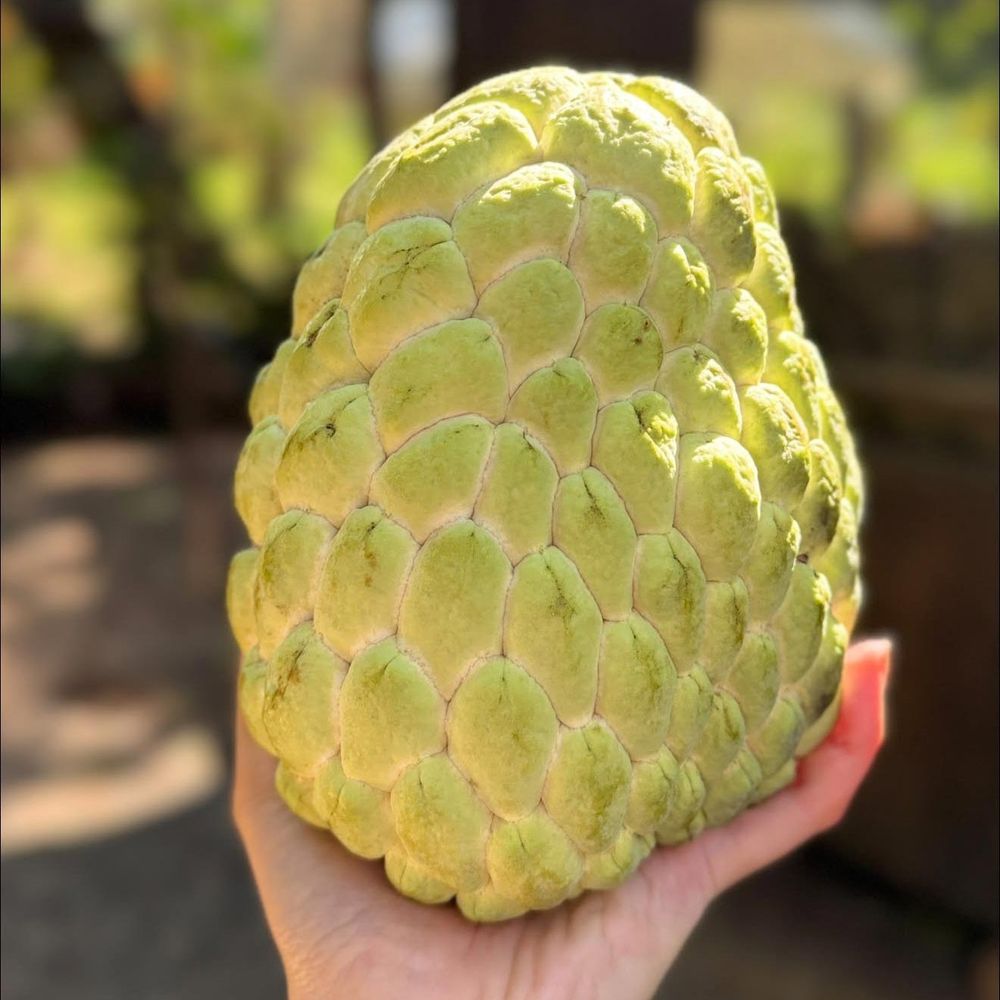
The guiding principle behind choosing a crop was that it should be different from what everyone else grew, so there would be no fight for the same market. The farm was also divided into growing zones. When they switched to coffee, for example, they retained some custard apple trees. If the farm relied on a single crop and it failed, everything would be lost. Dividing the land into zones meant there would at least be other crops to fall back on.
In 1974, they decided to plant 30 rai of durian, at roughly 20 trees per rai. The hardest part was finding a way to keep the trees alive.
"Life was extremely difficult in those days. We had not drilled a groundwater well because we had no money, so we hauled water from a pond by the road up the hill. All we had then were 200-liter oil drums. We bought several, carried the water back by vehicle, and rationed it out tree by tree. My brother-in-law said they would scoop up the water and give each tree one dipperful just to keep it alive. Mother said keeping them alive nearly killed the family. If we bought 100 trees, we had to replace 50; only half survived. We just kept replanting. Dad grew durian and rambutan at the same time. The rambutans bore fruit first and helped support us while we waited for the durians. In those days, durian took five years to produce because there was no technology to help us."
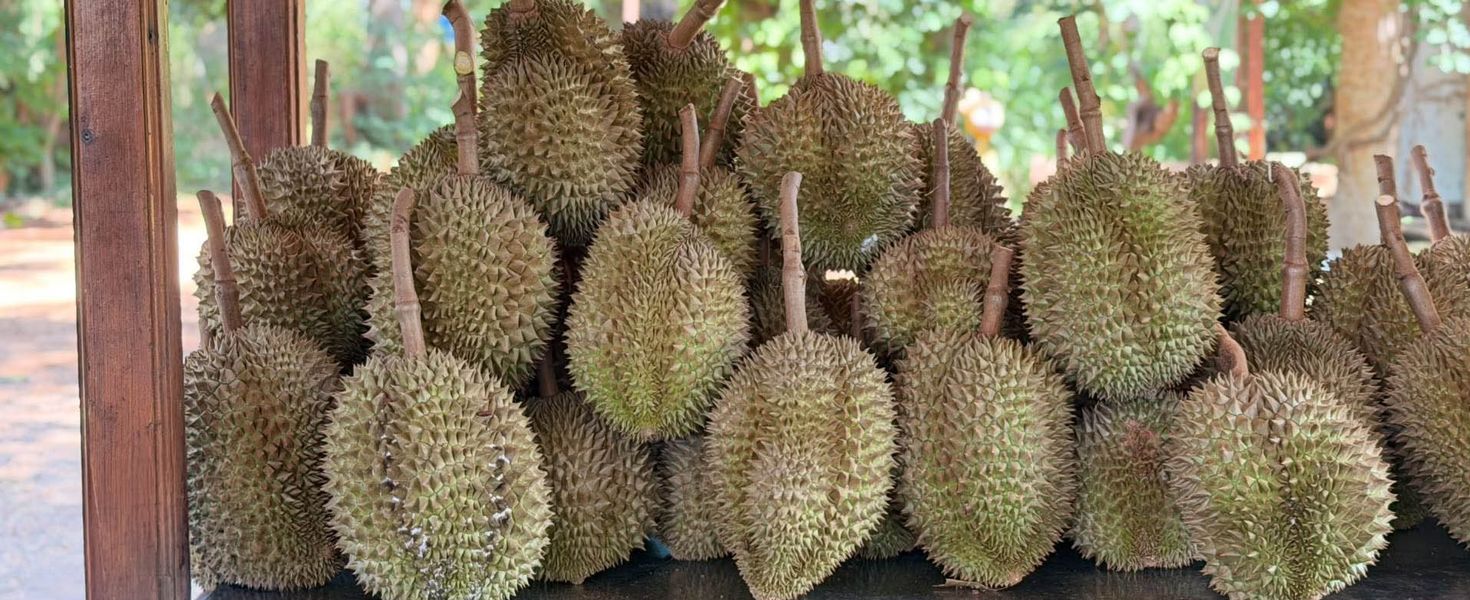
From that first planting in 1974, the orchard continued to develop. Today, it is the first durian orchard to receive a Geographical Indication (GI) mark from the Department of Intellectual Property, Ministry of Commerce.
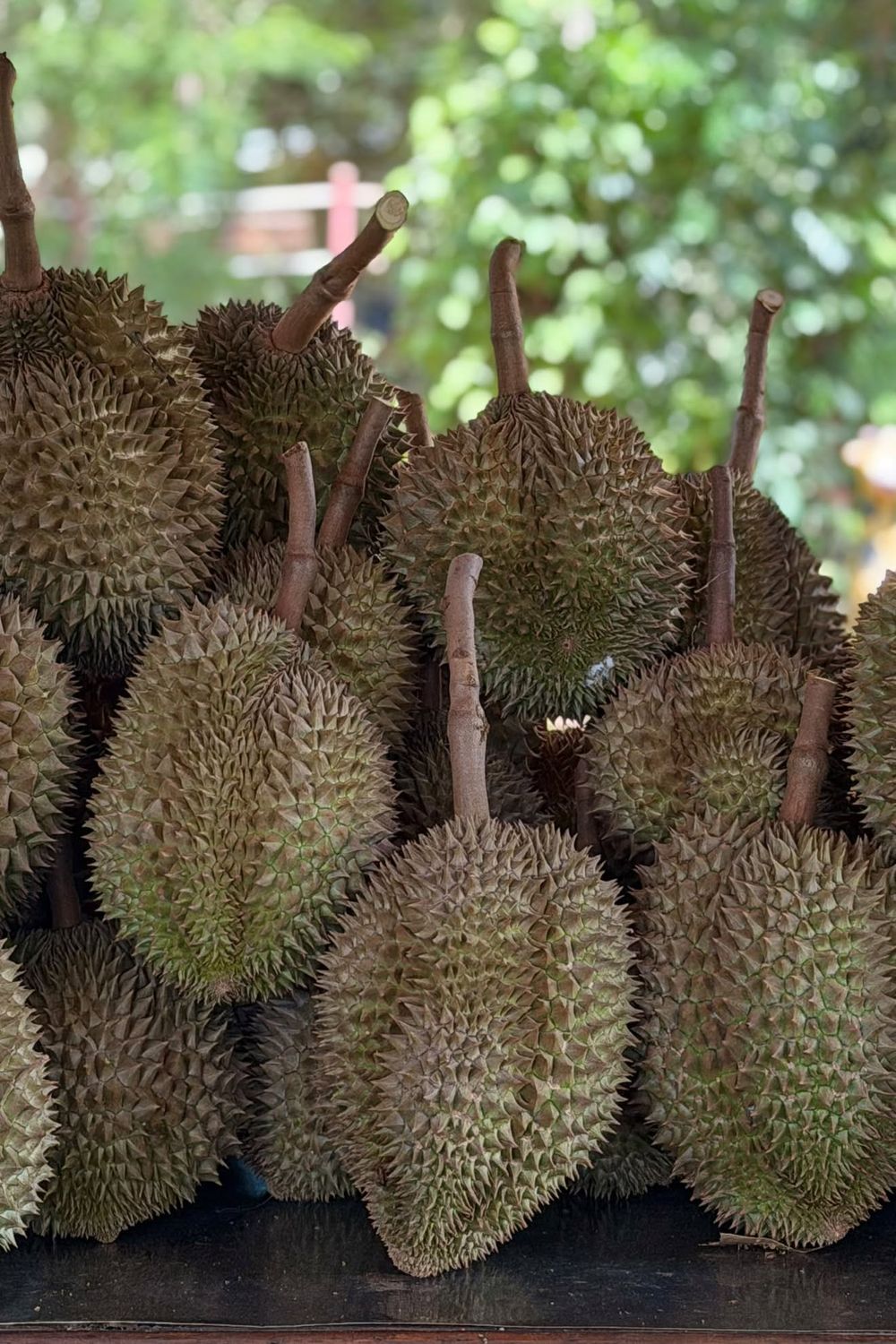
What did the first harvest taste like?
"At the time, we thought it was delicious, but we could not yet explain how it was different. One year, after I had graduated and returned home, an academic visited the orchard. He called our house - we still had a landline then. Only two durians remained when he arrived. He asked to buy one. We told him the crop was sold out and those were the only two left, but he still bought one. A year later, he called and said he was an academic at Kasetsart University. He had collected durians from different places for comparative analysis and was calling to tell us that ours was the most delicious. Even durian from Nonthaburi could not match it. That was back then; other orchards have probably developed considerably since. But at the time, we were overjoyed to hear it. Then he hung up, and we had no idea how to call him back. He had simply called to let us know."
The area's distinctive soil, water, and climate give Pak Chong durian a unique and outstanding flavor. Today, it is another product awarded a GI mark by the Department of Intellectual Property.
Today, the deliciousness they could not explain back then has been defined through the distinctive qualities of GI-certified Pakchong-Khaoyai Durian: "dry flesh, smooth and velvety on the palate, with a mild aroma."
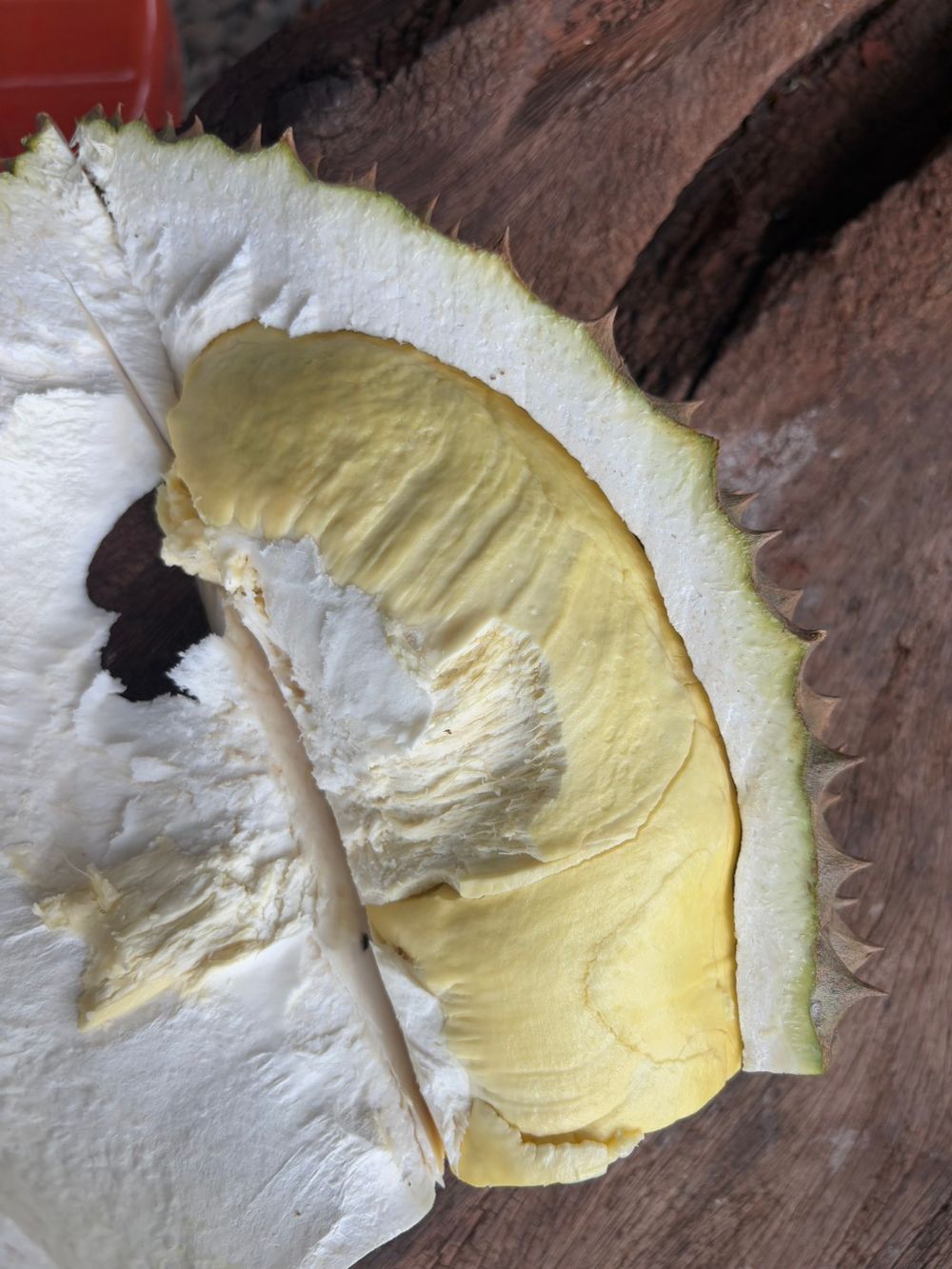
"We can say with confidence that ours was the first orchard because we were the first to bring the fruit to market. Once people saw that Pak Chong could grow durian, others began planting it too - five trees here, 10 trees there - and the number gradually increased. I still remember durian first selling for 17 baht per kilogram. When it reached 25 baht, we were already delighted. Then, less than 10 years ago, durian began to boom and prices rose as it became popular. We benefited from that too."
As for what distinguishes the durians at Rai Wong Kaset, Rattana said she now looks after 10 rai. After her father died, the jointly owned family estate was dissolved and the land was divided among the heirs. Her orchard follows the most natural methods possible and avoids heavy chemical use. Ground-cover plants, cow manure, compost, and fermented coral-tree extract are used. The orchard grows many cultivars, including Lin Lab-Lae, Long Lab-Lae, Met Nai Yai Prang, Kob Pikun, Kanyao, Ochee (Black Thorn), Musang King, Nok Yip, and Monthong. Monthong is planted most extensively, although Nok Yip has recently become almost as popular.
Seeing today's success, some may think growing durian is easy. Follow the work closely, however, and it becomes clear just how difficult caring for durian trees can be. Sometimes they demand even more tender attention than one's own children.
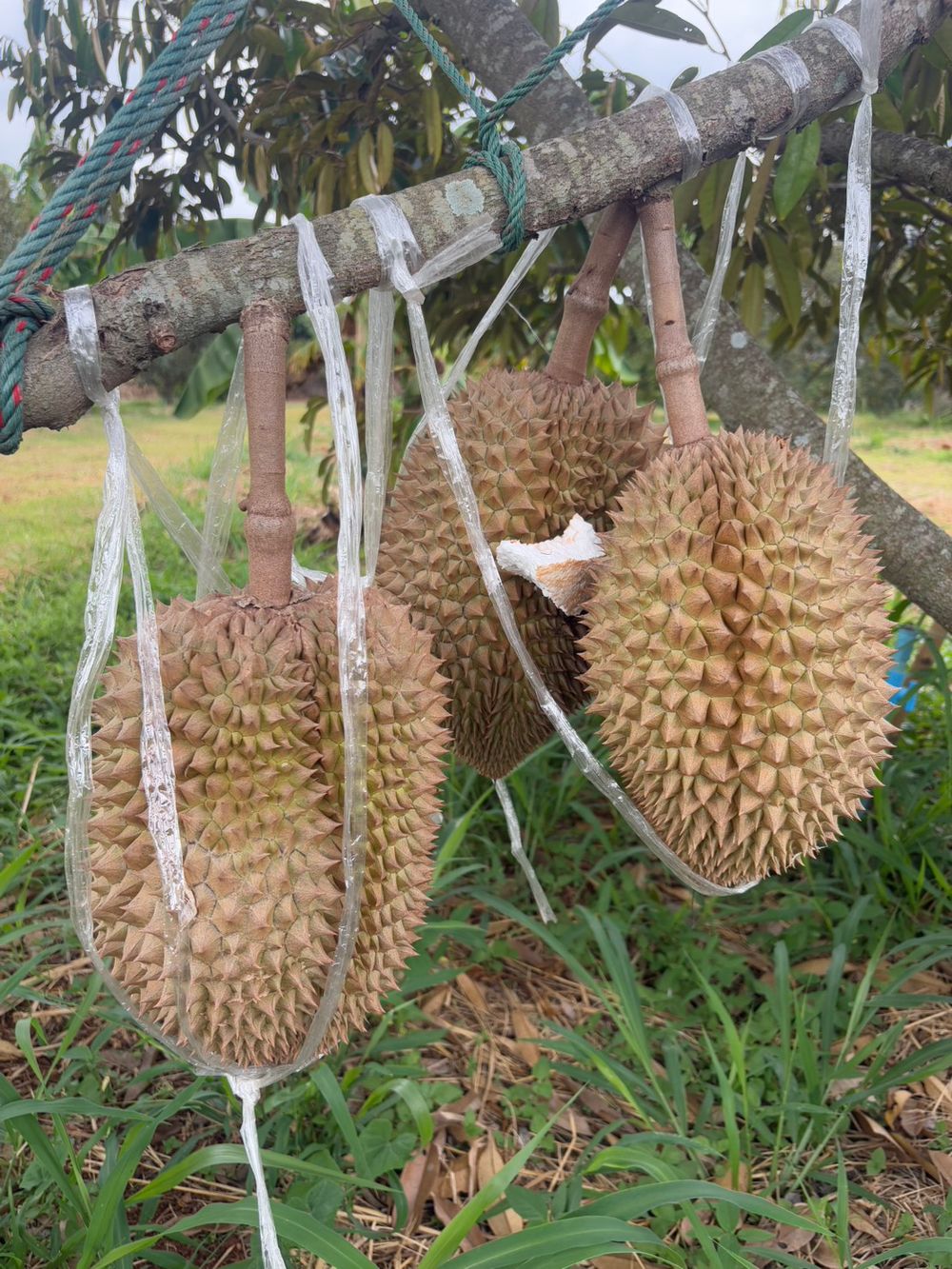
"Seeing the trees laden with fruit does not mean it will always be this way. If the root system develops a problem, a tree can die at any time. We cannot control the weather. Nature causes the greatest suffering because every year is different. This year, the winds were so strong that I do not know how many durian trees ended up with their roots pointing skyward. Elephants are another natural hazard. They eat the trees and trample them. They have not reached our orchard yet, but over around Khao Wong, they have pulled trees right out of the ground. This is a frightening new natural hazard. Farmers can only feel at ease once everything has been sold. Running an orchard is not easy. Many people ask why we do not choose another occupation. We love this land and are bound to it. Caring for it makes us happy, and seeing the produce fills us with joy. But in any year when the returns fall short of what we have invested, we must hold on to our money and be as frugal as possible."
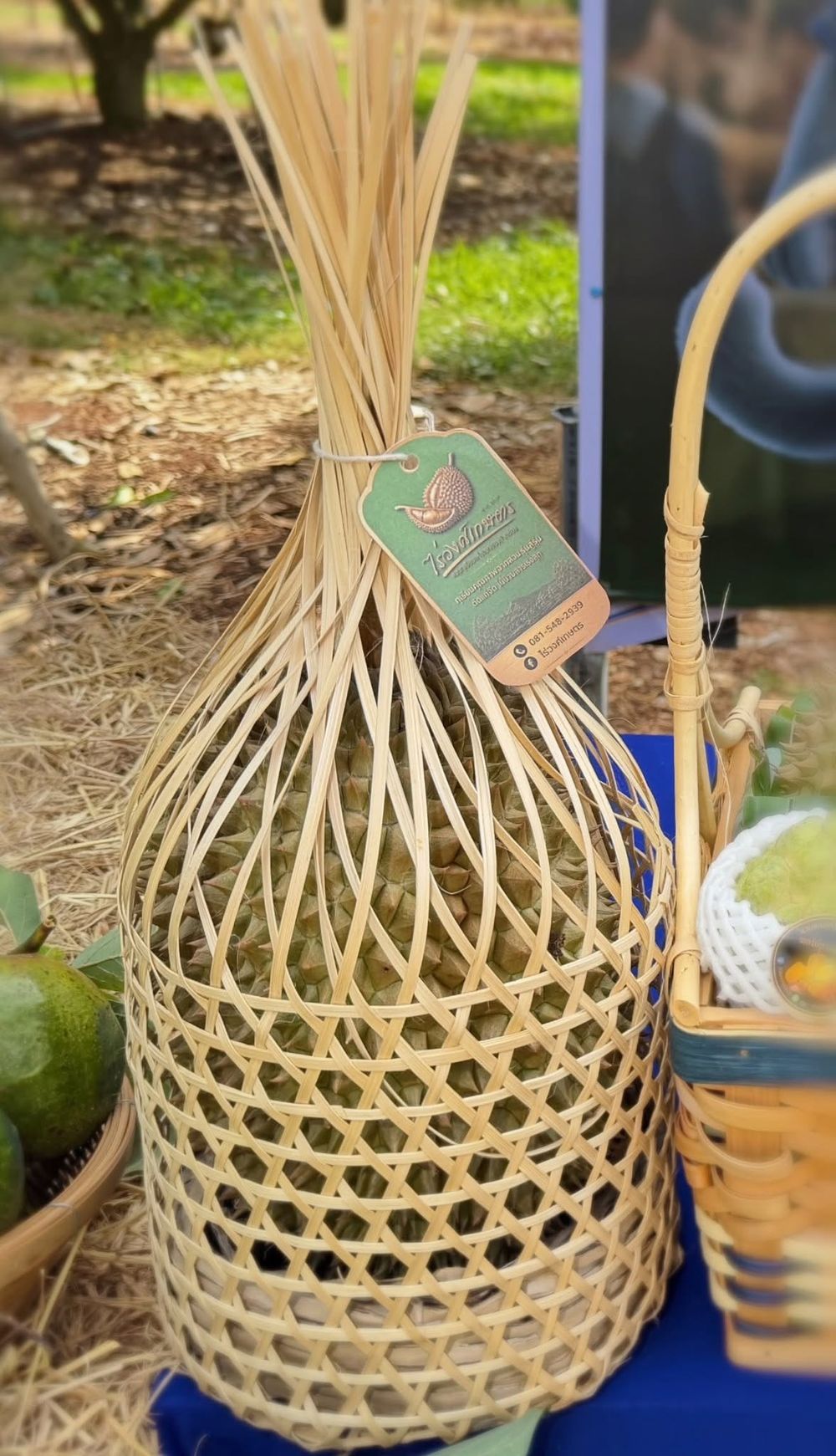
Beyond the natural hazards that worry orchardists, another source of heartache is customers who do not understand what farmers endure.
"Some customers know nothing about orchard farming. They do not understand that farmers earn their harvest income during only three months of the year; for the rest of the year, we have to care for the trees. Some ask why the fruit is so expensive and bargain the price down to this or that amount. Sometimes we think, after all the care it takes, we have only a three-month window in which to sell. Then we have to make that money last for how many more months? The money we receive is not all savings either; some must go back into caring for the trees. If an orchardist wants to save enough to buy a car, it takes three or four years, because we must keep something in reserve in case a natural disaster strikes. And no farmer wants to hear that this orchard's fruit is not delicious or that orchard's fruit is not delicious. When we grow it, we want every segment of every fruit to taste good, because that is where our income comes from. I still remember what a fruit vendor once said when she came to buy from us. She was lovely. A customer complained that the fruit was not attractive enough, and the vendor spoke up for the farmers: 'If they could sculpt every fruit, they would. But they cannot. Of course they want every one to be beautiful, because they want to earn money from it.' I still remember those words today."
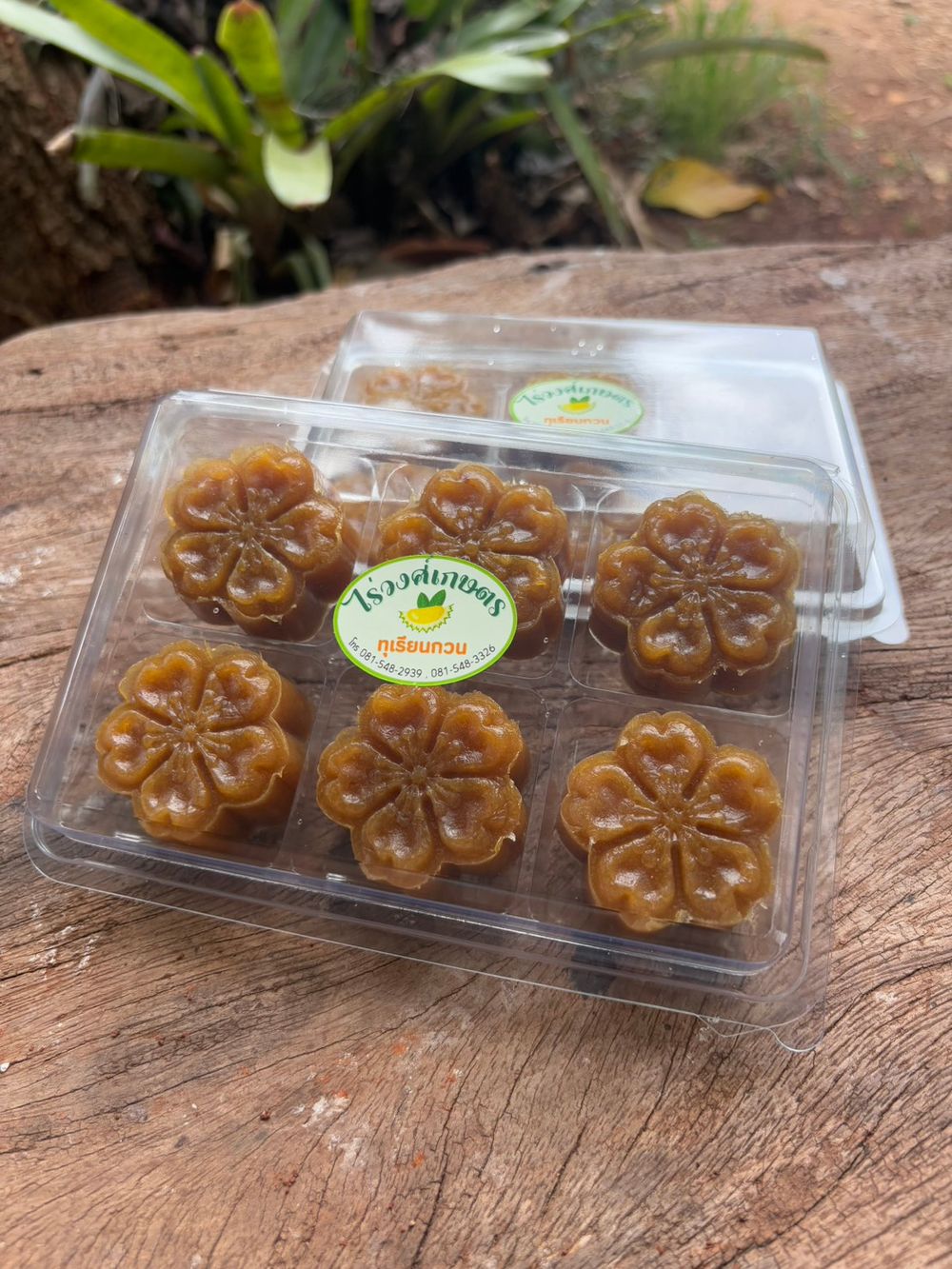
In addition to fresh durian, the younger generation now taking over the orchard has introduced durian paste. Slowly cooked over charcoal, it offers a naturally gentle sweetness and another option for durian lovers.
"I am immensely proud that we have fought on to this age and managed to preserve the land our parents worked so hard to acquire," Rattana said with a broad smile.
Rattana said the orchard's durian crop is now almost sold out, so anyone hoping to taste it will have to hurry. This weekend, the orchard will also have a booth at Durian GI Festival Pakchong Khaoyai 2026, held at the Nong Nam Daeng Subdistrict Administrative Organization. Visitors can come to browse, buy, and taste. Alongside Rai Wong Kaset, several other GI durian orchards will have booths offering their fruit to sample.
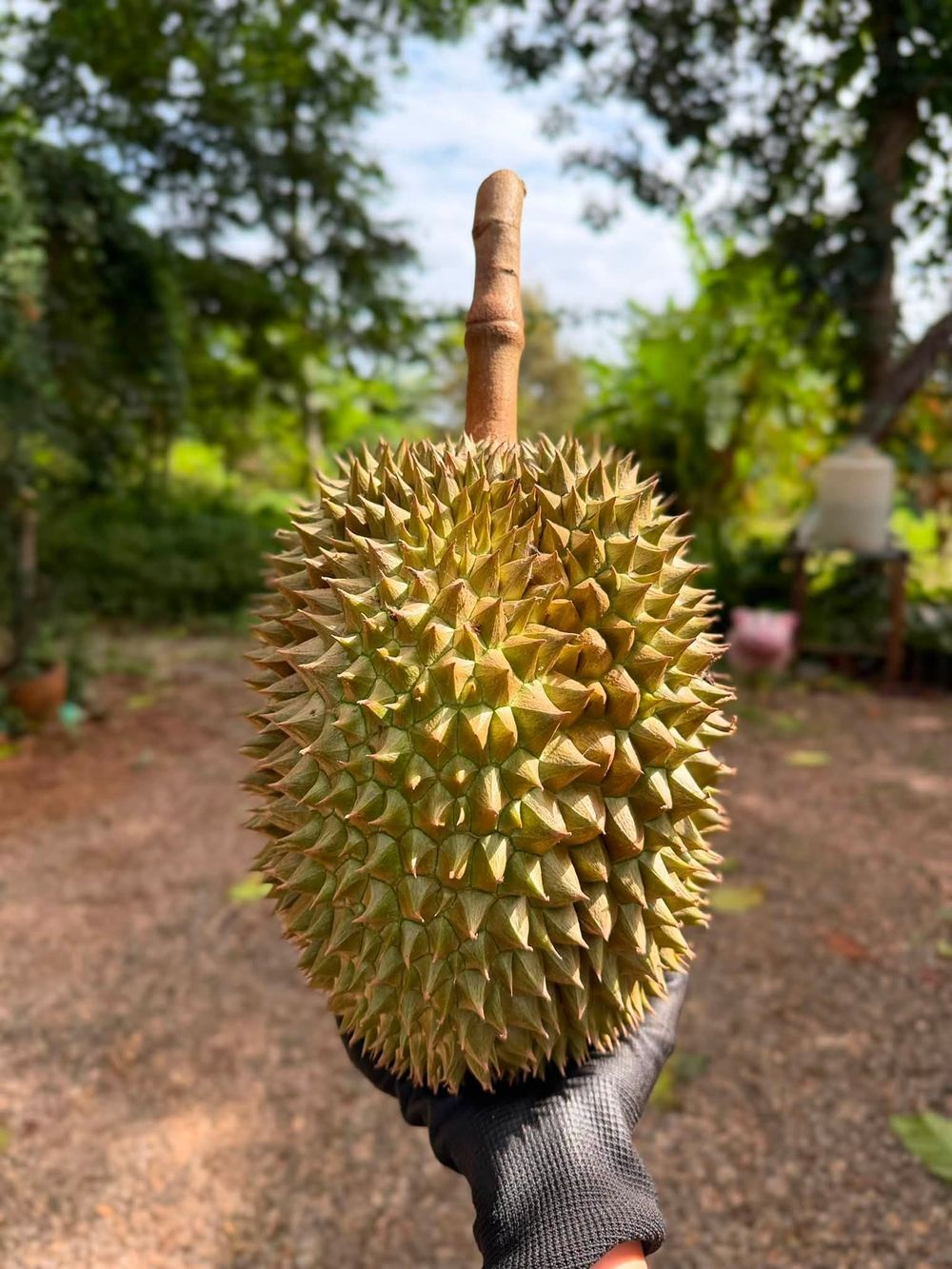
One more reminder: durian lovers should not miss Durian GI Festival Pakchong Khaoyai 2026, now in its fifth edition. The festival will be held from July 24-28, 2026, from 10:00 a.m. to 8:00 p.m. at the Nong Nam Daeng Subdistrict Administrative Organization, Pak Chong District, Nakhon Ratchasima Province. The venue is on Thanarat Road, along the route to Khao Yai National Park.
© 2025 Khaoyai Connect. All rights reserved.
No part of this content may be copied, modified, or distributed in any form without prior written permission.
