

Khon Kaen / City of Art / (Temporary)
Column: The Glaring Arts
At the end of this past March, Khon Kaen appeared unusually vibrant. Multiple art events were held simultaneously, to the point where the province seemed to transform into a “Temporary City of Art.”
Amidst the scorching heat and skyrocketing fuel prices, venturing out to see art felt like a small glimmer of hope for some respite—at least in an emotional sense.
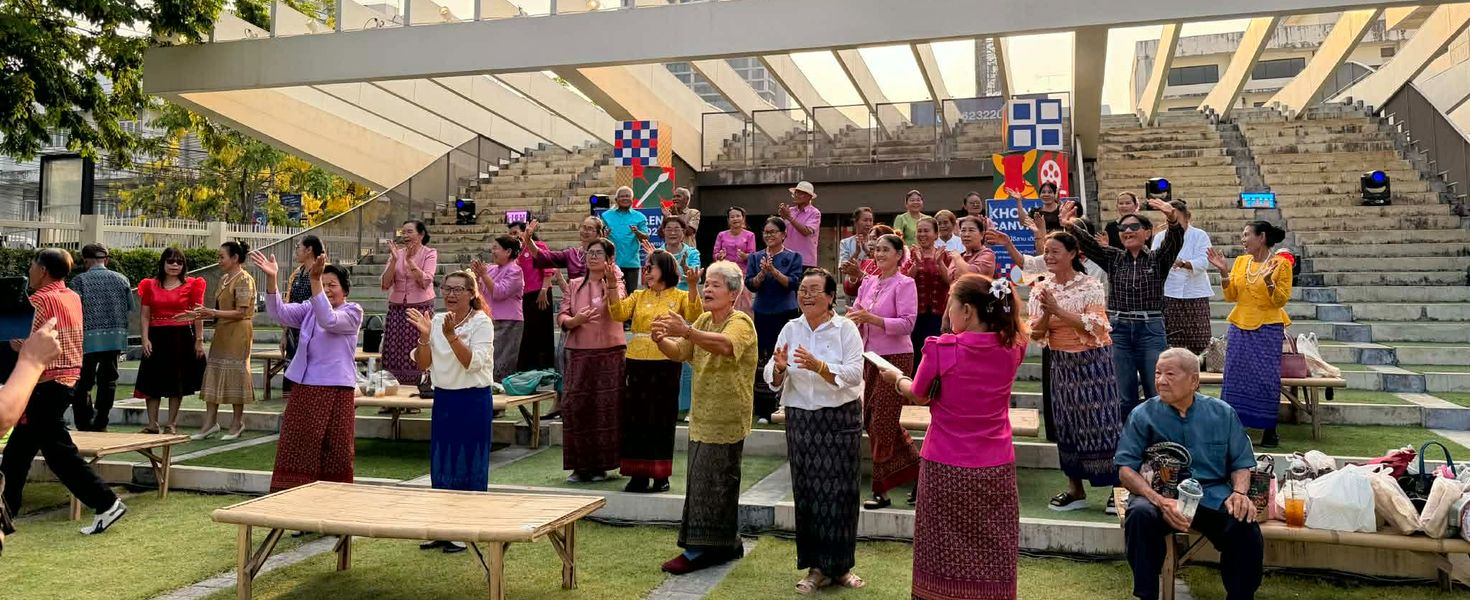
The emergence of KHON KAEN CANVAS: Isan Art Fair & Showcase—a festival for exhibiting and selling contemporary Isan art at the Treasury Museum Khon Kaen between March 28–29, organized by the Isan MICE Industry Trade Association—arrived at a time when art is being called upon as both a creative force and an economic tool. The festival manifested alongside beautiful and ambitious terminology: phrases like "art ecosystem" and "partner networks."
All of this was intended to reinforce Khon Kaen’s image as an "Art Hub."
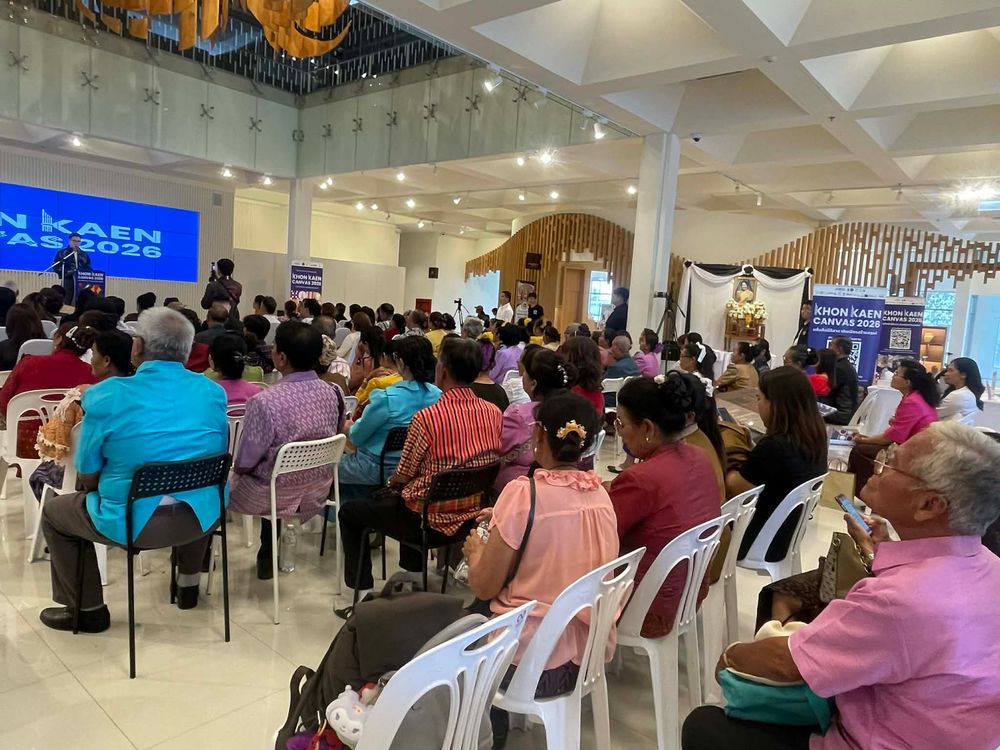
The interesting part, however, is that these elements seemed to exist more at the level of language or on social media feeds than in the realm of actual experience or reality. The image of large crowds mobilized from various communities and districts, sitting in neat rows to listen to the opening ceremony, reflected an atmosphere closer to a "government function" than an "art space."
Regardless, if we consider what actually took place at the event, the critical question lies not in the “intention” but in the “understanding.” Although the event was labeled an “Art Fair,” the management failed to establish the fundamental conditions for either “art” or a “market.”
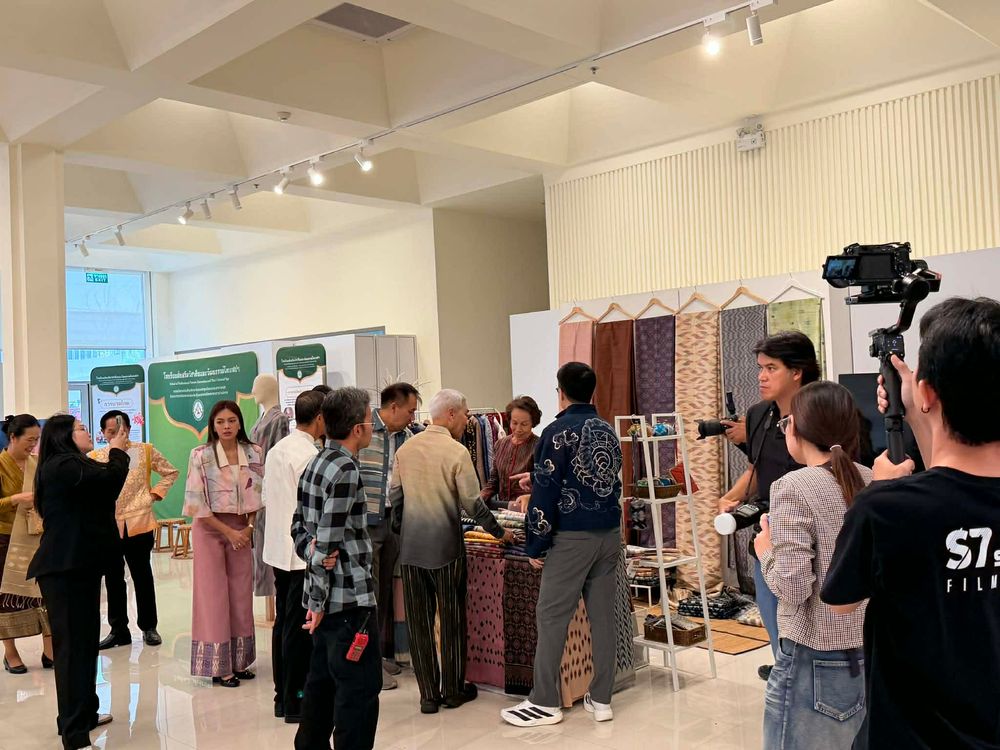
Within the exhibition area, we encountered a peculiar coexistence between artworks, Thai massage booths, woven fabrics, and souvenirs.
The art was lumped together without any spatial design, visual rhythm, or even an attempt to let the pieces communicate. Everything was simply placed there, loosely tethered by the word “contemporary.”
To call this an “Art Fair” is almost impossible because it failed to meet even the basic requirements of product presentation for sales. What it most closely resembled was an OTOP (One Tambon One Product) exhibition that had been recontextualized under the umbrella of the word “contemporary.”
I do not mean to imply that OTOP products are bad or lack value. On the contrary, developing community products to generate income and added value is a positive thing. However, in a space titled Isan Art Fair & Showcase,
Art was reduced to a mere “object” clustered together, rather than something being “presented” or “communicated.”
The works were laid out with an intention that is difficult to decipher: what exactly was the audience supposed to do with them?
Look at them? Buy them? Walk past them? Or simply acknowledge their existence?
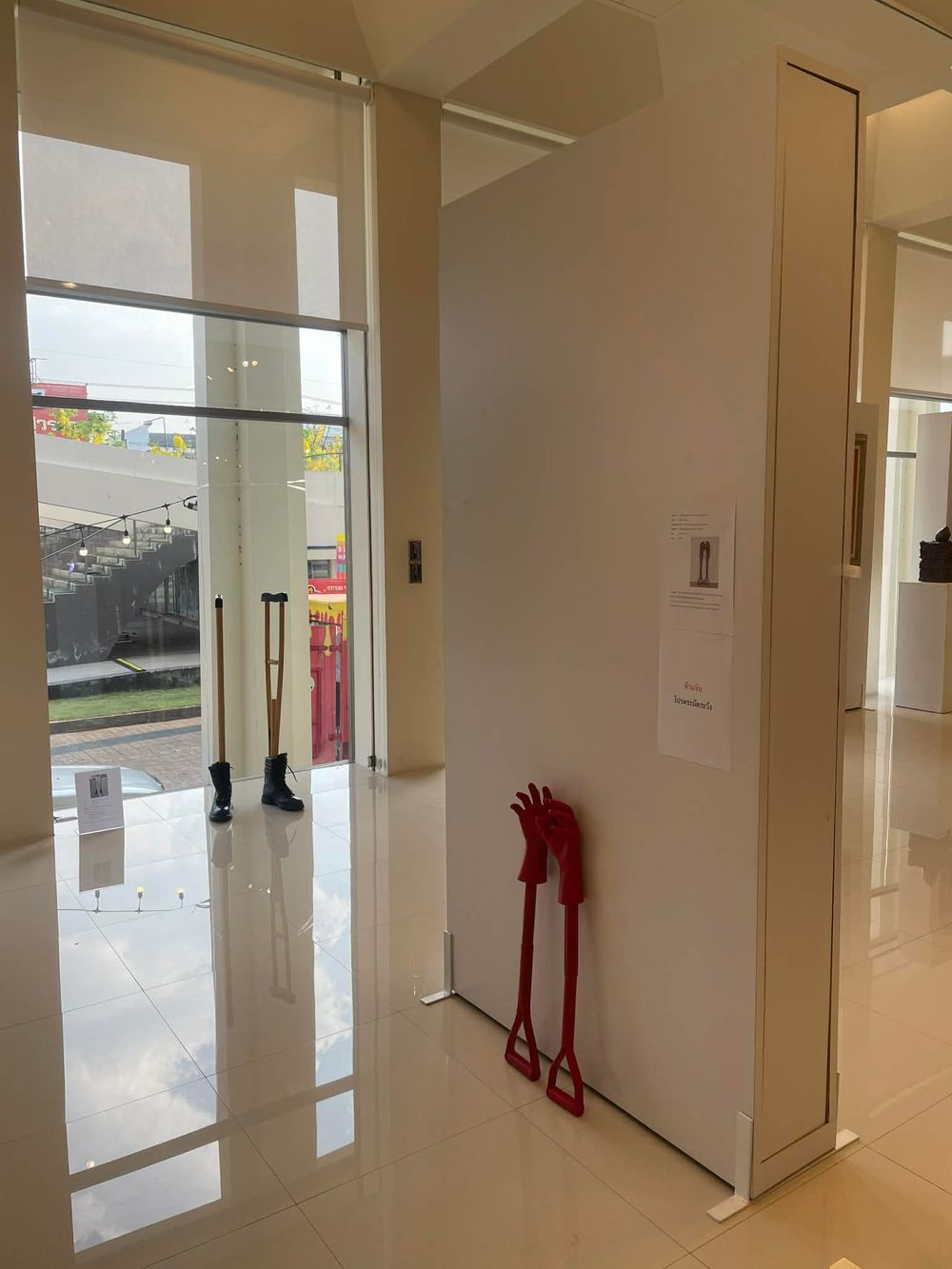
A vast number of artworks were arranged without any curatorial design. There was no sequence of perception, no relationship between the work and the space, and not the slightest effort to draw the viewer into an artistic experience.
Meanwhile, the area defined as an “Art & Craft Market” fared no better. Some vendors were unsure of what they were participating in, and the audience was unsure of what the event was supposed to be. Yet, the organizers seemed confident that it was already a success.
Perhaps this disconnect in understanding is the most "complete" work of art this event produced.
Consequently, what occurred was not an “Art Fair,” but merely a simulation of one, executed within the framework of a traditional event model. The most significant irony was the attempt to brand the event as “contemporary art” while relying on old-school management and logic that failed to create a new experience for the audience. In this sense, “contemporaneity” appeared only at the level of language, not in practice.
Furthermore, mobilizing various communities from both the city and outlying districts without clear communication reflects a structural issue: the organizers view the community as a “component of the event” rather than as genuine “participants.” The result was a large gathering of people in the same space who never truly “met” in the sense of a meaningful exchange.
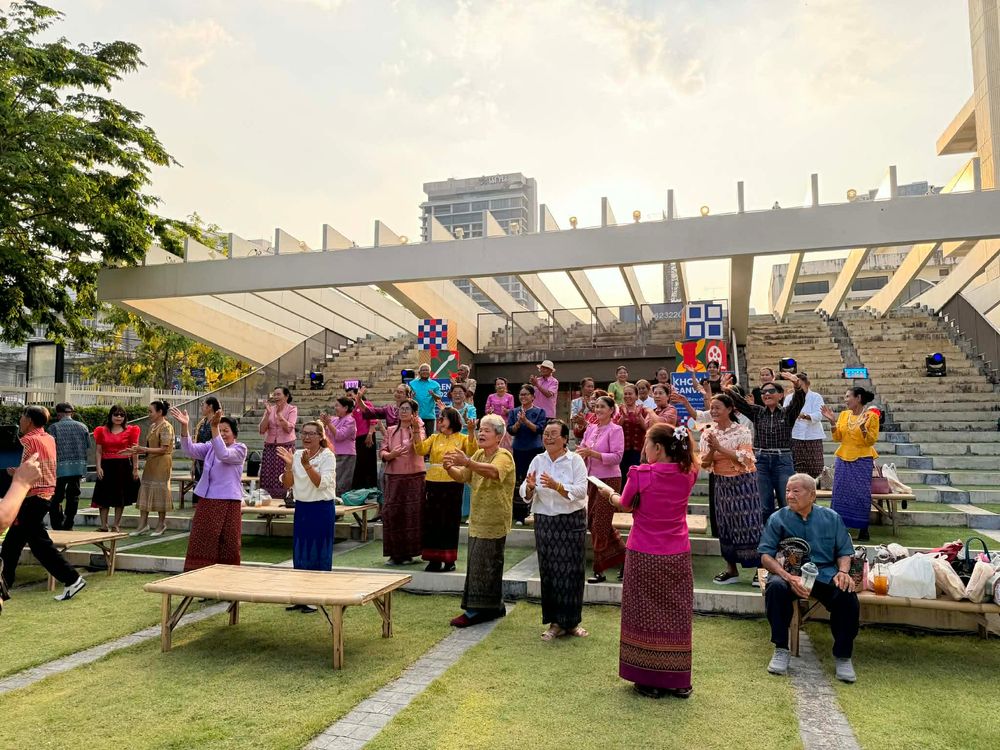
KHON KAEN CANVAS: Isan Art Fair & Showcase is therefore not just an example of a flawed event, but a reflection of structural problems in understanding contemporary art at a regional level—especially in a context where art is tied to social policy, economic agendas, and city branding. Ultimately, art cannot be conjured through event organizing alone. For a society to move forward, it requires the cultivation of conditions in thought, planning, management, and experience.
Considering this somber reality, the only thing this event clearly revealed was that those conditions have yet to manifest. It is a great shame.
Moving on from the art at the Treasury Museum, I walked through the heat along Klang Muang Road, passing Khon Kaen Wittayayon School toward BKS Station 2, or what locals call "Prub Arkard" (the Air-Conditioned Bus Terminal). I had heard there was a showcase of performance art and design, combined with a forum on urban development. It sounded quite intriguing, as the old terminal has been used for events before. Having observed it many times myself, I was eager to see how this new interpretation would unfold.
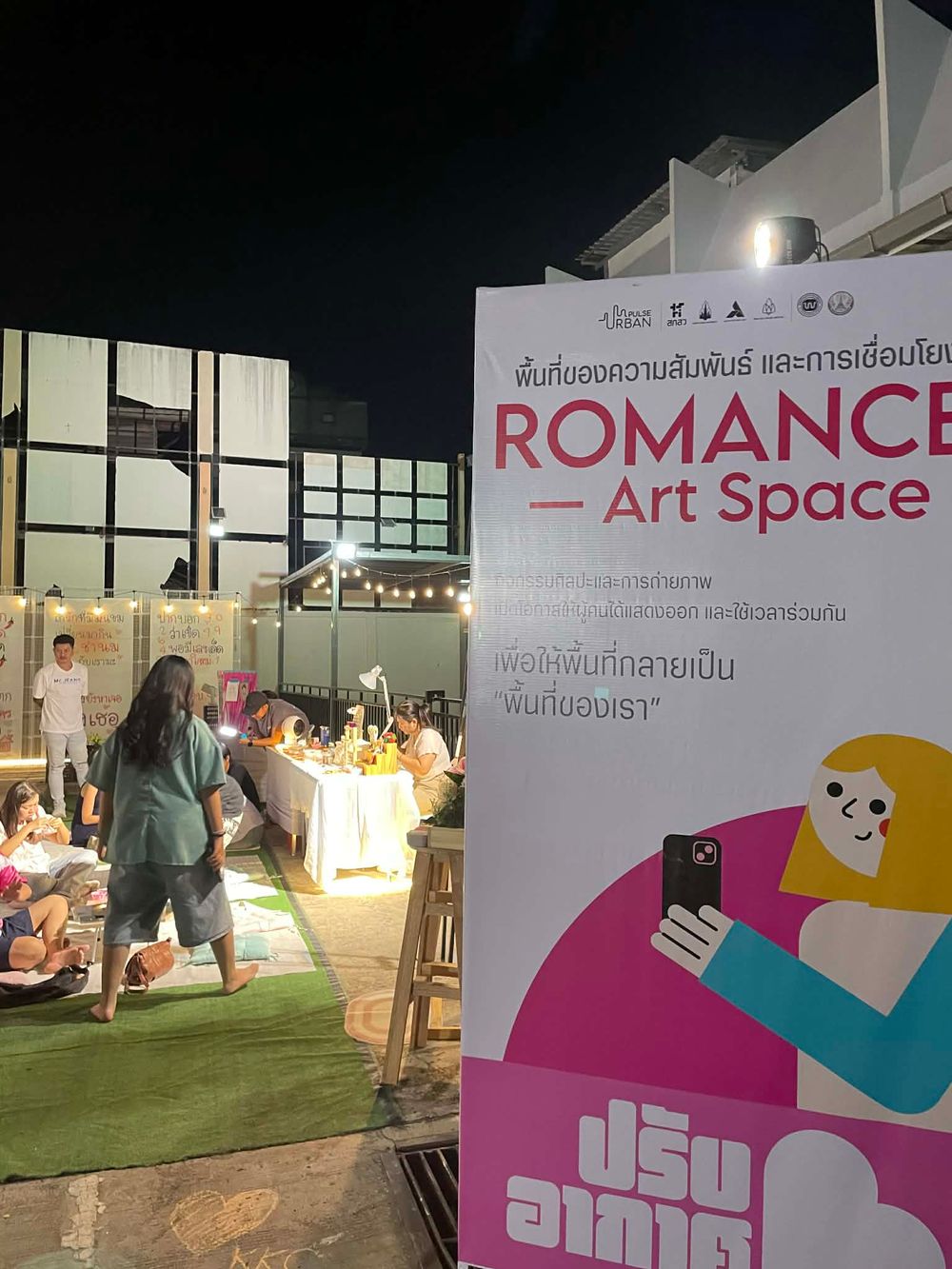
The Khon Kaen Air-Conditioned Bus Terminal (BKS 2) was brought back to life under the project name “Urban Pulse: Pumping the Heart of the City.” This is an effort by the government, universities, and various networks to “revive the old city” through the power of youth and contemporary art. It is supported by the Fundamental Fund (FF) 2026, with research funding allocated through Thailand Science Research and Innovation (TSRI). According to the project description, this is a major step toward urban renewal—a creative space, a platform for participation, and the future of sustainable development.
But looking at what actually happened on the ground during the two-day event (I attended both days),
The key question is not "What is this event doing?" but rather "Is this so-called 'revitalization' actually happening?"
The Khon Kaen Air-Conditioned Bus Terminal was once a hub of travel, a place of waiting, a meeting point, and an economic lifeline for many.
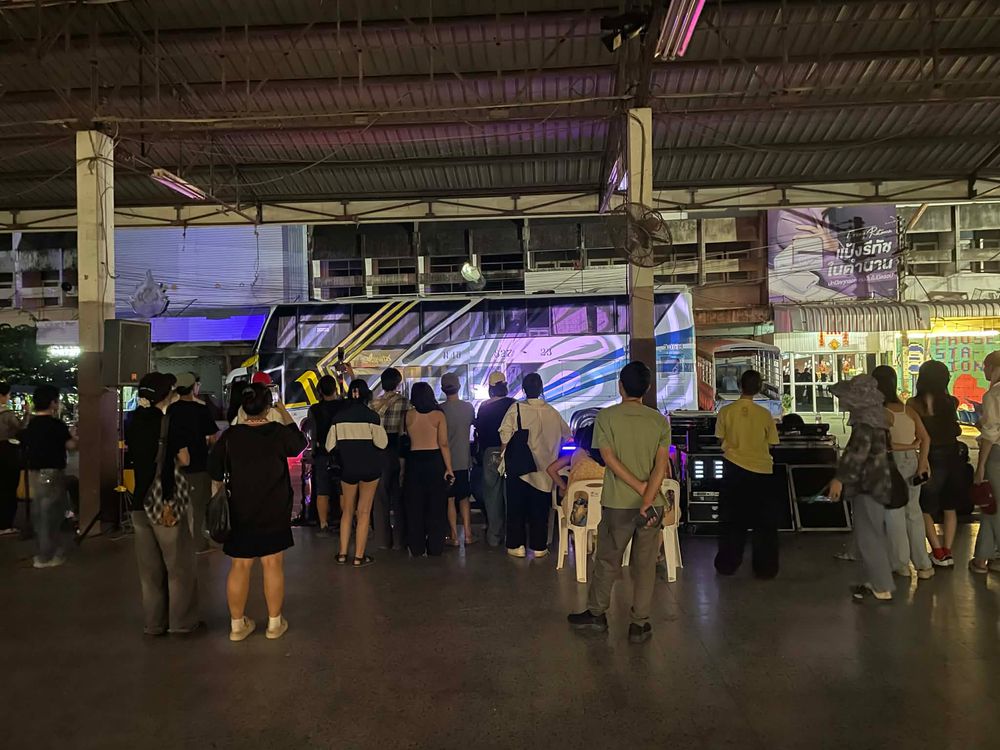
However, since the move to BKS 3 in 2014, this space has not transitioned into anything new. It was left to die—without a plan, without direction, and without anyone taking responsibility for the clear impact that followed.
Creating the atmosphere of a “city living room” through sweet messages, craftwork, decorative lights, mats, and activity corners—when placed atop a crumbling structure, decaying walls, and abandoned architecture—does not result in harmony. This is not revitalization; it is a “contradictory aesthetic overlap.”
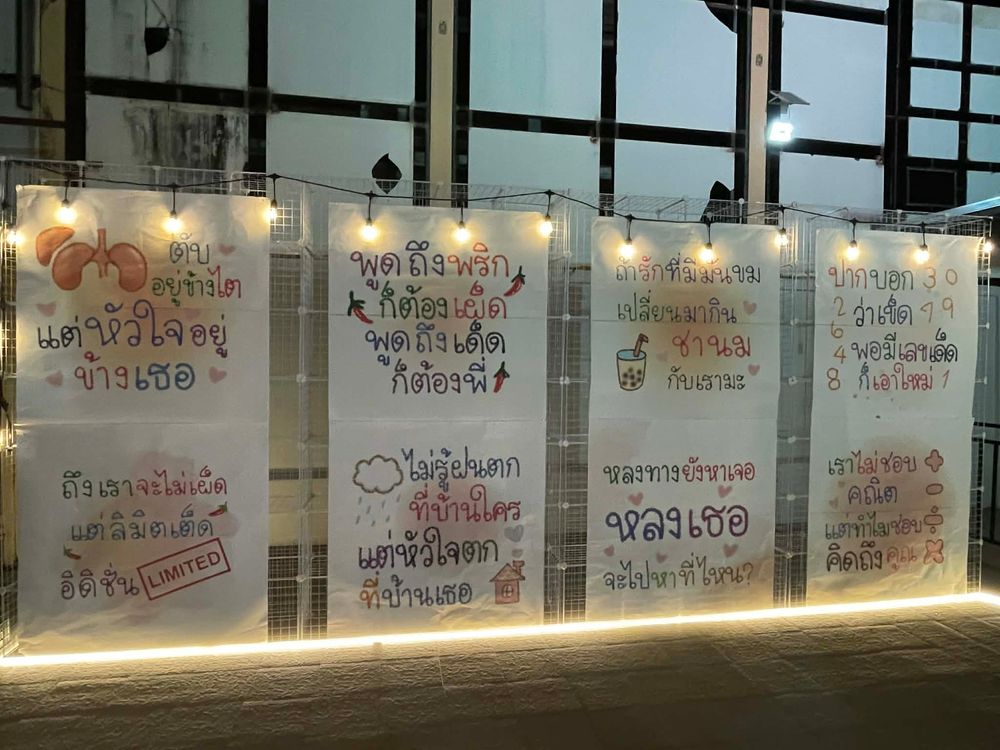
A sign for "Romance Art Space" clearly declared the area’s focus on relationships and feelings. Upon closer look, this "romance" did not stem from the space itself; it was merely an installation.
In the performance section, the term “Liminal Transit” was used to evoke the image of transition. But this terminal isn't in the process of becoming something new. What the art encountered was not a space in transition, but a space that had already been left to die.
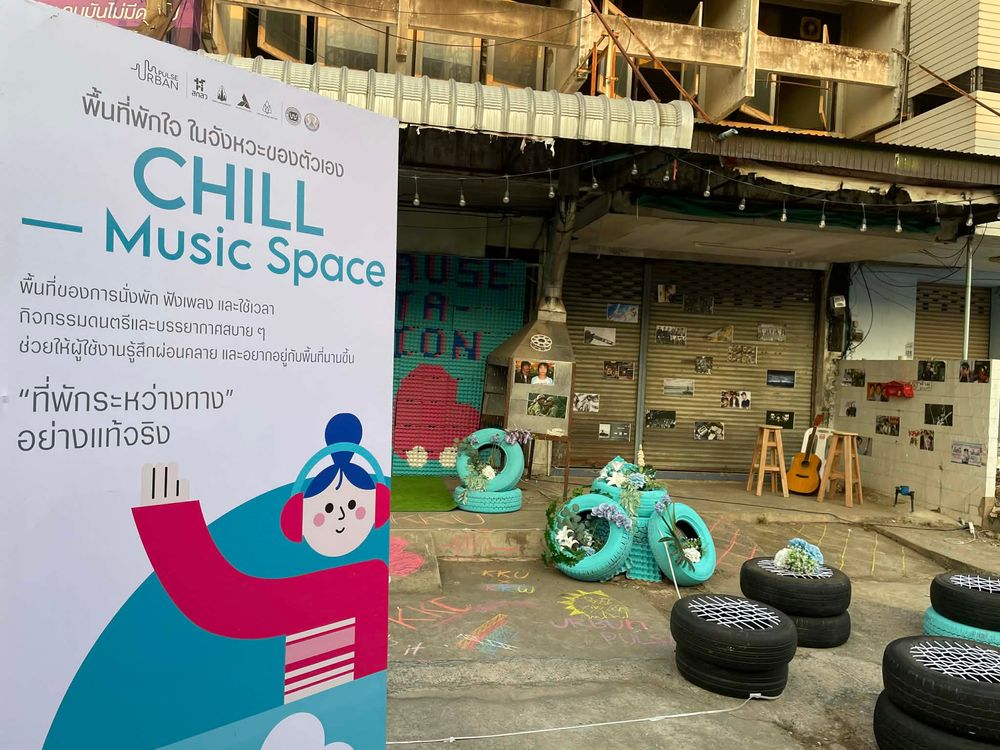
The six Immersive Performances allowed the audience to step into the actual space. What the audience received, then, was not just an atmosphere, but the experience of others—the memories of those who once lived their lives here, edited and rearranged into a "Role Play" for an audience that never had a stake in this space. The pain of the people here became an “Aesthetic” that one could simply walk in to consume and then walk away from. While using performance to tell stories of loss might seem like giving a voice to the community, in reality, it is a simulation of pain by outsiders who don't have to live with it. The audience feels something, the organizers achieve their goals, and the relevant agencies get their "integration narrative"—then it all ends. Meanwhile, the locals continue to live with the same old consequences.
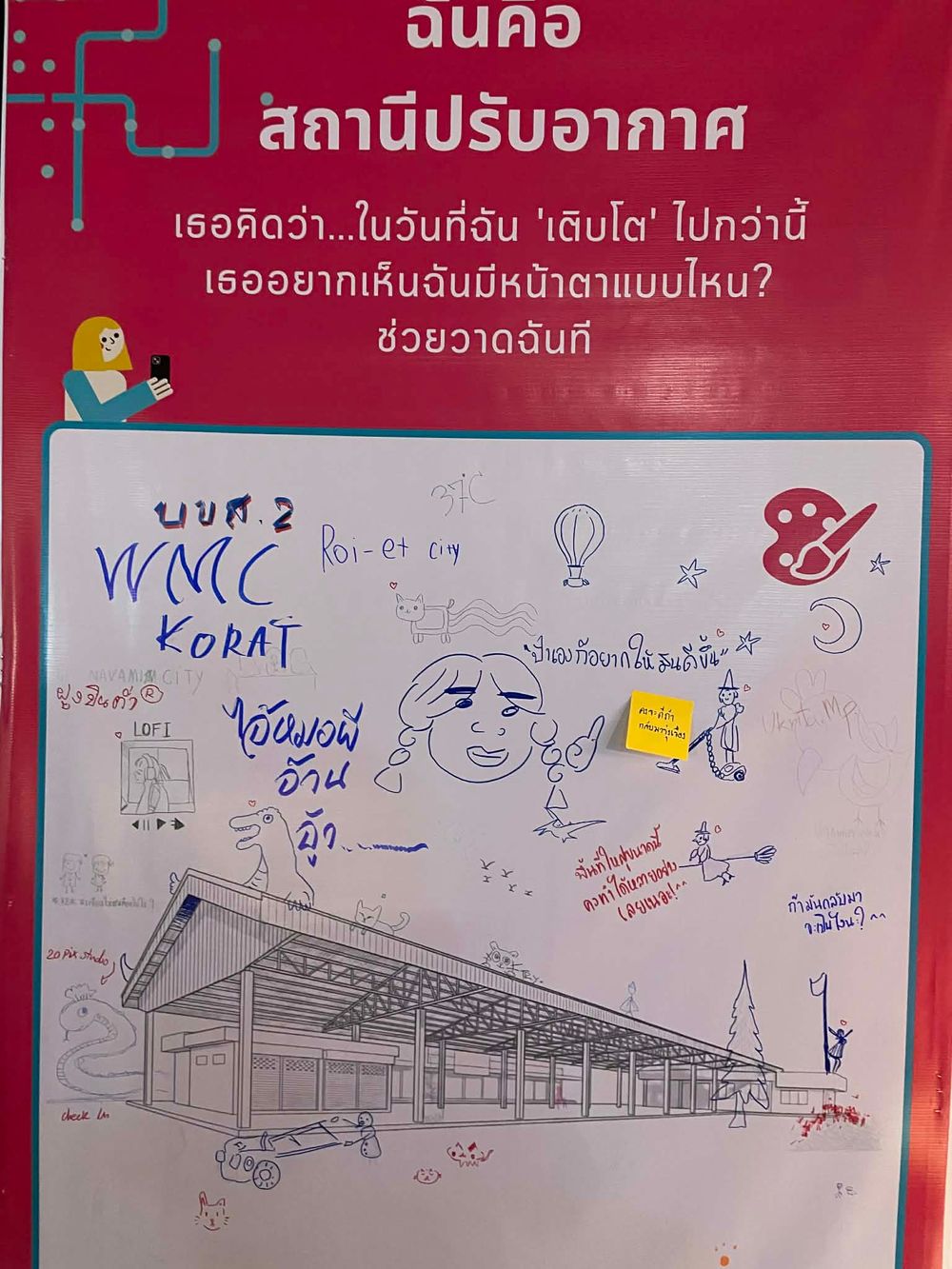
Toward the end of the performance, a voice announced over the speakers: “This space was not designed by leaders, but defined by you.”
That sentence sounds beautiful and evocative, but in this context, it is not an empowerment; it is the creation of an illusion of participation. Organizers come in to craft a romantic meaning out of the wreckage of a problem and then leave, leaving the locals behind with issues that were never sincerely addressed.
Even though the forum talked about the future of creative spaces throughout the session, the voices of the attendees reflected practical problems: access to the space, management, and the permits required to use it.
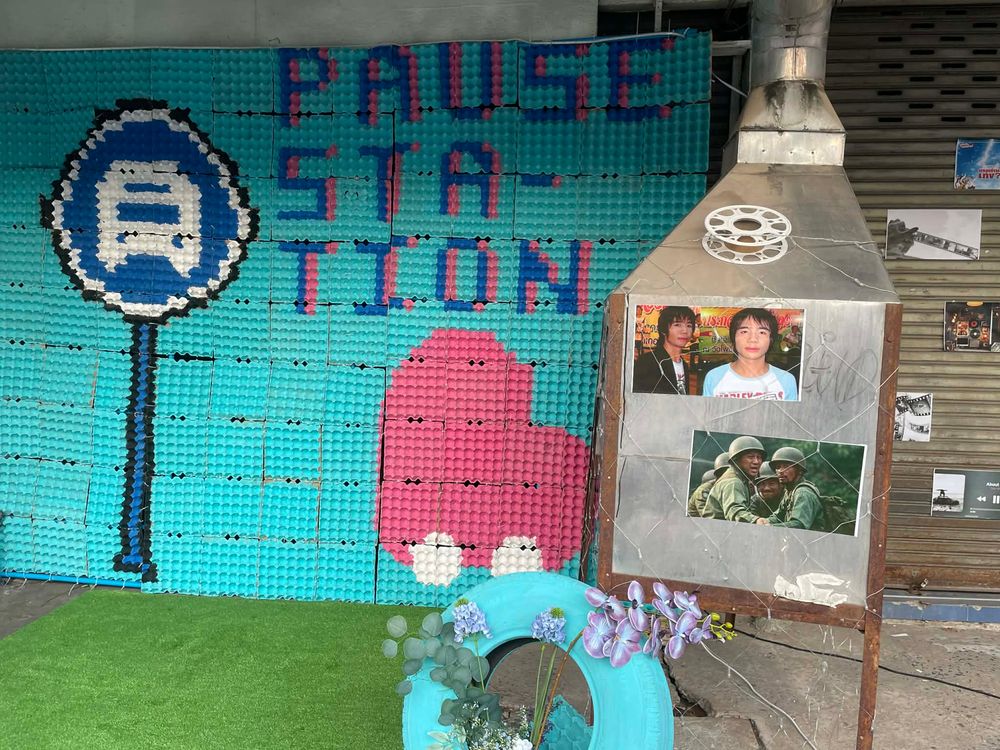
Urban Pulse today did not receive a pulse back from the city. Instead, it was a signal of an attempt to make a dying space look like it still has life. This is not a revitalization of space; it is an attempt to perform CPR on a ruin just to see it twitch.
Perhaps the question we should be asking is not “What can art do?” but rather, “Are we using art to change the space, or just using the space to produce an image of change?”
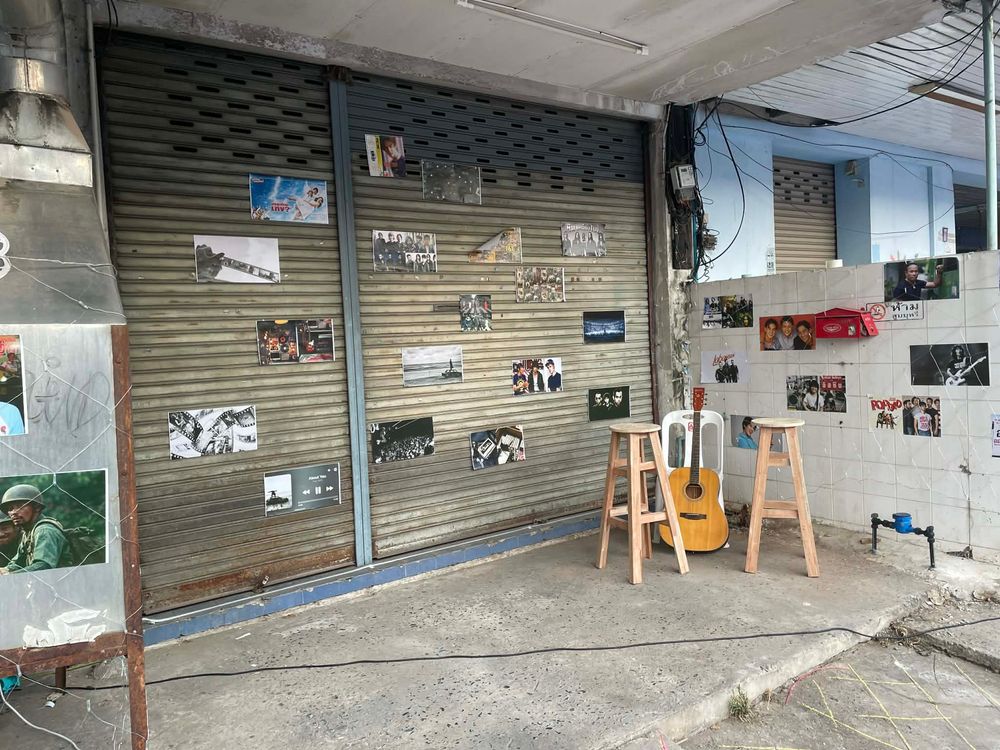
The question of the “future” remains unanswered, but the curtain has fallen. And while the actual future of the site remains uncertain, there were whispers at the event about the arrival of a fire station.
*As for the Khon Kaen Theatre Festival, I did not have the chance to attend. I was exhausted and ran out of time, but I understand it was held across both venues—the Treasury Museum and the Air-Conditioned Bus Terminal—totaling three festivals in one.*
© 2025 Khaoyai Connect. All rights reserved.
No part of this content may be copied, modified, or distributed in any form without prior written permission.
